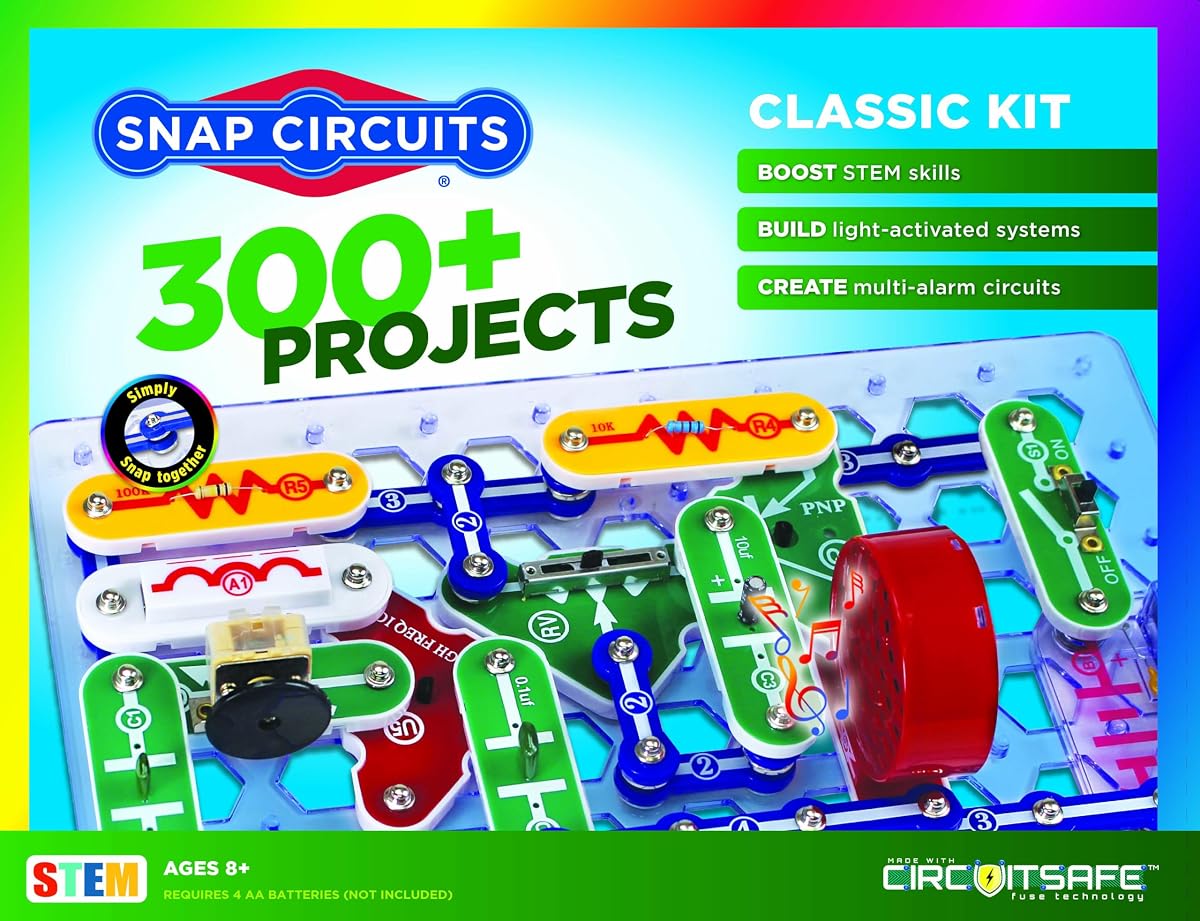
SNAP CIRCUITS Classic SC-300
4.8Editor score
300+ exciting projects
No tools or soldering needed
Color-coded snap components
This guide compares the top electronics kits for teens in 2026, highlighting features like coding, soldering, and robotics for STEM learning and creative
Electronics kits for teens offer a hands-on way to explore coding, engineering, and creativity. The best kits provide clear instructions, quality components, and room to grow from basic circuits to complex projects.
We evaluated ten leading kits based on component quality, tutorial clarity, project variety, and ease of use. Each option balances educational value with fun, ensuring teens stay engaged while building real skills in electronics and programming.
Each pick below shows what makes the kit stand out, from beginner-friendly snap circuits to advanced robotics. Note that availability and pricing can change, so check current details before purchasing your next STEM adventure.
4.8Editor score

4.7Editor score

4.5Editor score
Here is a side-by-side comparison of all ten kits to help you find the right match for skill level and interests.


This kit stands out with its Mega 2560 R3 controller, offering more pins and memory for advanced builds. It includes over 200 components and 35 guided projects that teach RFID, motor control, and sensor integration.
We may earn a commission when you buy through this link, at no additional cost to you.
The organized storage case keeps small parts like ICs and wires easy to find. Follow guided lessons with example code, then modify thresholds to create custom alarms or interactive displays. This flexibility supports growth from beginner to intermediate.
The larger component count means more setup time, but the pre-soldered modules reduce effort. Some teens may find the sheer volume overwhelming at first, but the structured lessons break it down effectively.
Ideal for teens ready to dive deep into coding and electronics. This kit offers the best balance of variety and support for serious STEM learning.
With 54 digital I/O pins and 4 hardware serial ports, this kit supports larger builds that multiple sensors and displays simultaneously.
The storage case and small-parts box reduce setup time, keeping wires and LEDs easy to find between projects.
We may earn a commission when you buy through this link, at no additional cost to you.
The UNO R3 Project Kit is a fantastic entry point for Arduino coding. It includes 30+ guided projects like LCD displays and RFID access, all designed to build confidence step by step.
We may earn a commission when you buy through this link, at no additional cost to you.
Flexible power options like a 9V supply and battery make it easy to run projects without constant USB connection. The organized storage case helps keep components sorted during learning.
While it lacks the extra memory of the Mega, it is perfect for standard projects. The only downside is dependency on a USB cable for initial setup, which is minor.
Perfect for teens starting their electronics journey with Arduino IDE. This kit balances simplicity with enough variety to stay engaging.
Pre-soldered modules and a solderless breadboard help beginners move from lesson to lesson without soldering experience.
Adjust sensor thresholds and timing using example code to turn guided lessons into original projects quickly.
We may earn a commission when you buy through this link, at no additional cost to you.
This robot car kit turns coding into a physical experience with FPV video and obstacle avoidance. Teens build, program, and drive their own car, making STEM learning dynamic and fun.
We may earn a commission when you buy through this link, at no additional cost to you.
Keyed XH2.54 connectors reduce wiring mistakes, and the illustrated tutorial guides assembly. The rechargeable lithium-ion battery supports longer play sessions compared to disposable options.
Assembly can take time and benefits from adult guidance for first-time builders. Some may find the initial wiring complex, but the rewards of controlling a working robot are worth it.
Best for teens who love robotics and interactive projects. This kit offers premium features like Wi-Fi modules that stand out in the category.
View live video through the onboard camera to control the robot with the app or IR remote easily.
Modify example code to create custom routes and reactions that develop problem-solving and engineering skills.
We may earn a commission when you buy through this link, at no additional cost to you.
Snap Circuits offers a safe, fun way to learn electronics basics without soldering. With 300+ projects like AM radios and doorbells, it keeps teens engaged all year round.
We may earn a commission when you buy through this link, at no additional cost to you.
The color-coded pieces snap easily onto a plastic grid, making setup fast. This kit is perfect for introducing electrical engineering concepts without complexity.
The only downside is less focus on coding compared to Arduino kits. Also, snap parts may wear over time with heavy use, though durability is generally high.
Ideal for younger teens or those preferring hands-on circuit building. This budget-friendly option delivers immense value and educational fun.
No tools are needed to build exciting projects like burglar alarms and electronic games immediately.
Winning multiple awards, this kit is trusted by educators and parents for high-quality learning.
We may earn a commission when you buy through this link, at no additional cost to you.
This kit lets teens build a real Bluetooth speaker with dual 3W speakers and LED lights. It focuses on soldering practice, making it ideal for those ready to move beyond breadboards.
We may earn a commission when you buy through this link, at no additional cost to you.
The amplifier board comes pre-soldered to simplify the process. Teens can enjoy music from their creation immediately after assembly, offering tangible rewards for effort.
The manual varies by batch, so connection methods may change slightly. Beginners with zero soldering skills might find this challenging, so practice is recommended.
Best for teens with foundational electronics knowledge. This project provides a practical, useful output that encourages further learning.
Focus on soldering the LED board and wires to develop practical skills and confidence.
Enjoy favorite music through a speaker you built yourself, perfect for dorm rooms and desks.
We may earn a commission when you buy through this link, at no additional cost to you.
The Super Starter Kit is a cost-effective way to learn Arduino coding. With 22+ guided lessons, it covers everything from blinking LEDs to motor control and environmental monitoring.
We may earn a commission when you buy through this link, at no additional cost to you.
Plug-in modules and a solderless breadboard let beginners focus on wiring and code. The illustrated component list helps find parts quickly, reducing setup frustration.
It offers slightly fewer projects than the Mega version, but still covers key concepts. Teens should check power-module input limits carefully during setup.
Perfect for budget-conscious learners wanting solid Arduino education. This kit balances affordability with comprehensive learning.
Use Arduino IDE to understand digital input and output, then create your own alarms or motion projects.
Download tutorials and check component polarity to ensure smooth first-time building.
We may earn a commission when you buy through this link, at no additional cost to you.
This kit creates a speaker with a vibrant light show synchronized to music. The high-resolution illustrated manual ensures every soldering step is clear for assembly.
We may earn a commission when you buy through this link, at no additional cost to you.
The dynamic LED light visualizer adds excitement to the building experience. It is perfect for hobbyists who want a visual impact alongside audio output.
Requires basic soldering skills, so absolute beginners may need guidance. The visuals depend on audio volume, which may limit quiet testing.
Ideal for teens who value creative visual projects. This kit combines practical audio with engaging lighting effects.
Built-in LEDs pulse and flash in sync with music, enhancing the listening experience.
Colorful illustrated manual demonstrates component placement and wiring for smooth assembly.
We may earn a commission when you buy through this link, at no additional cost to you.
Build your own theremin that creates music by waving hands around electric fields. This kit focuses on physics and capacitance, offering a unique take on electronics.
We may earn a commission when you buy through this link, at no additional cost to you.
No tools are needed; parts snap onto a breadboard. This makes it accessible for all skill levels, encouraging exploration without barriers.
The output is specialized compared to general circuits, which might limit broader learning. But it teaches important concepts about electric fields well.
Perfect for teens interested in music and physics. This kit offers a creative, instrument-focused project experience.
Discover the physics of electrical capacitance by creating sound through hand movements.
Everything needed is in the box, so you can start creating without learning soldering.
We may earn a commission when you buy through this link, at no additional cost to you.
This kit acts as a sensor lab, adding motion, light, and temperature sensing to any Arduino-compatible board. It includes 37 modules like PIR and ultrasonic sensors.
We may earn a commission when you buy through this link, at no additional cost to you.
Tutorial materials provide example code and wiring diagrams to integrate sensors easily. Teens can add displays and timing to build complex automated projects.
Controller boards are not included, so you need your own UNO or similar. Power management requires careful setup with the included module.
Best for teens expanding existing projects with sensors. This kit is ideal for prototyping and advanced experiments.
Experiment with GY-521 motion sensing, PIR detection, and ultrasonic ranging easily.
Use LCD1602 and timing modules to build clocks, alarms, and status displays.
We may earn a commission when you buy through this link, at no additional cost to you.
Build a complete electronic project with seven interactive functions that engage and challenge. This kit is designed for teens 15 and above, offering structured practice for soldering.
We may earn a commission when you buy through this link, at no additional cost to you.
Choose from three difficulty levels to match experience. Video guidance supports assembly, helping users complete the project with clear instructions.
It requires soldering skills and is not for younger teens. The focus is on practical assembly and testing rather than coding.
Perfect for teens ready for hands-on component assembly. This kit provides an engaging way to develop practical skills.
Three difficulty levels match different experience levels for structured skill building.
Explore seven built-in interactive functions after completing the soldering project.
We may earn a commission when you buy through this link, at no additional cost to you.
Choosing the right electronics kit depends on skill level, interests, and educational goals. Here are key factors to consider.
Match the kit to the teen's experience. Snap circuits work for beginners, while Arduino kits suit those ready for coding. Soldering kits assume foundational knowledge.
Choose a kit that challenges without overwhelming to keep interest high.
Kits with more components allow for diverse projects. Look for sensors, motors, and displays to explore different electronics fields.
Variety ensures the teen can grow with the kit over time.
Clear instructions and example code are vital. Look for illustrated guides or video support to reduce setup frustration.
High-quality tutorials teach concepts effectively, not just assembly.
Consider what interests the teen most. Robotics kits offer physical interaction, while sensor kits focus on coding. Music kits blend science with creativity.
Align the project type with hobbies to maximize engagement.
Decide if soldering is appropriate. Some kits require it, while others use snap components. Soldering builds fine motor skills but adds complexity.
Start with no-solder options if the teen is new to electronics.
Choose kits that allow adding components later. Arduino-compatible kits are ideal because you can add new sensors or displays.
Expandability extends the learning life of the kit.
Look for kits with pre-soldered modules or safe voltage limits. This reduces risks during assembly and experimentation.
Safety should be a priority for all ages and skill levels.
Higher cost kits often include more components and better tutorials. Compare the number of projects to the price for value.
Invest in a kit that offers long-term educational returns.
Start with the provided tutorials to understand basic assembly and coding. Take notes on wiring and code logic to build confidence.
Store components in their original cases to prevent loss. Organize wires and small parts by type for easier access.
Clean boards and contacts regularly to ensure connections remain stable. Avoid exposing electronics to moisture or dust.
Snap Circuits are ideal for beginners because they require no soldering or tools. Arduino starter kits like the Super Starter Kit are great for teens ready to start coding without heavy soldering requirements.
Most Arduino kits require a computer to upload code. Robotics kits often need a device for the app. Snap circuits and some soldering kits work independently once built.
Yes, many kits like Snap Circuits and Arduino starters are designed for STEM classrooms. They provide structured lessons that educators can use for group projects.
Robotics kits are often recommended for ages 8 and up with adult guidance. Teens can handle more complex robotics projects independently with Arduino-based options.
Arduino-compatible kits allow expansion with additional sensors and modules. Snap Circuits can also be combined with other sets to increase project variety.
No, many kits like Snap Circuits and the Theremin kit require no soldering. Soldering kits are optional for those wanting to develop manual assembly skills.
Simple projects take an hour, while robotics builds may take a day or more. Follow tutorial pacing to ensure understanding rather than rushing.
Most Arduino kits use C++ via Arduino IDE. Snap Circuits do not require programming, focusing instead on physical circuit logic and assembly.
The top picks like the Mega 2560 Kit and Snap Circuits offer outstanding value and learning. Each provides unique pathways into coding, engineering, and creative projects.
Prioritize kits that match your teen's interests. Whether robotics or music, the right tool turns learning into an adventure.
Check current pricing and availability before purchasing. These kits offer long-term engagement and essential STEM skills.