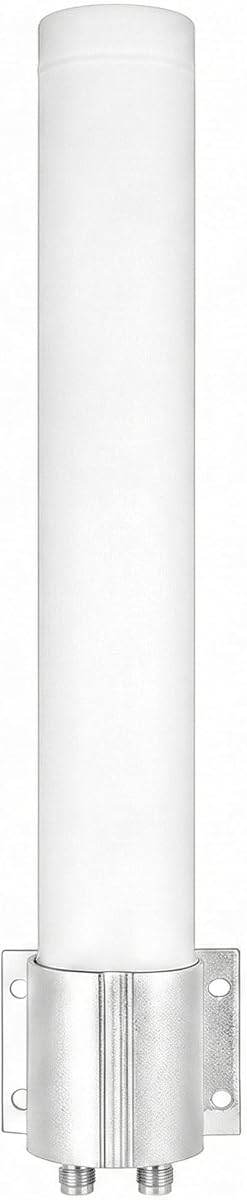
Pro-Gain 2.4G/5.8G MIMO WIFI Antenna
4.8Editor score
MIMO technology for stable high-speed streaming
UV-resistant fiberglass construction for durability
Optimized for remote and rural internet access
This guide compares the top 10 marine WiFi antennas for 2026 based on durability, gain, and connectivity to help boaters choose the right signal booster.
Connecting to the internet while on the water requires reliable hardware designed to withstand harsh environments. A marine WiFi antenna extends your range significantly, allowing you to access distant hotspots safely and efficiently.
We evaluated ten leading models based on gain, weather resistance, and compatibility with common marine routers. Our analysis focuses on real-world performance in salt spray and high-wind conditions to ensure you get stable connectivity.
Each pick highlights specific strengths like dual-band support or rugged construction to suit different boating needs. Keep in mind that availability and pricing fluctuate, so verify current details before making your final purchase decision today.
4.8Editor score

5.0Editor score

4.2Editor score
This table provides a side-by-side comparison of the top ten marine WiFi antennas available today. Review the key specifications to find the model that best fits your boat and connectivity requirements.


The Poynting Omni-496 stands out as the top choice for boaters who need reliable long-range connectivity. With a perfect 5.0 rating, this antenna delivers exceptional performance in challenging marine environments while supporting modern Wi-Fi standards.
We may earn a commission when you buy through this link, at no additional cost to you.
Its robust construction includes UV and saltwater resistance, ensuring it withstands harsh coastal weather without degrading. The dual-band capability covers both 2.4 GHz and higher frequency bands, allowing for flexible connectivity with various routers and gateways.
While the price is higher than entry-level options, the investment pays off in durability and signal strength. The included mounting bracket simplifies installation on standard poles or masts, making it accessible for DIY users.
Boaters seeking the best overall performance should prioritize this model. It balances high gain with enterprise-grade weatherproofing to ensure your internet remains stable even during rough conditions.
The 8 dBi gain significantly extends your range to access distant shore-based hotspots reliably.
Compatibility with Wi-Fi 6e and Wi-Fi 7 ensures future-proof connectivity for your marine setup.
We may earn a commission when you buy through this link, at no additional cost to you.
This premium antenna targets users who demand enterprise-grade performance for remote work or entertainment. The MIMO configuration optimizes signal-to-noise ratio, ensuring stable speeds even when connected to weak sources.
We may earn a commission when you buy through this link, at no additional cost to you.
Its fiberglass housing resists degradation from salt spray and UV rays better than plastic alternatives. The low VSWR value minimizes signal reflection, maximizing the efficiency of your transmitter and receiving power.
Installation can be tricky due to the specific cable recommendations and dual N-Female connectors. However, the setup ensures maximum data throughput for heavy bandwidth tasks like video conferencing.
Ideal for remote cabins or boats where consistent high-speed internet is critical, this model delivers professional reliability that justifies its higher price and installation complexity.
Optimized for 4K streaming and lag-free conferencing in remote locations with weak signals.
Constructed with UV-resistant architectural fiberglass to endure extreme temperature and humidity ranges.
We may earn a commission when you buy through this link, at no additional cost to you.
For boaters on a budget needing basic connectivity, this combination antenna offers an efficient solution. It integrates GPS, cellular, and WiFi signals into one compact puck to simplify wiring on smaller boats.
We may earn a commission when you buy through this link, at no additional cost to you.
The through-hole design ensures a clean installation that prevents water ingress, while the weatherproof casing protects internal components from the elements. Pre-wired leads reduce the need for extra coaxial purchases.
The gain is modest compared to high-performance models, limiting its range for distant hotspots. However, it suffices for standard docking situations where signal strength is already moderate.
Best for casual users or smaller vessels requiring a simple upgrade, this model balances cost and functionality effectively without demanding complex setup procedures or mounting hardware.
Combines GPS cellular and WiFi capabilities into one unit to reduce clutter on the boat.
The puck design allows for discreet placement without obstructing navigation or deck access.
We may earn a commission when you buy through this link, at no additional cost to you.
This variant offers nearly identical durability to the flagship model at a lower cost. It provides solid 7.5 dBi gain suitable for most coastal applications while maintaining the trusted Poynting build quality.
We may earn a commission when you buy through this link, at no additional cost to you.
The design focuses on essential features needed for reliable internet access. It supports a wide range of frequencies including Wi-Fi WiMAX and LTE, making it versatile for different network types.
While it lacks the extra gain of the top model, it remains a strong contender for daily use. The feed-through mount simplifies securing it to standard marine poles without specialized tools.
Boaters seeking a reliable and cost-effective upgrade should consider this option. It delivers essential performance without breaking the bank, making it a smart choice for casual cruisers.
Supports a wide range of frequencies including Wi-Fi WiMAX and LTE for broader compatibility.
The feed through design allows for quick installation on standard one-inch marine mounting poles.
We may earn a commission when you buy through this link, at no additional cost to you.
With 9 dBi gain, this antenna leads the pack for raw signal strength. It is ideal for reaching distant WiFi sources where standard units fail to maintain a connection.
We may earn a commission when you buy through this link, at no additional cost to you.
The fiberglass housing remains lightweight, which is crucial for mounting on smaller poles or masts. The integrated connector ensures a secure interface for coaxial cables without extra adapters.
While the gain is high, users should note potential directional limitations compared to true omni-directional models. Proper orientation may be necessary to achieve optimal performance in specific areas.
For those prioritizing maximum distance, this model is the top choice. It delivers exceptional range for its size, making it perfect for rural marinas or distant anchorages.
The 9 dBi gain provides significant boost to reach faraway access points effectively.
Designed for outdoor use with waterproof features to ensure longevity in rain or spray.
We may earn a commission when you buy through this link, at no additional cost to you.
This antenna targets users needing strong cellular data on the water. It supports 4G LTE and 5G NR, ensuring compatibility with modern high-speed mobile networks.
We may earn a commission when you buy through this link, at no additional cost to you.
The ABS housing is engineered for demanding enterprise and marine applications. Its compact height makes it easy to mount without obstructing visibility or other equipment on deck.
To fully utilize its capabilities, you must pair it with a MIMO-capable router. While not a dedicated Wi-Fi antenna, it significantly boosts cellular data used for internet bridging.
Boaters relying on cellular networks for connectivity will appreciate its robust build and wide frequency support. It is a solid choice for tech-savvy users seeking maximum data speeds.
Compliant with multiple carrier technologies including 4G LTE and 5G NR for broad access.
Approved by federal and state agencies ensuring it meets strict safety and performance standards.
We may earn a commission when you buy through this link, at no additional cost to you.
These compact antennas are ideal for indoor or sheltered installations where range is less critical. They support both 2.4 GHz and 5.8 GHz bands, covering the basics for most wireless devices.
We may earn a commission when you buy through this link, at no additional cost to you.
Sold in a two-pack, they allow for MIMO configurations that can improve throughput on compatible routers. The RP-SMA connector is widely available, making integration straightforward for many users.
However, their lack of waterproofing makes them unsuitable for direct exposure to rain or salt spray. They should be kept inside a cabin or enclosure to prevent damage.
For small boats with internal routers or short-range needs, these offer a practical and affordable solution. They work well for local networks but struggle with distant hotspots.
Sold as a two-pack to enable MIMO setups without spending extra on individual units.
Uses common RP-SMA connectors to work with a wide range of consumer wireless equipment.
We may earn a commission when you buy through this link, at no additional cost to you.
This versatile unit integrates cellular and WiFi capabilities into one roof-mounted package. It simplifies wiring by combining two antennas into a single unit to reduce clutter.
We may earn a commission when you buy through this link, at no additional cost to you.
The IP67 rating ensures it can handle outdoor conditions without water ingress. The global frequency range allows it to work in many regions, making it suitable for international boating.
The cable length is limited to 40cm, which may restrict placement options on larger vessels. You must ensure your router ports align with the included SMA connectors.
Ideal for those needing cellular data alongside WiFi, this model bridges the gap between the technologies. It is best suited for setups where a short reach to the router is feasible.
Works in most countries thanks to broad frequency range support for various network standards.
Combines 4G LTE MIMO and WiFi signals to reduce cable clutter and simplify setup.
We may earn a commission when you buy through this link, at no additional cost to you.
This antenna offers excellent gain for its price, making it accessible for users needing strong signals without high costs. The outdoor-ready build ensures it can withstand typical weather conditions on deck.
We may earn a commission when you buy through this link, at no additional cost to you.
Its versatile design works with routers access points and security cameras. This makes it a flexible choice for broader marine network setups beyond just internet access.
Installation is straightforward as it replaces existing antennas easily. However, verify connector types to ensure compatibility with your specific wireless hardware.
For budget-conscious boaters who still want strong performance, this model delivers. It balances high gain and affordability effectively for general marine internet needs.
Delivers high 9dBi gain to extend your WiFi coverage significantly for distant connections.
Offers a simple upgrade path for existing routers without needing complex installation tools.
We may earn a commission when you buy through this link, at no additional cost to you.
While not a WiFi antenna this VHF model is essential for marine safety. It covers all standard communication channels and NOAA weather frequencies, ensuring reliable communication with coast guard services.
We may earn a commission when you buy through this link, at no additional cost to you.
The ratchet mount allows for folding during transport or storage, protecting it from damage in narrow spaces. The fiberglass radome resists UV degradation and corrosion effectively.
It uses standard PL-259 connectors compatible with most marine radios. Grounding is crucial for performance, so ensure proper installation to avoid interference or safety hazards.
Every boat needs this for safety communications even if you prioritize WiFi separately. It is a foundational piece of equipment for responsible and compliant boating.
Includes all VHF marine bands and NOAA weather channels for essential safety communication.
The ratchet mount allows quick folding for low-clearance travel or compact storage on board.
We may earn a commission when you buy through this link, at no additional cost to you.
Selecting the right marine WiFi antenna depends on your specific connectivity needs and boat setup. Consider these key factors to ensure you get reliable performance.
Gain determines how effectively the antenna captures and transmits signals. Higher dBi values extend your range to distant hotspots but may require careful alignment.
Choose higher gain if you frequently travel far from shore or need to reach weak sources.
Marine environments demand IP68 ratings to protect against saltwater and humidity. Look for antennas with UV-resistant fiberglass housings.
Always verify the waterproof rating before purchasing to ensure longevity.
Modern networks use both 2.4 GHz and 5 GHz bands. Dual-band antennas offer better compatibility and reduced interference.
Prioritize dual-band models to future-proof your connectivity.
Matching the connector type to your router is essential. Common types include N-Type and SMA. Mismatched connectors can lead to poor performance.
Check your router ports before buying to avoid extra adapters.
Secure mounting is vital for stability. Look for adapters compatible with standard poles or L-brackets.
Ensure the bracket fits your boat deck to prevent vibration.
MIMO supports multiple data streams for faster speeds. It requires compatible routers and two leads.
Invest in MIMO if you use high bandwidth tasks.
Cable length affects placement flexibility. Ensure the included or available cables reach your router.
Measure distance carefully before installation.
Higher quality antennas cost more but offer durability. Look for warranties to protect your investment.
Balance cost with expected performance needs.
Mount your antenna as high as possible on the boat to minimize obstruction. Ensure the mounting hardware is tightened securely to handle vibration and wind.
Connect the coaxial cable firmly to both the antenna and router. Use weatherproof tape on outdoor connections to prevent moisture from affecting signal quality.
Regularly inspect the housing and cables for signs of wear or corrosion. Clean the radome gently with fresh water to remove salt spray and debris.
2.4 GHz provides better range and wall penetration, while 5 GHz offers faster speeds with less interference. Dual-band antennas support both for optimal flexibility and performance.
Most work with standard routers, but check connector types and frequency support. Some models require MIMO-compatible routers for advanced features.
Mount the antenna as high as possible on a mast or pole to maximize line-of-sight. Avoid placing it near metal structures that could block signals.
High-quality marine WiFi antennas typically have IP67 or IP68 ratings for water and salt resistance. Verify the rating before purchasing to ensure durability.
Dedicated cellular antennas are better for 4G/5G data. Some combo units support both, but ensure compatibility with your modem.
Inspect for corrosion regularly and rinse with fresh water. Check cable connections for tightness and seal any exposed joints.
The Poynting Omni-496 and Pro-Gain MIMO lead our list for high performance and durability. They provide reliable connectivity for demanding maritime environments.
Prioritize weather resistance and gain based on your typical routes. A well-chosen antenna ensures stable internet access for safety and communication.
Remember to verify compatibility with your current router before purchasing. Check current availability to ensure the best fit for your specific setup.