
Pyle PDC21
4.5Editor score
Steel chassis construction
Passive hum elimination
Ground lift adapter
Finding the right bass direct box ensures your low-end tone translates cleanly to any sound system. A good unit matches impedance, eliminates hum, and handles long cable runs without losing signal integrity. Whether you play live or record at home, the right box matters.
We compared ten leading models based on user ratings, technical specs, and real-world performance data. Our analysis covers passive and active designs, channel options, and build quality. This list helps you find the perfect match for your instrument and setup without guesswork.
Each pick highlights key strengths, trade-offs, and ideal use cases for clarity. You will see what makes each unit stand out in its category. Keep in mind that prices and availability can change, so check current details before you buy to secure the best deal.
4.5Editor score
4.8Editor score

4.7Editor score
As an Amazon Associate we earn from qualifying purchases.
The following table provides a side-by-side view of all ten models, highlighting key specs like channel count, power requirements, and construction type to help you compare options quickly.




The Pyle PDC21 is an accessible entry point for musicians needing a reliable direct box without breaking the bank. It holds a strong rating from users who value cost-effective gear that delivers clean audio. This passive unit is built to handle everyday gigs and home sessions with ease.
We may earn a commission when you buy through this link, at no additional cost to you.
Its steel chassis ensures durability during transport, while the built-in hum eliminator tackles ground loop noise effectively. The attenuator input helps prevent overload when connecting high-output instruments. You get a balanced XLR output that integrates smoothly with most mixers and audio interfaces.
While it lacks advanced features like phantom power or stereo channels, its simplicity is a strength. It does exactly what is expected for a budget box. The trade-off is fewer customization options, which may limit complex setups but suits standard live applications well.
This model is ideal for students, hobbyists, or bands on a tight budget. If you need a no-fuss box to get bass signals into a PA system cleanly, this is a solid choice. It provides the core functionality required without unnecessary complexity.
The all-steel build offers protection against drops and bumps without inflating the price tag.
Ground loop interference is minimized, keeping your bass tone clear and professional.
We may earn a commission when you buy through this link, at no additional cost to you.
This Pyle unit offers a straightforward solution for converting instrument signals to balanced mic levels. Users appreciate its ability to connect various devices like keyboards and guitars to a PA system. The passive design means no external power is needed for basic operation.
We may earn a commission when you buy through this link, at no additional cost to you.
The impedance transformer ensures your signal reaches the mixer without degradation over long cables. It includes buzz and hum cancellation features that clean up noisy environments. Input attenuation allows you to manage signal levels effectively, preventing clipping at the source.
While it handles common applications well, it may not suit extreme professional touring needs. The build is functional but not as robust as higher-end models. For practice rooms or small venues, it provides the reliability you need without the bulk.
Choose this if you want a versatile box for multiple instrument types. It works well for sampling old records or connecting consumer systems. It balances utility and simplicity for musicians who need a flexible direct injection tool.
The connector variety lets you integrate keyboards and outboard processors easily.
Transformers preserve tone while matching impedance for long cable runs.
We may earn a commission when you buy through this link, at no additional cost to you.
The Radial Pro DI is a benchmark for passive direct boxes, praised for its tone and build quality. Its custom transformer delivers a rich, full-frequency response ideal for bass. The I-beam chassis provides unmatched protection for touring musicians facing rough handling.
We may earn a commission when you buy through this link, at no additional cost to you.
This unit stands out for its ability to maintain signal clarity over distance. Engineers trust it for professional recordings and live shows where reliability is critical. It requires no battery or phantom power, ensuring it always works when you need it most.
The main trade-off is the cost compared to consumer-grade options. You are paying for engineering and durability that last years. It is also a single-channel design, so stereo instruments need a different box if you want full separation.
Invest in this if you need a dependable box for professional use. It offers peace of mind on stage and in the studio. This is the tool for musicians who prioritize sound fidelity and longevity above all else.
The custom transformer ensures your bass tone stays natural and detailed.
I-beam construction protects internals from the rigors of travel.
We may earn a commission when you buy through this link, at no additional cost to you.
Whirlwind delivers a high-quality passive box at an accessible price point. The IMP 2 is known for its fantastic footprint and clean audio performance. It converts unbalanced instrument signals to balanced mic levels efficiently.
We may earn a commission when you buy through this link, at no additional cost to you.
The transformer is riveted to the chassis, ensuring stability and consistent performance. This detail speaks to the build quality found even in economical packages. It is ideal for users needing professional durability without the premium cost.
While it lacks advanced controls like pads or stereo outputs, it focuses on core function. This simplicity reduces potential failure points during live use. It remains a top choice for gigging musicians on a budget.
Choose this for reliable performance in small to mid-size venues. It handles standard bass and guitar connections well. If you need a workhorse that delivers clear sound consistently, this model fits the bill.
Riveted construction keeps the transformer secure during transport and use.
The small size saves pedalboard space or gig bag room.
We may earn a commission when you buy through this link, at no additional cost to you.
The PYLE-PRO PDC22 offers dual-channel functionality at a budget-friendly price. It lets you run two instruments simultaneously, which is rare for this price range. This makes it a good option for small setups or home studios.
We may earn a commission when you buy through this link, at no additional cost to you.
Its steel chassis provides decent protection, while the hum eliminator and ground lift help clean up signals. Attenuator inputs prevent overload from high-output gear. Users find it useful for various audio sources beyond just bass.
Consistency can vary between units, so checking reviews is wise. It may not match the precision of higher-end boxes but serves well for casual use. The convenience of two channels often outweighs minor limitations.
Opt for this if you need a second channel without adding cost. It is handy for duo gigs or multi-instrument players. It offers practical versatility for those managing multiple signals on a budget.
Run two sources at once without needing two separate boxes.
Ground lift and hum reduction keep your mix cleaner.
We may earn a commission when you buy through this link, at no additional cost to you.
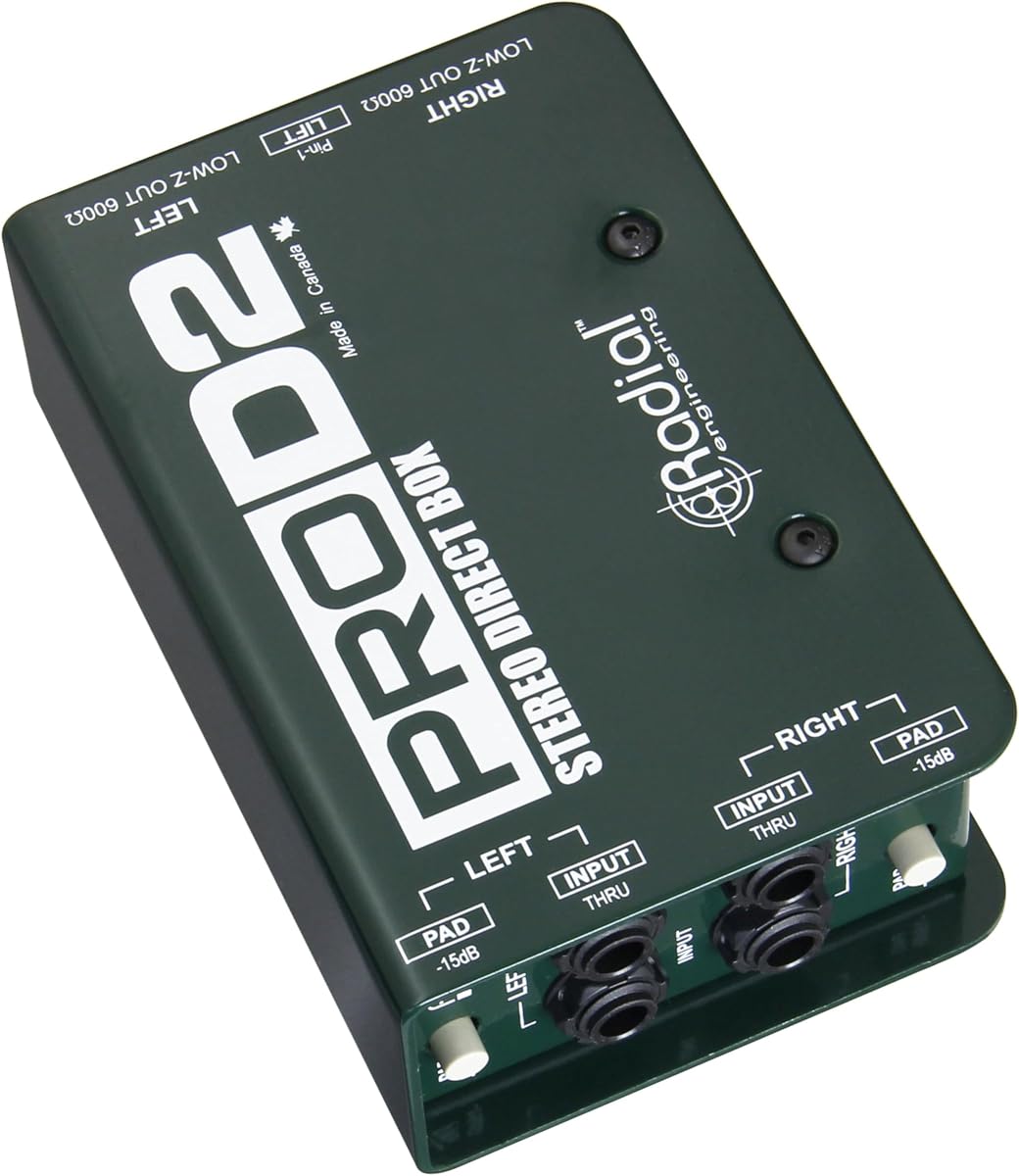
The Radial ProD2 is a top-tier passive box for stereo instruments and dual sources. It maintains separation between left and right channels without degradation. This is essential for keyboards and stereo effects running to a PA.
We may earn a commission when you buy through this link, at no additional cost to you.
Its isolation transformers handle ground loops while the 15dB pad prevents clipping on loud signals. The road-ready build ensures it survives tours. It offers a perfect balance of performance and durability.
The higher cost is justified by its professional-grade features. It is larger than single units but offers capabilities others lack. If you need stereo integrity without active electronics, this is a strong choice.
Select this for professional gigs with stereo setups. It provides the control and quality engineers expect. It is a robust tool for anyone requiring reliable, high-end passive performance.
Isolation transformers keep your stereo image intact over long cables.
The pad and lift switches offer total signal management.
We may earn a commission when you buy through this link, at no additional cost to you.
The Bolanle DB2 offers two channels with useful controls for signal management. It includes attenuation settings to prevent overload on sensitive inputs. Users value its clean output for both live and studio applications.
We may earn a commission when you buy through this link, at no additional cost to you.
Its rust-proof and scratch-resistant design makes it ideal for touring. Ground loop elimination is effective, keeping your tone noise-free. The stereo outputs allow flexible routing options in a mix.
While less mainstream, it delivers reliable performance for the price. It may lack some refinement compared to legacy brands but offers great utility. It is a great alternative if you need stereo passivity on a budget.
Choose this for its robust build and flexible controls. It works well for bass and synth players needing dual inputs. It balances cost and features for musicians seeking value.
Attenuation switches let you match levels perfectly to your mixer.
Rust-proof materials ensure it looks good after many gigs.
We may earn a commission when you buy through this link, at no additional cost to you.
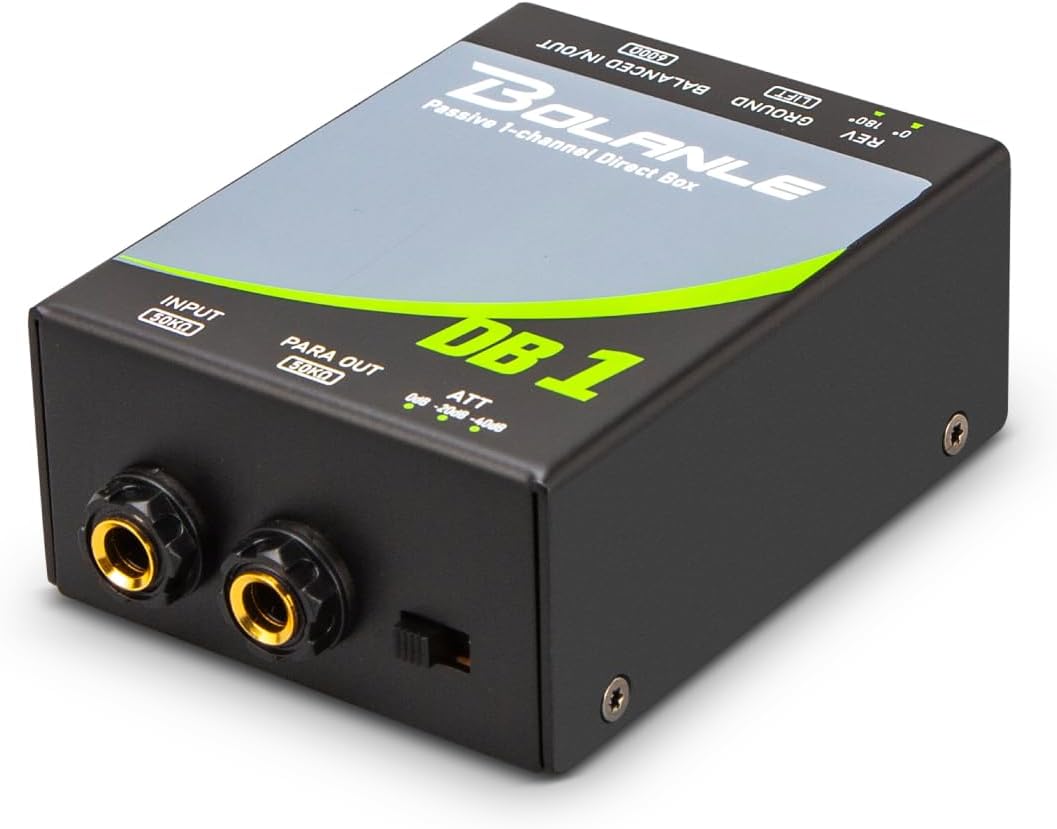
The Bolanle DB1 is a straightforward mono box designed for clarity. It requires no power, ensuring reliability in any setting. The feedback eliminator and parallel output help manage tone and volume on stage.
We may earn a commission when you buy through this link, at no additional cost to you.
Its road-ready construction stands up to frequent use and transport. You get a clean signal path that preserves instrument tone effectively. This simplicity makes it easy to integrate into any setup.
The lack of advanced features is a trade-off for reliability. It focuses on core tasks rather than complex controls. For standard bass gigs, it does exactly what is needed without fuss.
This unit fits players who want a dependable, no-power box. It suits small venues and practice sessions well. If you value reliability and clear sound, this is a good pick.
Connect to an amp and mixer simultaneously without losing tone.
No batteries or cords mean fewer things to fail.
We may earn a commission when you buy through this link, at no additional cost to you.
The Bolanle J22 is an active box that solves power issues with multiple options. You can use phantom, battery, or USB to keep running. This ensures you can play even if one source fails on stage.
We may earn a commission when you buy through this link, at no additional cost to you.
It maintains full stereo separation for dual keyboards or synths. The noise elimination is effective, keeping long runs clean. Metal housing protects the electronics during transport and rough handling.
The active design adds versatility but requires a power source. This is manageable with the included options. It provides a professional-quality path for active instruments and synths.
Choose this for active stereo instruments needing reliable power. It fits live and studio scenarios well. If you need flexibility and clear tone, this model is worth considering.
USB or battery backup keeps you going when phantom power fails.
Dual outputs keep left and right channels distinct.
We may earn a commission when you buy through this link, at no additional cost to you.
The Radial Pro48 is a compact active box designed for professional use. It relies on 48V phantom power for high-resolution audio. This makes it ideal for setups where rack gear is available.
We may earn a commission when you buy through this link, at no additional cost to you.
Its small size fits easily into tight pedal setups or racks. The pad helps manage high-output signals without clipping. It offers clean, transparent signal paths for bass and keyboards.
The need for phantom power limits its use in some contexts. Ensure your mixer supports it before buying. It delivers top-tier sound when power is stable and accessible.
This box is best for studios or stages with reliable power. It provides professional quality in a small package. If space and fidelity matter, this is a strong option.
The small footprint saves space on crowded stages.
High-resolution active circuitry delivers detailed sound.
We may earn a commission when you buy through this link, at no additional cost to you.
Choosing the right direct box requires understanding your specific needs and technical constraints. This guide breaks down the key factors to ensure you get the best performance for your setup.
Passive boxes use transformers to match impedance and require no power. They are reliable and handle passive instruments well. Active boxes need phantom power or a battery and are better for high-impedance or low-output sources.
Choose passive for simplicity and active for signal boost or specific instruments.
Mono boxes suit single instruments like bass or guitar. Stereo boxes preserve the left and right image for keyboards or synths. Consider if you play dual-output gear or need to mix multiple signals.
Select stereo if your instrument outputs two channels for full fidelity.
Durability matters for touring musicians. Look for metal chassis and sturdy connectors. A well-built box protects your signal and survives drops and heavy use.
Prioritize steel or aluminum builds for long-term reliability.
Active units need power. Phantom power is common but not always available. Battery or USB options add flexibility for remote gigs.
Ensure your power needs match the venue setup.
Pads prevent clipping on loud signals. Ground lift eliminates hum from loops. These switches are essential tools for clean audio.
Look for models with these controls to manage noise and levels.
Most use 1/4 inch inputs and XLR outputs. Check if your mixer requires balanced connections. Some units offer parallel outputs for amps.
Match your box to your gear interface for smooth setup.
A good box should handle low frequencies without rolling off. Bass needs full-range response to sound powerful. Avoid cheap units that muddy your tone.
Check specs for flat response to ensure clarity.
Budget units work for practice but may lack durability. Professional boxes cost more but last years. Balance your budget with your performance needs.
Invest in quality if you perform regularly.
Connect your instrument to the input using a quality 1/4 inch cable. Plug the XLR output into your mixer or interface. Ensure connections are tight to avoid signal loss or noise during performance.
Engage the ground lift switch if you hear hum or buzz. Use the pad if your signal sounds distorted. This ensures your tone is clean before it reaches the sound system.
Store the box in a protective bag when not in use. Avoid exposing it to moisture or extreme heat. Regularly inspect cables and connectors to maintain reliability.
Yes, an electric bass benefits from a direct box to match impedance and send balanced signals. It prevents noise over long cables and integrates your signal with a PA system cleanly. Even if you use an amp, a DI lets the engineer control your tone.
Passive DI boxes use transformers and need no power, making them reliable for standard use. Active DI boxes need power and offer higher input impedance, which suits certain instruments like piezo or active pickups. Choose based on your specific instrument type.
Absolutely. A stereo direct box maintains the left and right channels of keyboards. This preserves your sound image on stage. Ensure the box supports stereo inputs if you are using dual outputs.
This often happens without proper impedance matching. A direct box converts high-impedance signals to low-impedance balanced ones. Ensure your box has a good transformer and that cables are not too long.
Hum usually comes from ground loops. Engage the ground lift switch on your direct box. If that does not help, check your power sources. Sometimes using a balanced cable helps reduce interference effectively.
Passive boxes never need power. Active boxes require phantom power, batteries, or USB. Check your specific model before gigs. Always verify your mixer provides phantom power if needed.
We have reviewed ten top options ranging from budget-friendly to professional models. Each pick offers unique strengths for different budgets and needs. The Pyle and Bolanle models offer great value while Radial provides professional quality.
Prioritize build quality and features that match your playing style. If you play live often, invest in a durable unit with essential controls. For home use, a simpler box might suffice.
Prices can change often so check current availability. Verify the specs meet your needs before buying. With the right box, your bass tone will sound clean and powerful.