
Proster LCR Meter
4.5Editor score
Affordable Entry Level
Rotatable LCD Screen
Complete Test Kit
This guide compares the top Lcr Meter models for 2026, analyzing accuracy, features, and value to help you choose the best component tester for your needs.
Finding the right Lcr Meter is essential for electronics enthusiasts and professionals who need precise measurements of inductance, capacitance, and resistance. These devices go beyond standard multimeters to provide detailed insights into component behavior across various frequencies and conditions.
We have evaluated ten leading models based on their measurement accuracy, frequency range, display quality, and ease of use. Our analysis covers handheld units for field work and benchtop systems for laboratory environments, ensuring a comprehensive overview of the current market offerings.
Each pick highlights specific strengths and ideal use cases to help you match a device to your project requirements. Please note that product availability and specific configurations may change over time, so verifying current details before purchasing is always recommended.
4.5Editor score

4.7Editor score

4.4Editor score
The following table provides a side-by-side comparison of the ten selected Lcr Meter models. It highlights key specifications and capabilities to help you quickly identify which device aligns best with your technical requirements and budget constraints.

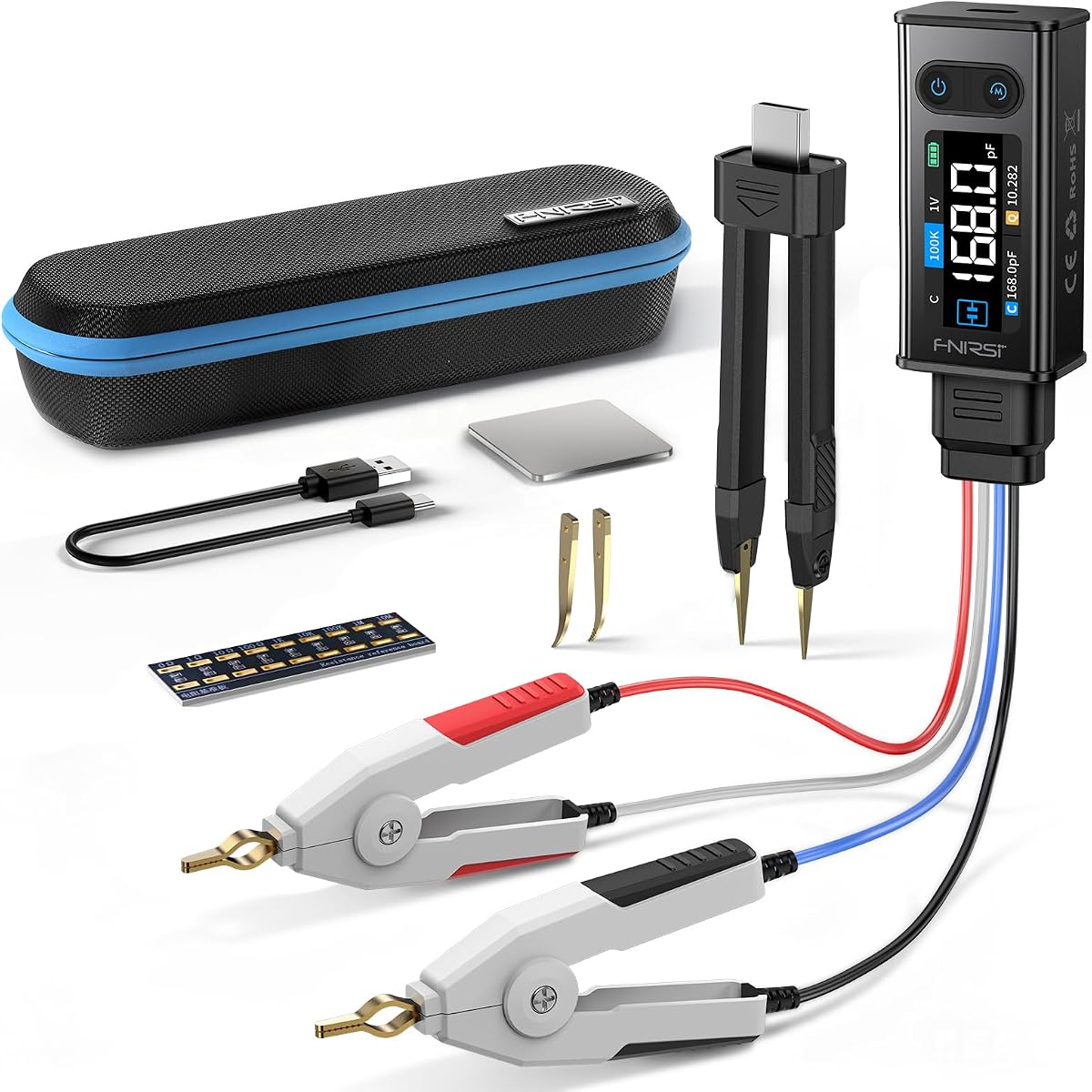


The FNIRSI LC1020E stands out as a top choice for hobbyists and technicians needing reliable component testing. With a 19,999 count display and support for frequencies up to 100kHz, it delivers precise measurements for inductors, capacitors, and resistors.
We may earn a commission when you buy through this link, at no additional cost to you.
Its dual parameter display allows simultaneous viewing of primary and secondary values like ESR or Q factor, streamlining the diagnostic process. The included sorting function helps quickly identify components within specific tolerance ranges, making it ideal for production or repair work.
While the device is powerful, users should ensure capacitors are fully discharged before testing to prevent damage. The battery life is generally good but may require frequent recharging if used extensively throughout the day without an external power source.
This unit is best suited for those who need a balance of portability and professional features. The bright TFT screen and intuitive interface make it easy to read in various lighting conditions, ensuring accurate data capture during critical tasks.
Viewing primary and secondary measurements at once saves time and reduces the need to switch modes frequently during complex testing sessions.
The built-in comparator alerts you when components fall within preset tolerances, speeding up quality control checks significantly.
We may earn a commission when you buy through this link, at no additional cost to you.
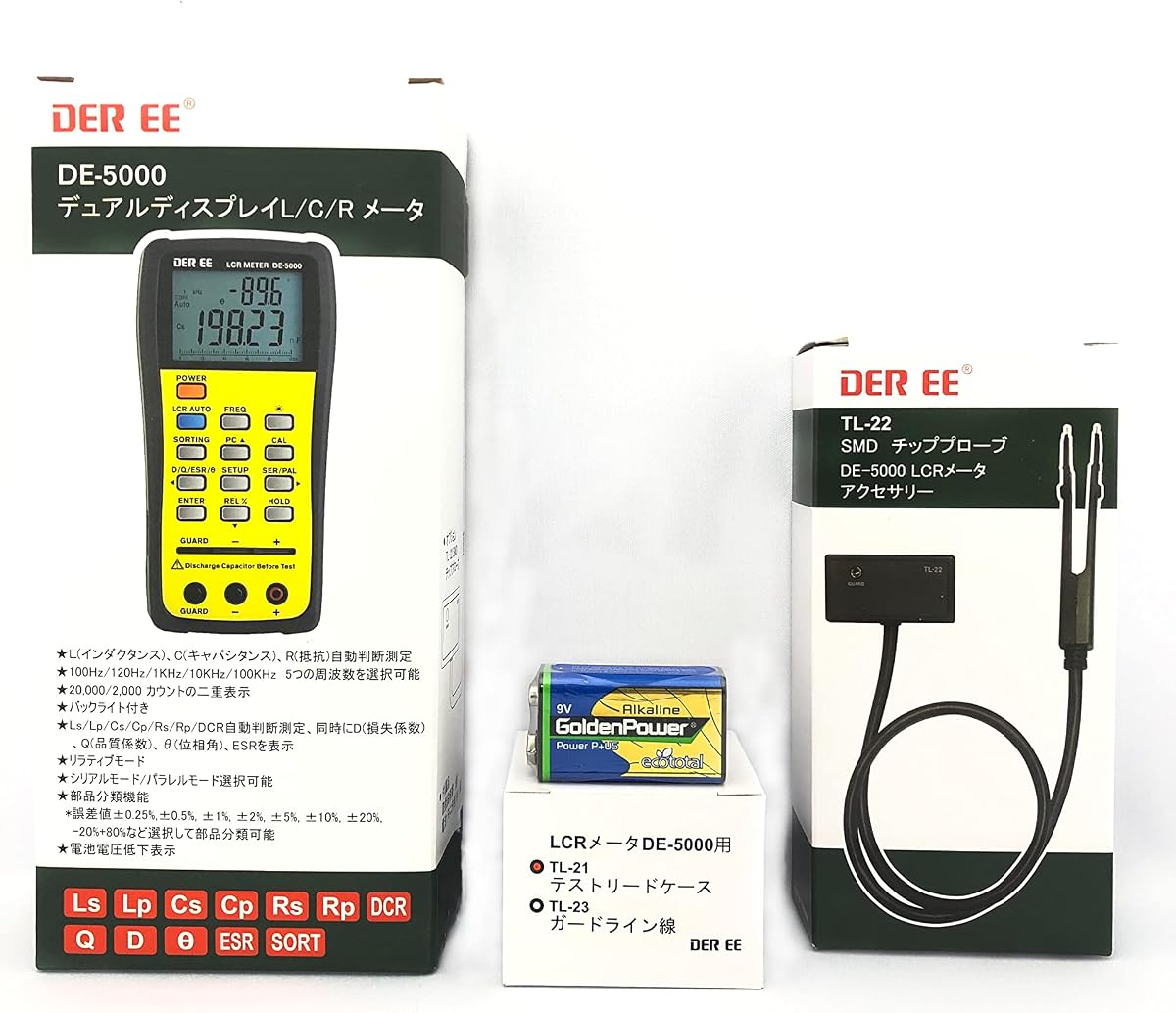
The DE-5000 is a classic handheld device known for its robust performance and straightforward operation. It offers auto ranging capabilities and supports a wide frequency range, making it suitable for a variety of electronic components.
We may earn a commission when you buy through this link, at no additional cost to you.
Users appreciate its ability to measure in serial or parallel modes automatically, which simplifies the testing process for different impedance types. The device provides clear readings and includes essential features like sorting and multiple test frequencies.
One limitation is the lack of a backlight, which can make readings difficult in low-light environments. Additionally, the interface relies on physical buttons that may feel less modern compared to newer touchscreen-enabled models.
This meter is ideal for field technicians who prioritize reliability and ease of use over advanced digital features. Its sturdy construction ensures it can withstand the rigors of daily use in challenging working conditions.
The automatic selection of ranges minimizes manual adjustments, allowing for quicker measurements during routine checks.
Supporting both series and parallel modes ensures accurate testing across a broad spectrum of component configurations.
We may earn a commission when you buy through this link, at no additional cost to you.
The MATRIX MCR5200 represents a high-end solution for laboratory and industrial applications requiring extreme precision. With 0.1% basic accuracy and frequencies up to 200kHz, it delivers detailed insights into component performance.
We may earn a commission when you buy through this link, at no additional cost to you.
Its 32-bit processor enables rapid measurements, while the USB and RS232C ports allow for easy data transfer to a computer for further analysis. The large display ensures clear visibility of complex data sets during extended testing sessions.
While excellent for bench work, this unit is not portable due to its size and power requirements. It is best reserved for environments where stability and accuracy are paramount over mobility.
This meter is recommended for professionals who need reliable data logging and high-frequency analysis. The included software and comprehensive accessory kit make it a complete solution for rigorous quality control processes.
The ability to take up to 30 measurements per second speeds up production line evaluations significantly.
Saving test conditions and results directly to a USB drive ensures no data is lost during long-term monitoring.
We may earn a commission when you buy through this link, at no additional cost to you.
This version of the DE-5000 comes as a complete kit, including essential test leads and a protective carrying case. It provides the same reliable performance as the standard model but adds convenience for on-the-go testing.
We may earn a commission when you buy through this link, at no additional cost to you.
The inclusion of SMD test leads makes it suitable for modern circuit boards, while the backlit display improves readability in darker conditions. Users can set tolerance levels for quick verification of components against specifications.
The added accessories increase the overall weight, which might be a consideration for extended field work. However, the convenience of having everything in one package often outweighs the minor inconvenience.
This set is perfect for professionals who need a ready-to-use solution without purchasing separate accessories. The carrying case protects the unit during transport, ensuring it remains in good condition for years of service.
Specialized tweezers allow for accurate testing of tiny surface mount components without slipping or damage.
Having all necessary leads and tools included simplifies setup, allowing immediate testing upon unboxing.
We may earn a commission when you buy through this link, at no additional cost to you.
The Proster LCR Meter is an excellent entry-level option for hobbyists and students. It offers essential functionality for measuring inductance, capacitance, and resistance at a very accessible price point.
We may earn a commission when you buy through this link, at no additional cost to you.
Its rotatable display is a standout feature, allowing users to read measurements comfortably from any angle without adjusting their grip. The kit includes test leads and a storage bag, ensuring you have everything needed to start.
While it lacks the high-frequency capabilities of premium models, it covers the needs of most general electronics projects. The simplicity of the interface makes it easy to learn and operate quickly.
This device is ideal for those new to component testing or working on basic repairs. Its durability and functional design provide good value for the price, making it a reliable companion for bench work.
The ability to rotate the screen reduces strain during long testing sessions, especially when working in awkward positions.
Providing core features at a fraction of the cost of high-end models makes professional testing accessible to everyone.
We may earn a commission when you buy through this link, at no additional cost to you.
This compact unit is designed for precision testing with integrated tweezers, making it ideal for surface mount components. Its small footprint allows it to fit easily into tight workspaces or travel kits.
We may earn a commission when you buy through this link, at no additional cost to you.
The auto-detect feature simplifies operation by identifying component types automatically, reducing the need for manual setting changes. The built-in magnet helps secure the device on a metal workbench, freeing up hands for other tasks.
While effective for small components, the integrated tweezers may wear over time with heavy use. Users should handle them carefully to maintain accuracy and extend the lifespan of the tool.
This meter is perfect for engineers who prioritize portability and ease of use. It bridges the gap between basic testers and professional-grade equipment, offering high utility in a pocket-sized form factor.
No extra probes are needed for SMD parts, allowing for immediate testing of components directly on the PCB.
The strong rear magnet keeps the meter steady, preventing accidental movement during delicate testing procedures.
We may earn a commission when you buy through this link, at no additional cost to you.
The Peak Atlas LCR45 offers impressive resolution for both inductance and capacitance, making it a strong choice for precise measurements. Its ability to measure impedance provides deeper insights into component behavior.
We may earn a commission when you buy through this link, at no additional cost to you.
With a maximum frequency of 200kHz, it covers a wide range of applications from audio to RF circuits. The menu system is straightforward, allowing users to navigate settings without confusion.
The device may have limited battery life compared to rechargeable modern units, but it remains dependable for standard tasks. Its simplicity and reliability make it a favorite among those who prefer straightforward tools.
This meter is best suited for users needing high-resolution data in a compact package. It is an excellent addition to any lab where precision and ease of operation are valued.
A resolution of 0.2uH allows detection of minute changes in inductance, crucial for sensitive circuit adjustments.
Testing up to 200kHz ensures compatibility with a wide variety of high-frequency electronic components.
We may earn a commission when you buy through this link, at no additional cost to you.
The B&K Precision 879B features a dual display that presents primary and secondary values simultaneously. This design enhances workflow efficiency, allowing technicians to monitor multiple parameters at once.
We may earn a commission when you buy through this link, at no additional cost to you.
Its backlit display ensures readability in dark environments, which is often a necessity in industrial settings. The device is designed to be comfortable to hold, reducing hand fatigue during prolonged use.
While it is heavier than some compact options, the build quality is robust and reliable. The USB interface facilitates easy data logging, making it suitable for documentation and reporting requirements.
This meter is recommended for professionals who need a balance of portability and advanced features. It is a solid investment for those who require consistent accuracy and clear data presentation.
Seeing primary and secondary data on one screen eliminates the need to toggle views, speeding up diagnosis.
The adjustable backlight allows for clear viewing in both dim and bright environments without glare.
We may earn a commission when you buy through this link, at no additional cost to you.
The Extech LCR200 is built to deliver accurate measurements for a wide range of passive components. Its dual backlight display ensures that readings are visible in various lighting conditions.
We may earn a commission when you buy through this link, at no additional cost to you.
A built-in test fixture allows for convenient testing without external leads for certain components. The device supports open and short calibration to minimize stray impedance and enhance accuracy.
Although it is slightly heavier than some modern handheld units, its durability is unmatched. It is designed to withstand rigorous use in industrial and professional environments.
This model is ideal for users who require a reliable workhorse for daily component checks. Its comprehensive features make it suitable for both casual and demanding technical applications.
Open and short calibration ensures that external factors do not interfere with measurement results.
The integrated fixture simplifies the testing process for small components, saving time and effort.
We may earn a commission when you buy through this link, at no additional cost to you.
The Pro1-100KHz stands out with its high accuracy and resolution, making it a reliable choice for precision work. It supports measurements down to 0.1pF, which is useful for identifying small capacitance variations.
We may earn a commission when you buy through this link, at no additional cost to you.
Its smart SMD tweezers integrate testing directly into the tool, streamlining the workflow for surface mount components. The device also includes diode testing functionality for broader diagnostic capabilities.
While the battery life is adequate, users may need to recharge frequently with heavy use. However, the accuracy and range provided are impressive for a handheld device of this size.
This unit is best for professionals who demand high precision in a portable format. The lifetime support and warranty add to its value, ensuring long-term reliability and peace of mind.
Measuring down to 0.1pF helps identify subtle component degradation that might otherwise be missed.
Combining LCR and diode testing in one device reduces the need for multiple tools in the toolkit.
We may earn a commission when you buy through this link, at no additional cost to you.
Selecting the right Lcr Meter involves considering several technical and practical factors to ensure the device meets your specific testing needs and environment requirements.
Accuracy refers to how close the measured value is to the actual value. Higher accuracy is crucial for professional and industrial applications where small deviations can lead to circuit failures. Look for meters with lower percentage error, such as 0.1%, for critical work.
Prioritize high accuracy for professional use to ensure reliable data and prevent costly errors in sensitive projects.
Different components behave differently at various frequencies. A wider frequency range allows you to test components under conditions that match their real-world operation. Most standard meters cover up to 100kHz, while premium models reach 200kHz or more.
Choose a frequency range that aligns with the operating frequencies of the components you frequently test for accurate results.
A clear and large display makes reading measurements easier, especially in low-light conditions. Backlit screens and color TFTs provide better visibility and can display multiple parameters simultaneously. High-resolution screens help reduce eye strain during long sessions.
Opt for a display with good visibility and backlighting to ensure you can read data clearly in any environment.
The included accessories can significantly impact usability. Some meters come with specialized tweezers for SMD components, while others provide standard clips. Having the right probes saves time and improves measurement accuracy for small or specific parts.
Check that the kit includes the necessary probes for your specific component types to avoid buying extras later.
Modern meters often feature USB or Bluetooth connectivity to save test data. This is essential for quality control and documentation. Devices with data logging allow you to track trends over time without manual recording.
Select a model with data logging if you need to archive results for reporting or analysis purposes.
Consider how the device is powered. Rechargeable batteries offer convenience but may have shorter runtimes compared to disposable ones. Ensure the meter has a low-battery indicator and reasonable power management features to avoid interruptions.
Choose a power source that fits your workflow, ensuring you won't run out of charge during critical tasks.
A sturdy build ensures the device can withstand drops and daily wear. Professional tools often have reinforced cases and high-quality components. Durability is key if you plan to use the meter in field or industrial environments.
Invest in a robust build if you require a tool that can survive tough handling and varied environments.
Prices vary significantly between budget and professional models. Ensure the warranty covers defects and offers support. A lifetime support policy can be a valuable asset if you rely on the device for critical operations.
Balance your budget with the expected lifespan and support options to get the best long-term value.
Start by calibrating the meter using the open and short functions. This ensures that any stray impedance from the test leads is compensated for, resulting in more accurate readings during actual tests.
Ensure that capacitors are fully discharged before testing. High voltage stored in a capacitor can damage the meter or cause injury. Always verify power is off in circuits before connecting test leads.
Store the device in a dry, cool place to protect the internal components. Keep the test leads organized and clean to prevent connection issues. Regularly check battery levels and charge or replace them as needed to maintain performance.
Multimeters can measure resistance and capacitance but often struggle with inductance and low-value capacitance. Lcr Meters provide precise measurements across multiple parameters at specific frequencies, which is essential for accurate component analysis.
Ideally, no. Components on a board can interact with other parts, leading to inaccurate readings. For best results, remove the component or isolate it. Some meters can measure in-circuit with care but results may vary.
Sorting mode helps categorize components based on tolerance. It alerts you if a component is within a specific range or outside it. This is useful for quality checks when you have a batch of parts to verify.
Calibration should be performed regularly or whenever you suspect accuracy issues. Follow the manufacturer's recommendations, typically every few months. Frequent calibration ensures consistent and reliable measurement results.
The right frequency depends on the inductor's application. A higher frequency like 100kHz is often used for RF parts while 1kHz is common for audio. Match the frequency to the operating conditions for the most relevant data.
Benchtop units offer higher accuracy and data features for lab work. Handheld units provide portability and ease for field repairs. Choose based on whether you prioritize precision or mobility for your tasks.
Yes, many modern Lcr Meters are designed to measure Equivalent Series Resistance. ESR is a critical parameter for checking capacitor health. A low ESR indicates a good capacitor while a high ESR suggests degradation.
Some advanced models include diode testing functions. This allows you to check forward voltage drop alongside other parameters. Verify the features of your specific meter to ensure it supports semiconductor testing.
We have explored ten distinct Lcr Meter models that cater to different needs ranging from budget-friendly entry options to high-precision benchtop systems. Each device offers unique features that can enhance your testing workflow.
When making a decision, consider the accuracy you need and the types of components you test most. Balancing these technical requirements with budget and portability will lead to the best choice for your specific situation.
Always verify the latest pricing and availability before purchasing since market conditions can change. We hope this guide helps you find a reliable Lcr Meter that supports your electronics projects effectively.