
Korg Volca Drum
4.4Editor score
Compact portable design
16-step sequencer
DSP synth engine
This guide compares the top digital drum machines for 2026, covering features, sound quality, and workflow to help you choose the perfect rhythmic tool.
Digital drum machines have revolutionized music production by offering portable, versatile, and powerful rhythmic capabilities. Whether you are a seasoned producer or a beginner exploring beatmaking, finding the right device is essential for crafting professional-sounding tracks.
We evaluated ten leading models based on sound engines, sequencing features, connectivity options, and user feedback. Our analysis highlights strengths in sampling, hybrid synthesis, and live performance to ensure you select a tool that matches your creative needs and budget.
Each pick showcases unique capabilities tailored to different workflows, from compact portable units to advanced standalone workstations. Note that pricing and availability can fluctuate, so verify current details before making your final purchasing decision today.
4.4Editor score

4.8Editor score

4.4Editor score
This side-by-side comparison outlines key specifications across all ten featured digital drum machines to help you quickly identify the model that best fits your specific production or performance requirements.


The Roland TR-8S Rhythm Performer stands out as a top choice for producers seeking a blend of classic drum machine heritage and modern production capabilities. Its high rating reflects widespread acclaim for its ability to deliver professional-grade sounds that suit both studio and live environments.
We may earn a commission when you buy through this link, at no additional cost to you.
This device excels by integrating authentic circuit models of legendary TR drum machines with the flexibility to import and manipulate custom samples via SD card. The sound design tools allow deep tweaking of decay, tuning, and start points, while the included software enhances workflow significantly.
While the TR-8S offers immense power, its advanced feature set may present a steeper learning curve for beginners. Additionally, the premium pricing positions it above budget options, but the durability and sonic versatility justify the investment for serious musicians.
It is an ideal purchase for electronic musicians and producers who need reliable performance-ready tools with extensive sound design freedom. If you value heritage meets modernity in your rhythmic creation, the TR-8S is a compelling flagship option to consider.
The TR-8S delivers detailed circuit models of the 808, 606, and 909, ensuring you have access to the most sought-after drum sounds in music history.
Import your own mono or stereo sounds to create hybrid kits that defy genre conventions, giving you complete creative control over your rhythmic texture.
We may earn a commission when you buy through this link, at no additional cost to you.
The Elektron Digitakt II is a powerhouse for producers who demand granular control over their beats and samples. It earns its rating through its robust 16-track architecture and sophisticated sequencing engine that supports complex rhythmic structures.
We may earn a commission when you buy through this link, at no additional cost to you.
Key strengths include three assignable LFOs per track and a wide array of effects like delay, reverb, and overdrive built directly into each track. The swappable filters and song mode allow for full composition editing, making it a standalone studio workstation.
Despite its capabilities, the interface can feel dense for newcomers accustomed to more visual systems. The learning curve is significant, requiring time to master parameter locks and conditional triggers effectively for dynamic performances.
This model is best suited for experienced electronic producers and sound designers who need deep sequencing power in a compact hardware format. If you prioritize intricate rhythmic programming and want full control over every parameter, the Digitakt II delivers.
Utilize parameter locks to change sound settings on individual steps, allowing you to create evolving and unpredictable patterns within a single sequence.
Swap filters easily between base, low-pass, comb, and legacy options to shape the tone of your drums with surgical precision during composition or live sets.
We may earn a commission when you buy through this link, at no additional cost to you.
The Korg Volca Drum offers an accessible entry point into digital percussion synthesis without sacrificing creative depth. It is highly rated for its ability to generate a wide range of unique drum sounds using its dedicated DSP engine and waveguide technology.
We may earn a commission when you buy through this link, at no additional cost to you.
Its standout features include the active step function that replaces steps to add variety and the slice function for intricate rhythms. The built-in speaker allows for on-the-go music creation, making it perfect for sketching ideas anywhere.
While the unit is highly versatile, its small interface limits quick visual feedback compared to larger models. Stereo sample handling is also limited, which might restrict users seeking complex layering or high-fidelity audio output.
This device is perfect for beginners or producers looking for a secondary portable unit to complement their main setup. Its affordability and unique sound engine make it an excellent choice for experimentation and live jamming.
The six-part DSP engine combined with a waveguide resonator adds rich resonances to drum sounds, creating textures that traditional samples cannot replicate easily.
Use randomize functions to change settings randomly or active step to alter patterns, providing instant inspiration and preventing repetitive groove writing.
We may earn a commission when you buy through this link, at no additional cost to you.
The Akai Professional MPC Sample delivers the iconic MPC workflow in a compact portable form factor. It is praised for its intuitive design that allows users to sample, chop, and create beats without needing a computer or DAW.
We may earn a commission when you buy through this link, at no additional cost to you.
Key strengths include a battery-powered design with a built-in microphone for instant sampling and responsive pads that capture dynamic input. The onboard FX processors with dedicated knobs provide creative sound design tools right in the palm of your hand.
While it is highly portable, the screen is small for navigating complex projects and storage relies on microSD cards. Advanced users might find the feature set simplified compared to larger MPC standalone units.
This is an ideal pick for DAWless creators and finger drummers who want to capture ideas on the move. If you love the MPC workflow but need a compact companion for live sets or travel, this unit fits perfectly.
Use instant sample chop mode and real-time timestretch to transform raw sounds into grooves quickly, keeping your creative momentum flowing without technical interruptions.
With internal battery and speaker support, you can record and playback tracks anywhere without external gear, making it a self-contained production hub.
We may earn a commission when you buy through this link, at no additional cost to you.
The teenage engineering EP-133 K.O. II is a unique portable sampler and sequencer that emphasizes speed and creativity. It features a redesigned build with double the memory of its predecessor to support more extensive sample libraries.
We may earn a commission when you buy through this link, at no additional cost to you.
It excels at live performance with punch-in effects controlled by a multifunctional fader, allowing real-time manipulation of filters and pitch. The sequencer engine supports rapid pattern swapping and instant freezing to build full tracks quickly.
While it offers impressive features for its size, the lack of a visual waveform display can make precise editing difficult. Polyphony limits may also restrict complex arrangements compared to larger professional samplers.
This device is best for travelers and casual musicians who need a fun and fast tool to sketch musical ideas. If you want a portable device that prioritizes workflow speed over complex editing, it stands out as a creative companion.
Build beats using four groups of 99 patterns and swap them instantly to find combinations that work together, mimicking a digital audio workstation workflow in hardware.
Record sounds from your environment using the built-in mic or line-in and then resample them on the fly to create layered textures and new sonic possibilities.
We may earn a commission when you buy through this link, at no additional cost to you.
The KORG drumlogue combines analog, digital, and multi-engine technologies to provide a versatile drum synthesis platform. It is designed for musicians who want to shape sounds using analog filters and open-source user oscillators simultaneously.
We may earn a commission when you buy through this link, at no additional cost to you.
Its standout feature is the dedicated volume knob for each part, allowing live mixing without navigating menus. The sequencer supports loop and chain functions for creating varied performances, while audio inputs let you process other instruments.
Despite its power, the user base is smaller leading to a lower rating compared to established models. The open-source engine requires some technical know-how to fully utilize, which might deter casual users.
This machine is ideal for sound designers and synthesists who want deep control over drum timbres. If you prefer hardware mixing and hybrid sound design over presets, the drumlogue offers a unique and powerful solution.
Load user oscillators or effects via USB-C and expand the sound palette with community-created tools, giving you freedom beyond stock factory options.
Use front panel knobs to adjust tuning and volume in real time during a performance, ensuring dynamic control over your drum mix.
We may earn a commission when you buy through this link, at no additional cost to you.
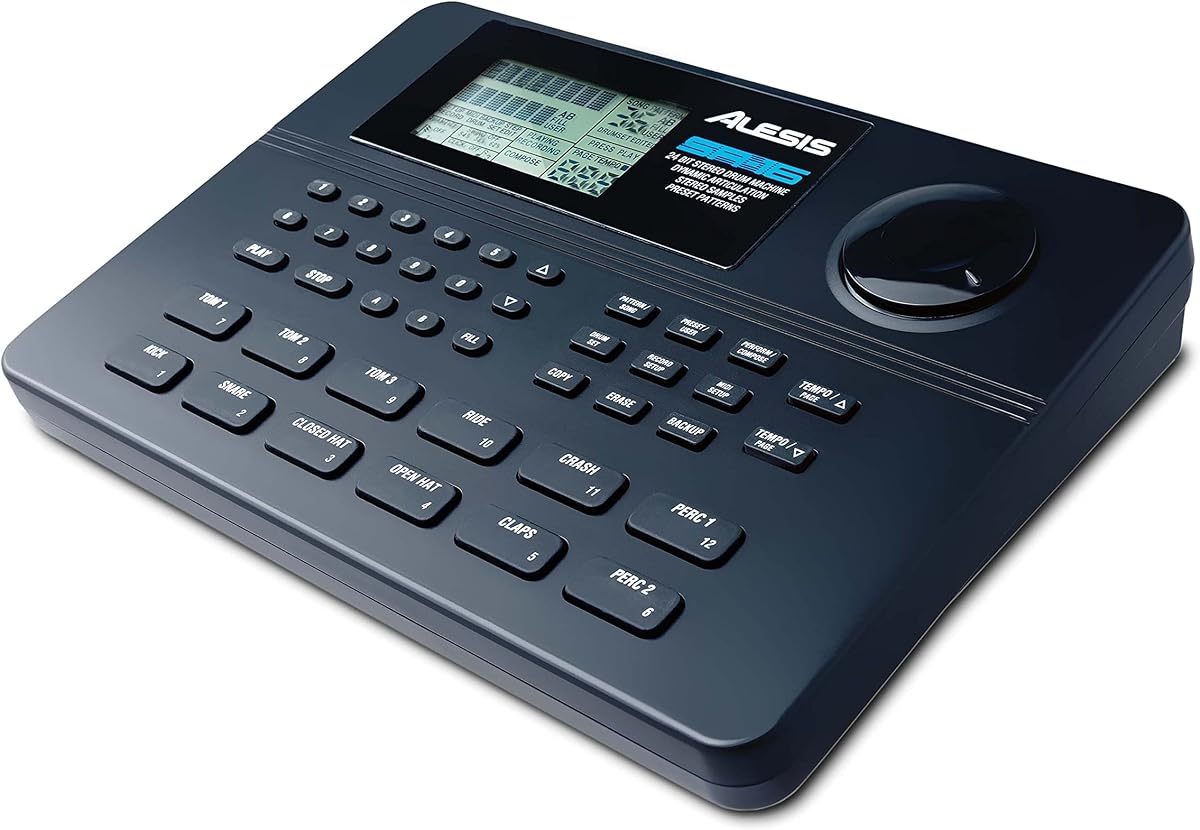
The Alesis SR-16 is a legendary classic drum machine known for its reliability and professional sounds. It remains a popular choice for songwriters and remix engineers who value straightforward operation and high-quality presets.
We may earn a commission when you buy through this link, at no additional cost to you.
Its strengths include 12 velocity sensitive pads with Dynamic Articulation and complete MIDI connectivity for integration with keyboards and computers. The built-in digital effects and stereo sample options add realism to your rhythmic productions.
Compared to modern units, its interface is older and lacks advanced sample import capabilities. While it covers most basic needs, complex sound design may be limited by its preset-centric architecture.
This device is a solid choice for live performers and songwriters needing a simple, reliable rhythmic companion. If you want classic sounds and straightforward workflow without modern software complexity, the SR-16 is a trustworthy option.
Expressive control is enabled by 12 pads that respond to touch, allowing dynamic performances that mimic real drumming dynamics.
Connect to any keyboard or computer to trigger sounds or sync patterns, ensuring the machine fits seamlessly into your existing gear setup.
We may earn a commission when you buy through this link, at no additional cost to you.
The Behringer LM DRUM offers a classic hybrid sampling drum machine paired with essential accessories like headphones and a cable. Its 5.0 rating reflects satisfaction with its superior sound quality and enhanced modularity for live use.
We may earn a commission when you buy through this link, at no additional cost to you.
It features 16 voices of sampling architecture and multiple audio outputs for flexible routing. The sequencer supports poly-meter and real-time triggering, while the integrated FX bus adds creative wave shaping options to your rhythms.
The bundle provides immediate setup convenience, though it adds physical bulk to the purchase. While the price includes extra items, users needing only the machine should verify if standalone sales are available.
This package is ideal for performers needing a complete live drum kit without extra purchases. If you appreciate hybrid sounds and want a ready-to-play solution with included monitoring gear, this bundle delivers strong value.
With included headphones and audio cable, you can start creating sounds immediately after unboxing, saving time on searching for essential accessories.
Use 16 independent analog outputs to process individual parts externally, offering studio-level control and sound design possibilities in a live setting.
We may earn a commission when you buy through this link, at no additional cost to you.
The Singular Sound BeatBuddy 10th Anniversary Edition brings drum machine capabilities into a pedal format for musicians. It allows hands-free control of beats, making it perfect for solo performers and singer-songwriters.
We may earn a commission when you buy through this link, at no additional cost to you.
It features studio-quality sound that mimics a real drummer, with over 200 songs across 24 genres and a massive storage capacity. The visual metronome helps improve timing, ensuring complex rhythms stay precise during live sets.
As a pedal unit, it lacks the complex sequencing features of traditional drum machines. Users cannot create custom arrangements easily, relying instead on pre-loaded patterns and fills which may limit creative flexibility.
This is the best choice for guitarists and solo artists needing a backing band without extra equipment. If you want to control beats with your feet during a live show, this pedal offers unmatched convenience.
Use two foot switches to start stop and fill drum parts, keeping your hands free for guitar or vocals while maintaining rhythmic precision.
The LCD screen displays timing visually to help you master complex signatures and stay on beat without needing external metronome devices.
We may earn a commission when you buy through this link, at no additional cost to you.
The Yamaha DTX Multi Pad offers an extensive sound library including over 1,000 percussion and effect sounds. It is a versatile device for adding textures and rhythmic layers to both electronic and acoustic setups.
We may earn a commission when you buy through this link, at no additional cost to you.
Key features include mute and layer functions to manage multiple sounds easily, and a sequencer that supports preset loops. User sample storage allows you to load custom audio, extending its utility beyond stock kits.
While it offers a broad sound palette, the interface feels dated compared to modern units. Navigating the menus can be slow, which may interrupt the creative flow during live performances.
This pad is best for musicians who need a wide variety of sounds and effects at their fingertips. If you want a dedicated device for layering textures without heavy processing, it provides a practical solution.
Choose from over 1,000 drum and percussion sounds plus keyboard tones, giving you a rich palette for creative composition and live performance.
Quickly mute or layer specific sounds to manage your mix in real time, ensuring you can focus on performance without getting lost in menus.
We may earn a commission when you buy through this link, at no additional cost to you.
Selecting the right digital drum machine depends on balancing sound engines, sequencing depth, portability, and workflow preferences. This section breaks down the critical factors to consider before making your purchase.
The sound engine defines the character of your drums whether it is sampling synthesis or analog. Look for models with circuit modeling or waveguide technology if you crave authenticity or unique textures.
Prioritize machines with high-quality samples or open-source engines that allow you to import custom sounds for a personalized sonic palette.
Sequencers vary from basic step programs to complex parameter-locking systems. Determine if you need song mode Euclidean generators or conditional triggers to build dynamic rhythms.
A flexible sequencer should support pattern swapping and chaining to help you avoid repetitive loops and create evolving musical structures.
For live performers or travelers, battery power and built-in speakers are essential. Check weight and dimensions to ensure the unit fits your gig bag or studio setup comfortably.
Compact units are ideal for sketching ideas but verify they still offer enough audio outputs for external mixing needs.
Ensure the drum machine supports MIDI USB-C and audio sync to integrate with your DAW or other hardware. Multiple outputs allow you to route tracks separately for better control in the mix.
Look for audio input features if you want to process external instruments through the drum machine's effects chain.
If you want to use your own recordings, check for SD card slots or USB file transfer capabilities. Storage capacity impacts how many custom kits or loops you can keep ready for use.
Prioritize models that allow sample importing without complex software workflows to maintain creative freedom.
Prices range from affordable starter units to premium workstations. Decide whether you need basic presets or advanced sound design tools to justify higher costs.
Consider bundles that include cables or headphones to get immediate value if you are setting up a new production space.
A well-designed interface with physical knobs for volume and filtering speeds up your workflow. Avoid models with overly complex menus if you prioritize quick live adjustments.
User feedback and reviews can highlight how intuitive the layout feels during actual production sessions.
Built-in effects like delay reverb and distortion can transform basic drum sounds into professional mixes. Look for dedicated effects controls on the panel for real-time manipulation.
Some machines allow you to assign effects per track, giving you granular control over the atmosphere of your rhythms.
Start by connecting your drum machine to a power source or inserting fresh batteries to ensure stable performance. Use audio cables to link the outputs to speakers or an interface and adjust volume levels carefully to avoid distortion.
Familiarize yourself with the sequencer and pad layout by trying preset patterns before building your own. Utilize features like active step or randomize to introduce variation into your beats and keep your tracks dynamic.
Maintain your device by keeping it clean and storing it in a dry cool place when not in use. Regularly update firmware if supported and back up custom kits to external storage to prevent data loss.
Yes, most digital drum machines offer standalone operation allowing you to create mix and playback tracks without a DAW. Look for models with SD card storage and built-in speakers for fully portable workflows.
Many modern drum machines support sample import via SD card or USB. Check the product specifications for file formats supported like WAV or MP3 to ensure compatibility with your custom recordings.
Sample drums use recorded audio files for realistic sounds while synthesis drums generate sound electronically for unique textures. Hybrid machines combine both to offer the best of both worlds.
Yes they are excellent for live sets due to their reliability and instant playback. Models with dedicated performance controls and audio outputs allow seamless integration into live rigs.
Most units include MIDI USB and sync ports to link with synthesizers computers and mixers. Verify connectivity options match your existing setup to ensure smooth integration.
You can usually expand sounds by loading factory or user packs via SD card or USB. Some models also support open-source engines for community-created oscillators and effects.
This guide presented ten top-rated digital drum machines ranging from compact samplers to advanced hybrid workstations. Whether you need affordability or deep sound design, each model offers distinct strengths tailored to different musical needs.
Prioritize factors like sound engine flexibility sequencing depth and portability based on your workflow goals. Choosing the right tool can elevate your production quality and keep your creative process engaging and efficient.
Prices and availability may change over time so always verify current listings before purchasing. Take advantage of bundles and promotions to maximize value while securing the best equipment for your setup.