
Lenovo ThinkPad P16s Gen 4 Laptop, 16" FHD+, Intel Ultra 7 255H, 32GB/1TB
4.0Editor score
Intel Ultra 7 255H
Portable Design
32GB DDR5 Memory
Wi-Fi 7 Support
Electrical engineers require powerful tools to handle complex simulations, CAD designs, and data analysis efficiently. A reliable laptop ensures you can work on critical projects without performance bottlenecks or hardware failures during important deadlines.
We evaluated ten top-rated laptops based on processor speed, graphics capabilities, memory capacity, and build durability. Each model was assessed for its ability to run industry-standard software like MATLAB, AutoCAD, and SPICE smoothly.
Our picks highlight unique strengths for different budgets and workflow needs. Prices and availability change frequently, so verify current details before purchasing to ensure you get the best value for your engineering requirements.
4.0Editor score

4.4Editor score

5.0Editor score
As an Amazon Associate we earn from qualifying purchases.
This side-by-side comparison highlights the key specifications and strengths of each laptop to help you find the right match for your engineering coursework or professional projects.




This Dell Precision 7680 stands out as a powerhouse for electrical engineers needing serious compute power. Its Intel i9 processor and 32GB of RAM handle complex simulations and CAD rendering without breaking a sweat.
We may earn a commission when you buy through this link, at no additional cost to you.
The workstation class design ensures that professional software like MATLAB and AutoCAD run with certified stability. You can connect up to three external monitors at 4K resolution, giving you ample screen real estate for schematic design.
While it is not the lightest option on the market, the trade-off is justified by the raw performance and durability. The MIL-STD-810H testing means it can handle the rigors of daily lab work or site visits.
If you need a reliable machine that won't hold you back during critical engineering tasks, this model is the top recommendation. It balances performance and expandability better than most consumer laptops in its class.
The i9-13950HX processor delivers sustained clock speeds necessary for running multi-threaded engineering simulations efficiently without throttling under load.
Support for three 4K external monitors via Thunderbolt 4 allows you to keep code, schematics, and reference materials visible simultaneously for enhanced productivity.
We may earn a commission when you buy through this link, at no additional cost to you.
This configuration offers a dedicated NVIDIA RTX 1000 Ada GPU which is beneficial for visualizing circuit designs and 3D models more smoothly than integrated graphics. The 32GB of RAM ensures you can run multiple engineering applications at once.
We may earn a commission when you buy through this link, at no additional cost to you.
Ideal for students or junior engineers who need workstation capabilities without the highest price tag. It supports up to four external monitors, providing excellent flexibility for desktop replacement scenarios in a lab environment.
The i5-13600HX processor is capable but may struggle with extremely heavy rendering tasks compared to the i9 variant. However, for general circuit simulation and coding work, it remains very responsive and efficient.
Consider this if you need certified stability for professional software and want to save some cost compared to the flagship model. It maintains the robust chassis and port selection of the Precision line.
The RTX 1000 Ada GPU provides necessary acceleration for CAD visualization and rendering tasks that integrated graphics might struggle to handle smoothly.
Support for four external monitors allows you to extend your workspace significantly when connected to a dock at a fixed workstation.
We may earn a commission when you buy through this link, at no additional cost to you.
The ThinkPad P16s Gen 4 balances portability with power, making it easier to carry between classes or job sites. It still includes ISV certifications so professional tools will run reliably without unexpected crashes.
We may earn a commission when you buy through this link, at no additional cost to you.
With Intel Ultra 7 255H processing and 32GB RAM, it handles daily engineering tasks like coding and schematic entry efficiently. The Wi-Fi 7 ensures fast connection speeds when downloading large project files or working in the cloud.
While it lacks a dedicated GPU for heavy rendering, it is sufficient for most electrical engineering coursework and professional drafting. The anti-glare screen helps reduce eye strain during long sessions reviewing complex schematics.
This is the best choice if you prioritize mobility and need a trustworthy machine for general engineering work. It offers a solid entry point into professional workstation class hardware without breaking the bank.
Its lighter build compared to full 16 inch workstations makes it ideal for students or engineers who travel frequently to different work sites.
Wi-Fi 7 support ensures your device can connect to the latest high speed networks for faster data transfer and stable video conferencing.
We may earn a commission when you buy through this link, at no additional cost to you.
This top-tier configuration is built for engineers who run massive simulations or need to virtualize multiple operating systems locally. The 64GB of RAM is a game changer for running memory-intensive data analysis tasks smoothly.
We may earn a commission when you buy through this link, at no additional cost to you.
Combined with the RTX 2000 Ada GPU, it excels at rendering complex 3D models and handling real-time visualization tasks. The 2TB SSD ensures you have plenty of space for large project libraries and datasets.
It is on the heavier side and comes with a higher price tag which might not be necessary for standard coursework. However, for professional R&D or senior engineering roles, the performance gain is absolutely worth the investment.
Choose this if you demand the absolute best performance available in a laptop chassis and need to push your hardware to its limits for demanding engineering workflows.
64GB of RAM allows you to run multiple virtual machines simultaneously for testing software across different environments without performance degradation.
The RTX 2000 Ada GPU handles professional visualization tasks with ease, reducing wait times during rendering and simulation processes.
We may earn a commission when you buy through this link, at no additional cost to you.
This variant trades maximum memory for storage and GPU power, making it suitable for engineers who work with large datasets locally. The RTX 2000 Ada ensures smooth performance in graphics-heavy CAD applications.
We may earn a commission when you buy through this link, at no additional cost to you.
The i7-13850HX provides ample processing power for most engineering software without the extra cost of the i9. It is a solid choice for professionals who need workstation reliability for daily tasks.
However, for some complex multi-threaded workloads, 32GB of RAM might become a bottleneck compared to the 64GB version. The price is still significant compared to standard consumer laptops.
It is worth considering if you need more storage than 1TB and do not require extreme RAM capacity. It offers a balanced high performance option for serious engineering work.
The 2TB SSD provides ample space for storing extensive project archives and large simulation datasets locally on the device.
NVIDIA RTX 2000 Ada graphics deliver professional level performance for rendering and visualization tasks essential in design workflows.
We may earn a commission when you buy through this link, at no additional cost to you.
Weighing only 3.13 lbs, this mobile workstation is perfect for engineers who need to travel frequently. Despite its small size, it includes ISV certifications to ensure compatibility with tools like SolidWorks and MATLAB.
We may earn a commission when you buy through this link, at no additional cost to you.
The Intel Core Ultra 7 165U processor offers excellent battery efficiency while still providing enough power for general engineering tasks. The 32GB of DDR5 RAM allows for smooth multitasking between different software applications.
Screen real estate is limited to 14 inches which can be tight for complex diagrams. However, it supports three external monitors to overcome this limitation when connected to a desk setup.
If portability is your main priority and you need a certified laptop for daily engineering work, this is a fantastic choice. It balances weight and performance better than almost any other workstation in this class.
At under 3.2 lbs, this device fits easily into small backpacks making it ideal for commuting to job sites or client meetings.
Independent Software Vendor certifications guarantee that major engineering tools will run without stability issues on this hardware platform.
We may earn a commission when you buy through this link, at no additional cost to you.
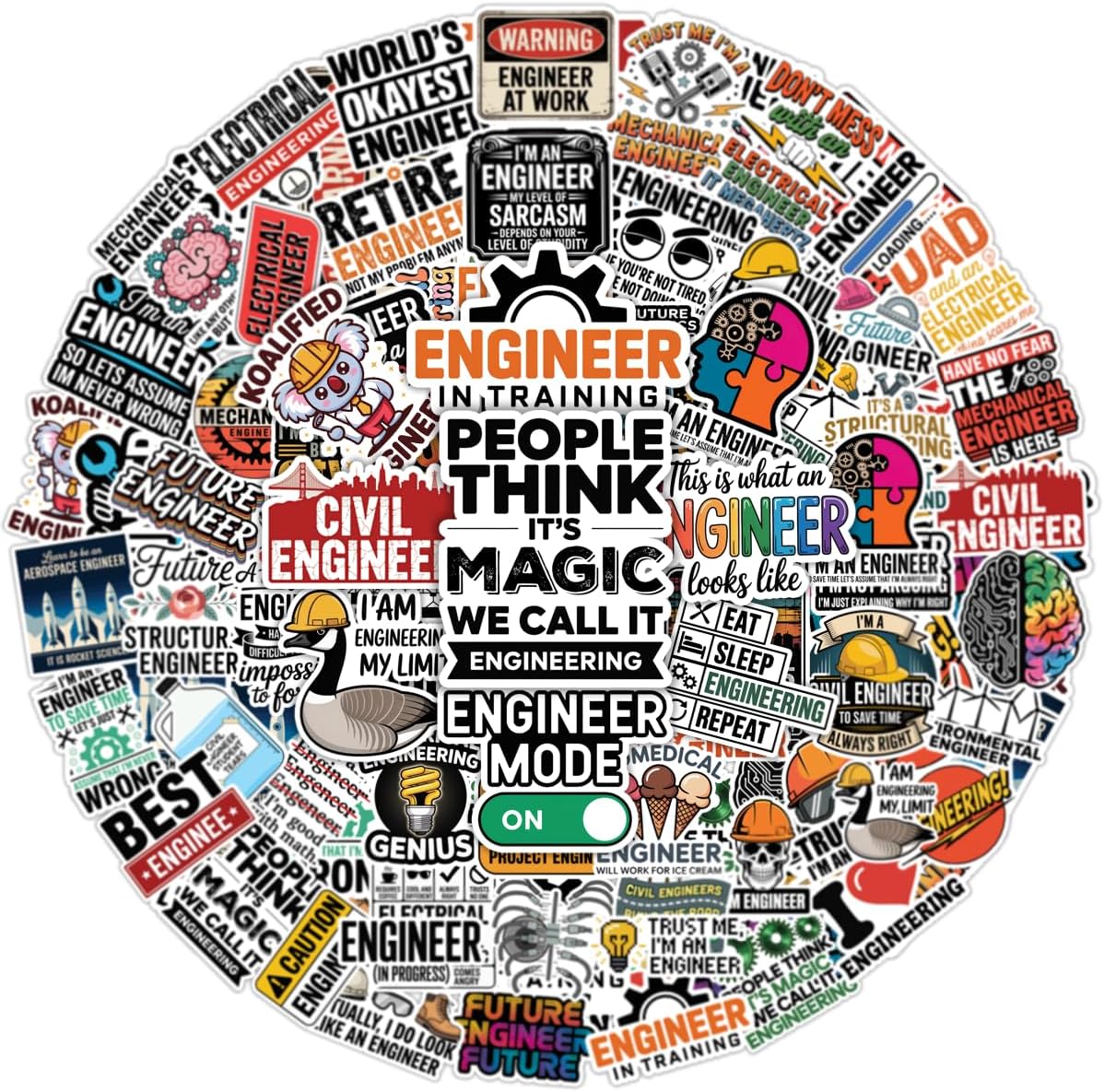
While not a laptop, these stickers are a popular accessory for personalizing your engineering gear. They feature themes relevant to electrical and mechanical engineering which makes them fun to display on laptops or water bottles.
We may earn a commission when you buy through this link, at no additional cost to you.
Made from durable vinyl, they resist water and UV rays so they stay vibrant even if you work in a workshop environment. They peel and stick easily without leaving residue behind when you want to change them.
These are perfect for students who want to show their pride in the engineering field on their daily carry items. They can also serve as a lighthearted gift for classmates or colleagues.
Include these in your purchase if you want to add some style to your setup. They do not affect laptop performance but do add a personal touch to your workspace.
The waterproof vinyl construction ensures the decals remain intact even in humid or wet workshop conditions.
Simple to apply to smooth surfaces like laptops without needing special tools or adhesives.
We may earn a commission when you buy through this link, at no additional cost to you.
The 7780 features a 17.3 inch screen that provides a massive workspace for detailed engineering drawings. It is designed primarily as a desktop replacement rather than a machine you carry every day.
We may earn a commission when you buy through this link, at no additional cost to you.
Powered by an i9 processor and RTX 2000 Ada graphics, it offers top of the line performance for simulations and rendering. The display quality is excellent with high brightness for outdoor visibility.
Due to its size and weight, it is cumbersome to transport frequently. This makes it best suited for fixed locations like an office or lab bench where mobility is less critical.
Choose this if screen real estate is your primary need and you want powerful hardware without needing to use external monitors.
The 17.3 inch screen offers significant workspace for detailed schematic work and multi-window applications without external monitors.
The i9 processor ensures that heavy computational loads are handled quickly during complex design or analysis tasks.
We may earn a commission when you buy through this link, at no additional cost to you.
These stickers add a touch of humor to your engineering gear with quotes about volts and amps. They are designed to be durable enough to withstand rough conditions in a toolbox or on a helmet.
We may earn a commission when you buy through this link, at no additional cost to you.
The vinyl is high quality and resistant to weather which ensures they last through daily wear and tear. They peel off cleanly without leaving sticky residue if you decide to move them.
These make great small gifts for classmates or fellow engineers who appreciate technical humor. They are also suitable for personalizing water bottles or tool boxes used on site.
If you want to show some personality on your equipment, these are a fun affordable option to consider adding to your order.
Designed to withstand outdoor conditions and rough handling in industrial or workshop environments without fading or peeling.
Suitable for application on laptops, hard hats, toolboxes, and other smooth surfaces where personalization is desired.
We may earn a commission when you buy through this link, at no additional cost to you.
This laptop is suitable for basic tasks like writing reports and simple coding. It offers a large 17 inch screen at a budget friendly price point which helps when funds are tight.
We may earn a commission when you buy through this link, at no additional cost to you.
However, it lacks the memory and processor power required for professional CAD software or heavy simulations. It may struggle with multitasking several applications at once.
For students starting out or for tasks that do not require heavy compute power, it can serve as a secondary device. It is best paired with cloud services to handle the heavier lifting.
Choose this if you need a cheap machine for basic writing and browsing without professional engineering software requirements.
Provides an affordable entry point for general computing needs without compromising on screen size for reading documents.
Suitable for writing reports, browsing documentation, and light web based tasks but not for heavy engineering software.
We may earn a commission when you buy through this link, at no additional cost to you.
Selecting the right laptop for electrical engineering requires balancing performance specs with portability. We highlight the most critical factors to consider before making your purchase.
Electrical engineering software such as MATLAB and LTspice benefits significantly from multi-core processing power. Look for modern Intel Core i7 or i9 processors or AMD Ryzen equivalents to handle simulations smoothly.
A powerful CPU ensures that rendering times are short and that complex calculations complete without lag.
RAM is critical when running virtual machines or multiple engineering tools at once. At least 32GB is recommended for professional work to prevent slowdowns when switching between heavy applications.
More memory allows you to keep more tabs and projects open without reloading them from storage repeatedly.
While basic CAD tasks can run on integrated graphics, dedicated GPUs like NVIDIA RTX series accelerate rendering and visualization. This is especially helpful for 3D modeling and complex circuit visualizations.
A dedicated graphics card ensures smoother performance when using professional software with heavy graphical loads.
A high resolution anti-glare screen is vital for reviewing detailed schematics and preventing eye strain. Look for at least FHD+ resolution with good brightness for visibility in various lighting conditions.
Quality displays help you spot errors in drawings and read small text for extended periods comfortably.
If you need to carry your laptop to lectures or job sites, weight and battery life become major factors. Lighter chassis designs with solid battery endurance will make your day less taxing physically.
Balancing weight with performance ensures your machine fits easily into your daily commute without feeling burdensome.
Many engineering applications require ISV certification to guarantee stability and proper functionality. Choosing a laptop with this certification helps avoid crashes when running critical professional tools.
ISV certification ensures that your software runs reliably and efficiently without unexpected errors during use.
Workstations often need to survive travel and rough handling in labs. MIL-STD testing indicates a device can withstand drops and extreme temperatures better than standard laptops.
A durable chassis protects your investment and ensures the device lasts through long academic or professional projects.
Multiple ports including USB-C and Thunderbolt allow easy connection to monitors and peripherals. Ensure your laptop has the necessary inputs for your specific lab equipment or monitors.
Good connectivity means you can set up a multi-monitor workstation effortlessly without needing excessive adapters.
Keep your laptop in a ventilated area while running simulations to prevent overheating. Using a cooling pad can help maintain performance during long rendering sessions or data analysis.
Regularly update your drivers and operating system to maintain compatibility with engineering software. This ensures that new features are available and that security vulnerabilities are patched promptly.
Back up your project files to a cloud service or external drive to prevent data loss. Engineering work often involves critical files that must be protected against hardware failure or accidental deletion.
Students should look for at least an Intel Core i7 processor, 32GB of RAM, and a dedicated GPU if possible. ISV certification is also valuable to ensure compatibility with required academic software.
Windows is generally better due to broader software support for CAD and engineering tools. Many engineering applications are optimized for Windows and may not run natively on macOS.
At least 1TB is recommended for storing large project files and software libraries. Solid State Drives provide faster access to data which improves overall workflow efficiency.
Yes a dedicated GPU is highly recommended for smooth performance in 3D modeling and rendering applications. Integrated graphics may struggle with complex visuals and slow down your work.
Chromebooks generally cannot run professional engineering software due to OS limitations. You need a Windows or macOS machine to access essential tools like MATLAB or SolidWorks.
Good battery life allows you to attend long lectures or work on site without needing constant power access. It increases mobility and ensures you can complete work even if outlets are unavailable.
We highlighted top choices including the Dell Precision 7680 and Lenovo ThinkPad P16s for their balance of power and portability. These models offer the performance required for complex engineering tasks and simulations.
Prioritize specs like RAM and processor speed to ensure your laptop can handle future coursework or projects. A powerful machine will last longer and remain useful as your needs grow over time.
Check current prices and availability before purchasing to ensure you get the best deal. Technology prices fluctuate so timing your purchase can help you save while securing the performance you need.