
SUNLU Filament Dryer Box S1 Plus
4.3Editor score
Fan assisted drying process
Visual humidity display included
Compatible with many materials
This guide compares the top filament dryer for 3D printing options available this month to help you choose the right moisture control solution.
Filament dryers are essential tools for anyone serious about 3D printing quality. They remove moisture from spools to prevent defects like stringing and poor adhesion during your prints.
We compared ten leading models based on capacity, heating technology, user interface, and overall value. Each entry offers unique features tailored to different printing needs and budgets.
Every pick highlights key strengths and trade-offs to help you decide. Remember that stock and pricing change frequently so check availability before making your final purchase decision today.
4.3Editor score

4.6Editor score

4.5Editor score
This table provides a side by side overview of all ten models discussed in this guide. Compare capacity, heating speed, and key features to find the right fit.



The Creality Space Pi X4 stands out as the top choice for serious 3D printing enthusiasts. It combines high performance with excellent capacity to handle large print jobs without interruption.
We may earn a commission when you buy through this link, at no additional cost to you.
Its dual heating chambers allow for rapid moisture removal which is crucial for advanced materials like ABS or Nylon. The touch interface offers precise control to ensure perfect results every time.
While it costs more than basic models the efficiency gains justify the investment. Users benefit from consistent prints and reduced waste over the long term using this unit.
Buyers seeking reliability and speed should consider this model first. It delivers professional grade drying and storage in one convenient sealed package for any home studio.
The dual heating setup reduces drying time significantly compared to single chamber units.
Holding up to four spools ensures you have enough material for complex multi-day projects.
We may earn a commission when you buy through this link, at no additional cost to you.
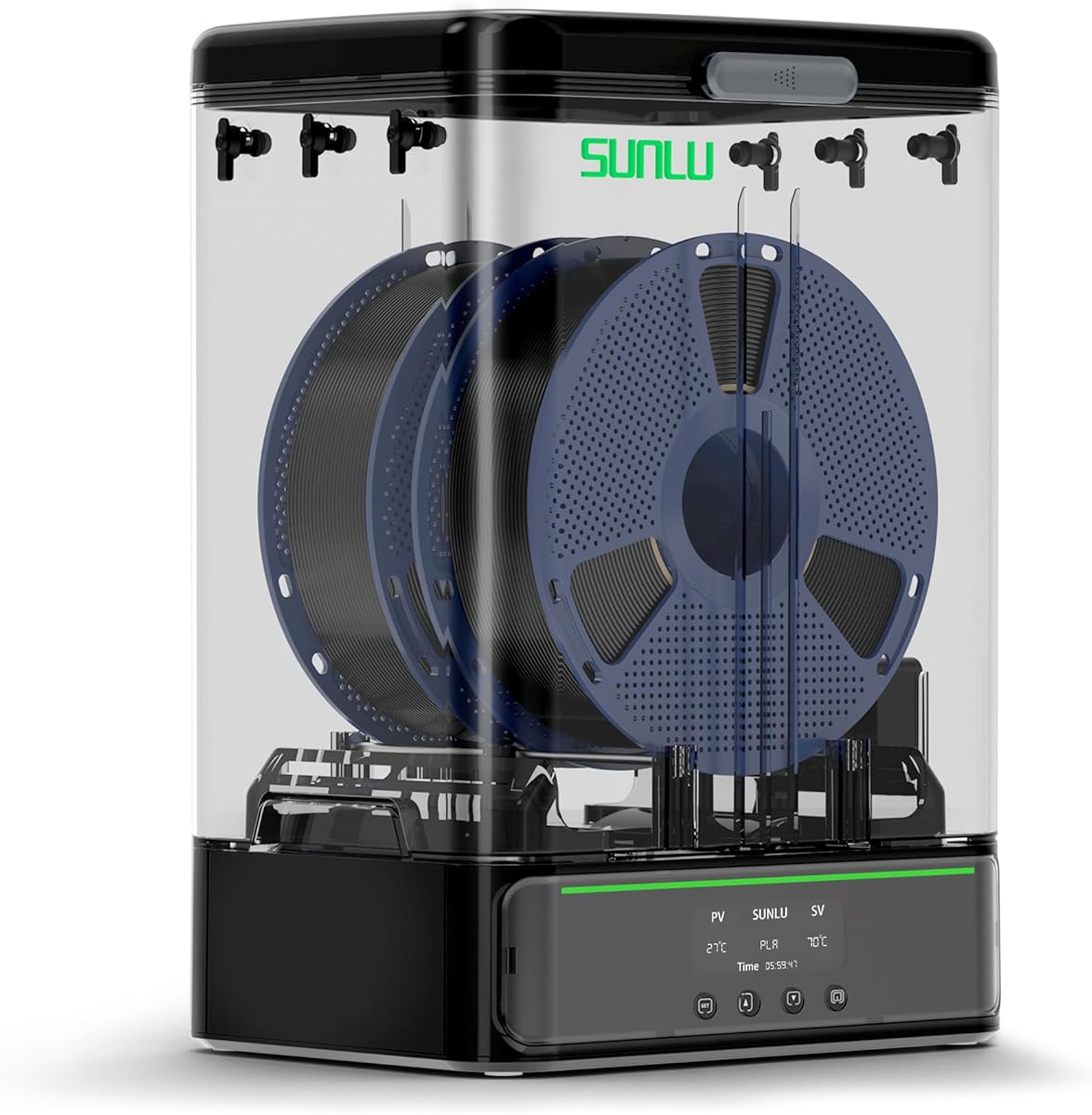
The SUNLU S1 Plus offers incredible value for beginners or those on a tight budget. It provides essential drying features without the high cost of premium competitors.
We may earn a commission when you buy through this link, at no additional cost to you.
The inclusion of a fan helps move air around faster which improves moisture removal efficiency. The display clearly shows temperature and humidity so you can monitor progress easily.
Some users note the build feels less robust than higher end options. However for standard PLA and PETG printing this model performs well enough for most daily needs.
This is the ideal entry level unit for new 3D printer owners. It solves common filament issues effectively while keeping your initial investment low.
This model proves you do not need to spend a lot to get good drying results.
Simple buttons and a clear screen make operation intuitive for everyone.
We may earn a commission when you buy through this link, at no additional cost to you.
The SUNLU S4 is a powerhouse designed for users who need to dry multiple spools simultaneously. Its high wattage heater ensures quick turnaround times for busy print shops.
We may earn a commission when you buy through this link, at no additional cost to you.
Eight exit holes allow connection to multiple printers at once which streamlines production workflows. The large internal space accommodates various spool sizes with ease and flexibility.
Its size means you need dedicated counter space to use it properly. Additionally the advanced features might be overkill for casual hobbyists who only print occasionally.
If you run multiple machines this unit is a game changer for efficiency. It delivers consistent heat and airflow across a large volume of filament at once.
Multiple outlet points let you feed several machines from a single drying source.
The high wattage PTC heater maintains stable temperatures for difficult materials.
We may earn a commission when you buy through this link, at no additional cost to you.
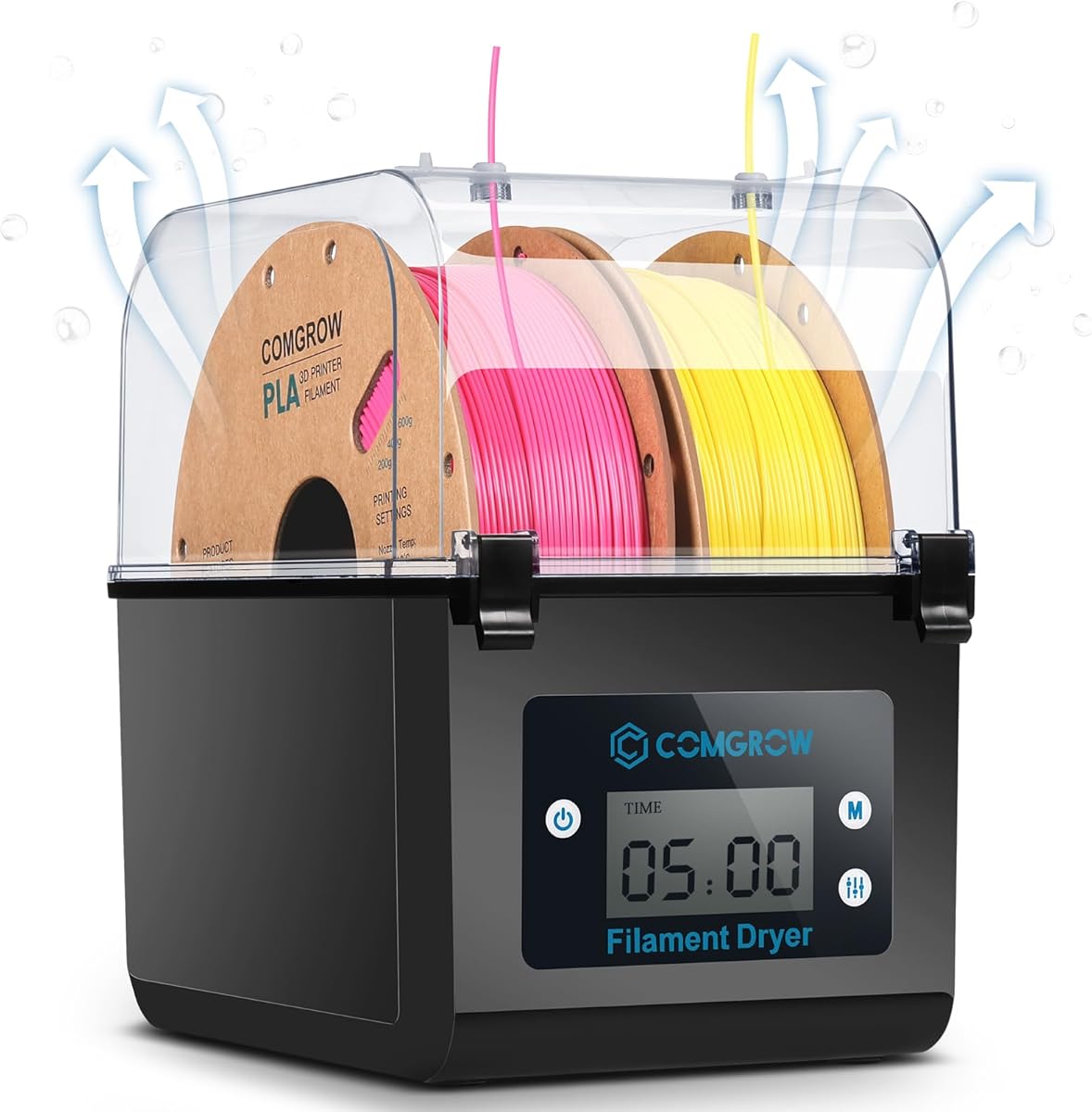
The Comgrow SH01 is a solid choice for those needing basic drying functionality without complex features. It keeps filaments dry during printing with reliable sealing and simple controls.
We may earn a commission when you buy through this link, at no additional cost to you.
Its design focuses on preventing re-absorption of moisture through good sealing mechanics. The touch buttons and screen make it easy to set your desired drying parameters quickly.
The maximum temperature is lower than some advanced units which limits use with high temp materials. But for standard PLA and ABS it works effectively and efficiently.
This model suits hobbyists who want a straightforward tool for daily use. It balances cost and performance well for general printing needs.
The sealed design keeps humidity out even when the dryer is not running.
Touch controls allow quick adjustments without needing a manual.
We may earn a commission when you buy through this link, at no additional cost to you.
The Creality Space PI Plus brings modern tech to filament drying with one touch presets for common materials. This saves time and ensures optimal settings without manual guessing.
We may earn a commission when you buy through this link, at no additional cost to you.
Its 360 degree hot air system provides even heating which prevents spots on the spool from staying wet. The touch screen adds a sleek look and intuitive control.
While it supports dual spools it may not be enough for large volume users. The mid range price reflects its balance between basic and premium features.
This is a great middle ground for users who want convenience and quality. The presets make it easy to switch between materials quickly.
Twelve preset settings cover most common filaments for easy one touch drying.
Fan driven hot air ensures all parts of the spool reach target temperature.
We may earn a commission when you buy through this link, at no additional cost to you.
Polymaker focuses on a holistic approach by combining drying and long term storage in one unit. This helps maintain dry conditions between prints to keep filament ready for use.
We may earn a commission when you buy through this link, at no additional cost to you.
The built in hygrometer lets you track humidity levels inside the box easily. Desiccant support further ensures that moisture stays out for extended periods.
It lacks active fans for rapid circulation which might slow down initial drying. However it excels at keeping filament dry over time after initial processing.
This unit is ideal for users who prioritize storage stability. It reduces exposure to ambient moisture throughout the workflow.
Seamlessly move from drying to storage without exposing filament to air.
Visual humidity indicators remove guesswork from filament management.
We may earn a commission when you buy through this link, at no additional cost to you.
The Space Pi SE offers a streamlined experience with a physical knob for easy adjustment. It fits well in smaller workspaces while providing solid performance for single spool drying.
We may earn a commission when you buy through this link, at no additional cost to you.
Thermal insulation inside keeps heat consistent and prevents external heat build up. Precision sensors ensure the temperature stays within safe ranges for various materials.
Its single spool capacity limits use for multi material workflows. Still it is efficient for standard daily prints where quick turn around is needed.
Users with limited space will appreciate its footprint. It delivers reliable drying without unnecessary complexity.
The knob interface allows quick temp adjustments without touching a screen.
Internal insulation improves efficiency and safety during operation.
We may earn a commission when you buy through this link, at no additional cost to you.
Another variant of the S4 emphasizes its capacity to handle four spools easily. Its robust construction ensures durability for high volume environments.
We may earn a commission when you buy through this link, at no additional cost to you.
Three circulation fans maintain consistent temperature throughout the large chamber. This avoids hot spots and ensures every part of the spool dries evenly.
The physical size is substantial and demands dedicated counter or shelf space. This limits portability and may not suit small hobby benches.
For users prioritizing capacity and consistency this model is excellent. It simplifies multi job workflows significantly.
Multiple fans ensure uniform temperature distribution across the entire volume.
Quality materials give the unit stability and longevity.
We may earn a commission when you buy through this link, at no additional cost to you.
The SP2 supports large three kilogram spools which is rare in consumer dryers. Its quick heating time ensures you spend less time waiting and more time printing.
We may earn a commission when you buy through this link, at no additional cost to you.
The detachable base allows you to use the unit as a storage box after drying. This flexibility is useful for managing filament inventory efficiently.
Its size makes it less portable than smaller compact units. However the capacity trade off is worth it for heavy users.
Ideal for those needing to dry larger spools quickly. It combines speed with convenient storage features.
Designed to accommodate larger commercial spools without cutting or rewinding.
Quickly reaches target temperature to save time in the printing process.
We may earn a commission when you buy through this link, at no additional cost to you.
The SUNLU S2 offers a balanced feature set for average home users. Its translucent lid lets you check filament status without opening the box.
We may earn a commission when you buy through this link, at no additional cost to you.
Built in rotation ensures the filament spins for even drying across the entire surface. This helps prevent localized moisture spots that can ruin prints.
While it lacks high end specs it handles common tasks well. The interface is simple and intuitive for quick setup.
Good for those who want a straightforward dryer. It effectively solves moisture issues without high cost.
The translucent lid allows visual checks without compromising the seal.
Continuous rotation ensures every layer of filament gets exposed to dry air.
We may earn a commission when you buy through this link, at no additional cost to you.
Selecting the right filament dryer involves evaluating several key features to match your printing needs and workflow requirements.
Capacity determines how many spools you can dry or store at once. Higher capacity models suit busy printers while smaller units fit limited spaces.
Choose a model that matches your typical print volume to avoid bottlenecks.
Higher wattage heaters reach target temperatures faster and dry filament more quickly. This reduces downtime and allows for quicker job turnover.
Look for PTC heaters which offer safety and consistent heat distribution over time.
Different materials require different drying temperatures. Ensure the dryer can reach high enough temps for materials like ABS or Nylon.
Adjustable ranges allow you to tailor settings for each filament type safely.
Interfaces range from simple knobs to advanced touch screens. Consider which style is easiest for you to use daily without confusion.
Clear displays help monitor progress and settings without opening the unit.
A good seal prevents moisture reabsorption after drying. Integrated storage boxes add value by keeping filament ready between prints.
Check for silicone gaskets or locking lids that ensure a tight seal.
Verify the dryer works with all filament types you use. Most support PLA PETG ABS and TPU but check specific max temps for specialty materials.
Universal compatibility ensures you can use one unit for all your needs.
Durable construction ensures the unit withstands regular use and heat cycles. Metal components often last longer than plastic in high heat environments.
Look for robust casing to protect internal electronics during operation.
Price should reflect the features and performance offered. Balance budget constraints with long term needs to find the best overall value.
Consider the cost of wasted filament if the dryer does not perform well.
Always place the dryer on a flat heat resistant surface to ensure stability. Connect the power and plug the filament through the designated exit hole carefully.
Set the temperature based on your filament type and let the unit preheat before starting. Monitor the display to ensure conditions remain stable during operation.
After use allow the unit to cool completely before closing the lid fully. Clean the interior occasionally to remove dust or debris that could affect airflow.
Drying time depends on moisture levels and dryer power. Most units take a few hours to reach optimal dryness for common materials. Advanced materials may require longer sessions.
Yes many dryers allow printing during the drying process. This ensures filament stays dry from spool to print. Just ensure the exit path is smooth to avoid clogging.
Typical ranges are 45 to 70 degrees Celsius for most materials. ABS and Nylon often need higher temps while PLA should stay lower. Always check manufacturer guidelines.
Some models include slots for desiccants which help absorb moisture during storage. Check your manual to see if your unit supports this feature for extra protection.
Unplug the unit and wipe the interior with a soft dry cloth. Avoid liquids that could damage electrical components. Ensure the fan area is clear of dust regularly.
Yes filament dryers are designed to remove moisture from damp spools. This can save cost by extending the life of older filament stocks.
We have explored ten top models ranging from budget friendly to premium solutions. Each offers unique strengths to match different printing demands and workspaces.
Prioritize capacity and heating power if you print frequently. For occasional users a basic model might suffice. Always consider long term filament preservation.
Check current availability and pricing before buying as these details change often. Select a dryer that balances cost and performance for your specific needs.