
Odatay 1000X Digital Kids Microscope Kit
4.6Editor score
100X to 1000X zoom
12 plastic slides included
500 photo storage capacity
Compact lightweight design
Compare the top 10 digital microscope for kids models for 2026 to find the best handheld STEM toy with screen, magnification, and storage features for young
Digital microscopes for kids transform everyday objects into fascinating scientific discoveries. These handheld devices combine magnification with digital screens, allowing children to see details invisible to the naked eye while capturing photos and videos of their findings.
We evaluated ten leading models based on image quality, ease of use, durability, and educational value. Our comparison considers magnification ranges, screen sizes, battery life, and included accessories to help you choose the right tool for young scientists.
Each pick below highlights specific strengths for different needs and ages. Prices and availability change frequently, so check current listings before purchasing. These tools offer endless hours of exploration and learning for curious minds at home or outdoors.
4.6Editor score

4.5Editor score
4.6Editor score
This table compares all ten selected microscopes side by side. Review magnification ranges, screen sizes, storage options, and key features to find the model that best fits your child's age and interests.



This digital microscope ranks first for its balance of clarity and safety. It features a 1000X magnification range with a 2.0 inch IPS screen for clear viewing. The 4.5 star rating reflects parent satisfaction with its build quality and ease of use.
We may earn a commission when you buy through this link, at no additional cost to you.
The anti-shake design helps keep images stable even when children hold it excitedly. Eight adjustable LEDs provide bright illumination for dark specimens. The ABS plastic body is smooth and free of rough edges to protect little hands.
While the manual focus requires some practice, it teaches patience and attention. The internal storage saves over 200 photos without needing extra cards. Exporting files via USB is simple for sharing school projects or family albums.
Ideal for ages three to twelve, this tool sparks curiosity through real discovery. Its safety certifications give parents confidence. We recommend this as a top choice for families seeking reliable science exploration.
This microscope allows children to see actual plant cells and insect anatomy. The precision focus system delivers lab-quality imaging that goes beyond toy expectations.
The shock-absorbent rubber casing survives drops. Most kids can operate it alone within minutes thanks to oversized focus dials.
We may earn a commission when you buy through this link, at no additional cost to you.
This kit stands out for its included accessories. It comes with real glass prepared slides for authentic biology learning. The 32GB card allows extensive photo and video storage without deleting files.
We may earn a commission when you buy through this link, at no additional cost to you.
A custom EVA case keeps all parts organized. The widened slide viewing slot makes it easier for children to insert specimens. The rechargeable battery supports 2.5 hours of continuous exploration.
Without a built-in screen, this model requires a connected device for viewing. This reduces cost but adds setup steps. It suits older children comfortable using tablets or computers.
Choose this if you want a comprehensive learning kit. The real slides offer better image quality than plastic alternatives. It is a strong option for classroom or homeschool use.
Five lab-grade glass specimens provide high clarity. Children see realistic biological samples instead of printed plastic pieces.
The hard-shell case holds the viewer slides and cables. This makes travel to outdoor nature exploration easier.
We may earn a commission when you buy through this link, at no additional cost to you.
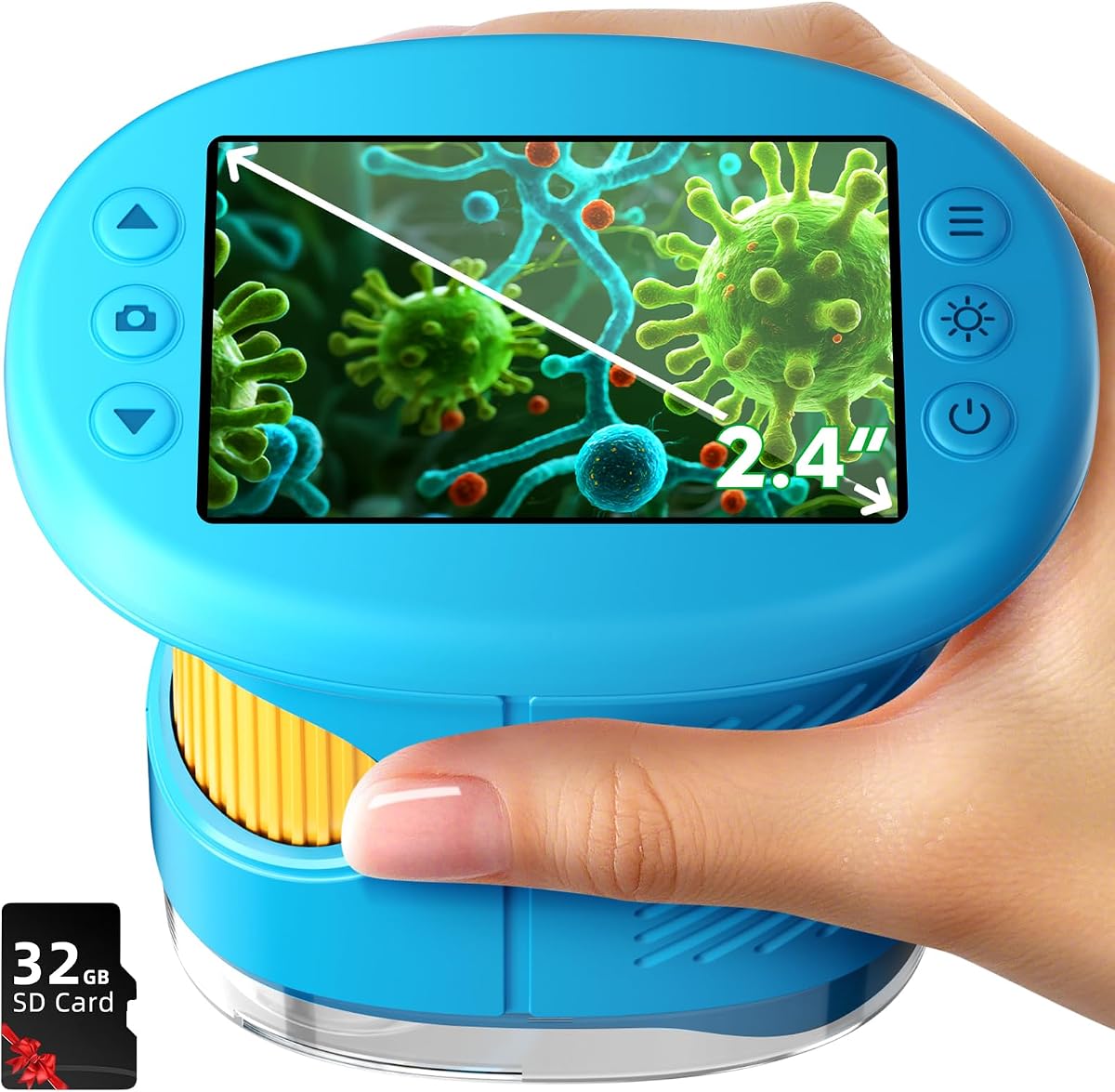
This Odatay model offers versatile magnification starting at 200X. The lowest level allows long distance viewing which helps locate specimens. The 2.4 inch screen provides a comfortable view for young eyes.
We may earn a commission when you buy through this link, at no additional cost to you.
It weighs only 0.5 pounds and fits in pockets. A neck strap supports hands-free carrying during hikes. Eight LED lights ensure visibility in dim conditions without glare.
A protective silicone case guards the screen from scratches. The tripod hole allows steady viewing when needed. File transfer to PC enables sharing of large projects.
Best for active explorers who need portability. The included slides offer ready to use samples. Consider this for outdoor adventures where weight matters.
Four levels of zoom adapt to different needs. Lower levels help find bugs while higher levels show fine details.
Twelve prepared slides cover plants and insects. The silicone case protects the device during travel.
We may earn a commission when you buy through this link, at no additional cost to you.
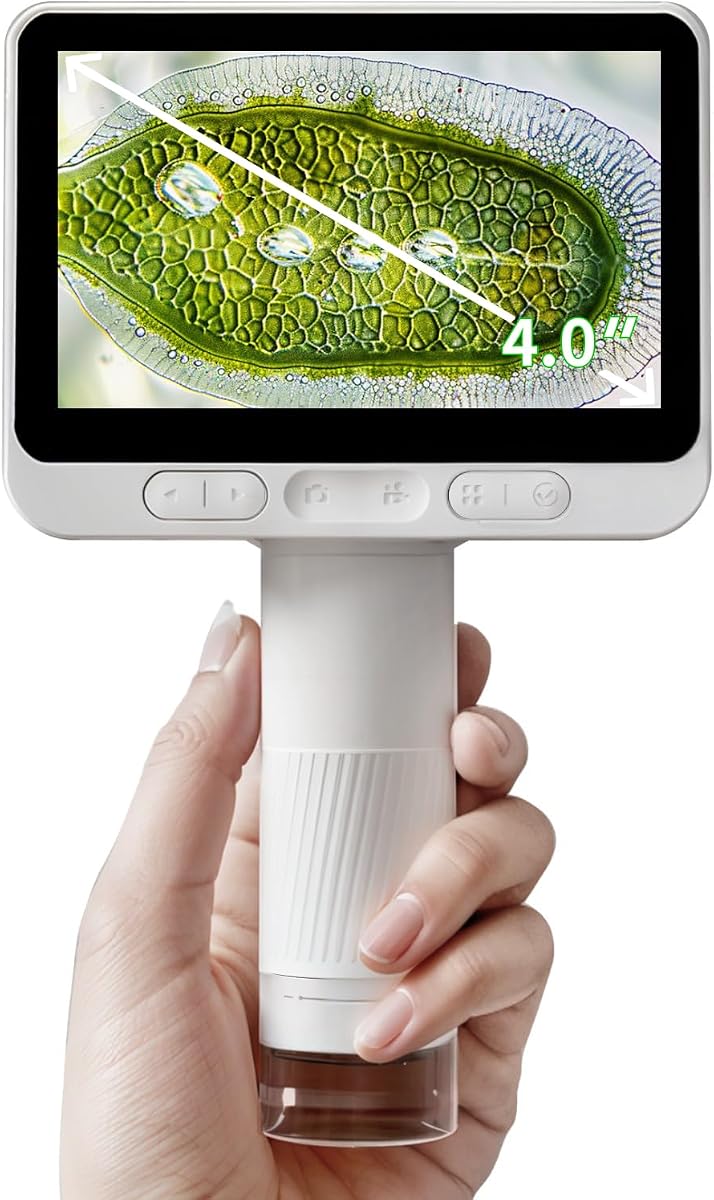
The BEAVERLAB Finder offers a spacious 4.0 inch IPS display. Images appear bright and detailed for shared viewing. Its 1600X magnification reveals intricate patterns on fabrics and coins.
We may earn a commission when you buy through this link, at no additional cost to you.
Built-in hotspot connects to mobile phones instantly. This allows immediate sharing of discoveries on social platforms. The 1080P camera captures smooth videos for school presentations.
Eight adjustable lights ensure clear visibility. The pocket design remains portable for on-the-go learning. Higher price reflects premium features and build quality.
Choose this for advanced young scientists. The screen size reduces eye strain during long sessions. Ideal for families wanting top features and connectivity.
Hotspot feature connects to phones easily. Share results with family or classmates without cables.
1080P videos and images show fine details. The screen makes viewing comfortable for multiple kids.
We may earn a commission when you buy through this link, at no additional cost to you.
This model features a custom cat-shaped housing. It stands out visually and appeals to children. The 2.4 inch HD screen offers rich colors for clear viewing.
We may earn a commission when you buy through this link, at no additional cost to you.
Safety certifications include UKCA and CE standards. Materials are odorless and gentle on hands. The focus wheel is designed for small fingers.
Internal memory stores 200 photos. However exporting requires inserting a memory card. This adds steps but secures data from accidental loss.
Perfect for younger kids needing fun design. The three modes allow PC connection or standalone use. Great gift for ages three to twelve.
Food-grade silicone and durable ABS plastic. Smooth edges protect hands during use.
Connect to PC or use standalone. The large screen helps children see details better.
We may earn a commission when you buy through this link, at no additional cost to you.
This Odatay kit offers strong value for families. It includes twelve slides covering plants and animals. The 2.0 inch IPS screen displays sharp colors.
We may earn a commission when you buy through this link, at no additional cost to you.
Internal storage holds up to 500 photos. This capacity supports many projects without cards. USB connectivity allows easy file transfer to computers.
Buttons on top allow one-hand operation. The lanyard keeps the device secure during movement. Lower price point makes it accessible for schools.
Ideal for classroom groups or first-time buyers. While slides are plastic, they remain clear. Choose this for budget-friendly science exploration.
500 photo storage reduces delete needs. Children can save many discoveries without extras.
Includes 12 slides out of the box. No need to prepare samples immediately.
We may earn a commission when you buy through this link, at no additional cost to you.
This model supports up to 1600X magnification. The 4.0 inch screen brings visuals to life. It offers desktop handheld and portable modes.
We may earn a commission when you buy through this link, at no additional cost to you.
The battery lasts up to 4 hours. This supports long field trips without recharging. The 1080P camera captures clear videos for sharing.
Three brightness levels for LEDs help visibility. PC connection facilitates sharing on large screens. Lower rating may reflect usability complexity.
Best for recording videos of specimens. The detachable design adds flexibility. Consider if video presentation is a priority.
4 hours of continuous battery power. Great for camping or long class periods.
Switch between desktop and handheld. The portable mode helps outdoor adventures.
We may earn a commission when you buy through this link, at no additional cost to you.
This microscope emphasizes portability at 0.5 lbs. It fits easily in pockets or bags. The 2.0 inch screen provides bright images.
We may earn a commission when you buy through this link, at no additional cost to you.
Eight LED lights support low-light exploration. Photo and video capture allows memory saving. PC connection enables file transfer for reports.
The 4K camera claim may be digital. Actual optical quality matches standard HD. The strap prevents dropping during use.
Good for travel and quick checks. Simple controls help children start fast. Select for lightweight needs over advanced features.
Fits in pockets easily. Great for museum visits and hikes.
Eight LEDs illuminate dark areas. Three levels adjust for comfort.
We may earn a commission when you buy through this link, at no additional cost to you.
Stability is key for outdoor use. This model reduces shake for clearer images. The anti-glare diffuser aids viewing in sunlight.
We may earn a commission when you buy through this link, at no additional cost to you.
It uses BPA-free ABS plastic. Safety certifications give parents peace of mind. USB-C charging ensures modern compatibility.
Built-in storage holds 200 photos. Files transfer to computers easily via cable. The strap makes carrying comfortable.
Ideal for nature walks and field trips. The design prioritizes steady viewing. Choose for outdoor focus over premium screens.
Enhanced stability helps focus. Children get clear images faster.
USB-C cable for fast power. Compatible with modern chargers.
We may earn a commission when you buy through this link, at no additional cost to you.
This WINWEND model is simple and light. It weighs less than 300g. The wrist band prevents drops easily.
We may earn a commission when you buy through this link, at no additional cost to you.
Storage holds 400 photos and video card. PC connection broadens the viewing field. Six brightness levels adjust lighting.
Focus is coarse and fine for accuracy. Older children can manage this well. Price fits budget buyers seeking basics.
Good for ages five to twelve. It introduces STEM concepts simply. Select for first-time users or classrooms.
Wrist band prevents loss. Lightweight design helps children carry.
400 photo capacity supports learning. Videos require memory card.
We may earn a commission when you buy through this link, at no additional cost to you.
Selecting the right microscope involves checking features that match your child's age and interests. This section explains key factors to consider before purchasing.
Magnification determines how close the image appears. Look for ranges starting at 100X and going up to 1000X or more. Higher power reveals details like insect eyes or fabric threads.
Choose higher magnification for older kids exploring biology. Beginners may prefer lower ranges for ease of use.
Larger screens make viewing comfortable for longer periods. Models with 4-inch displays reduce eye strain compared to 2-inch versions. Brightness also impacts clarity.
Opt for at least 2.4 inches. A larger screen is better for sharing with peers or parents.
Digital microscopes save photos and videos. Internal storage varies from 200 to 500+ files. Some models include memory cards for expansion.
Check if SD cards are needed for export. More storage means fewer deleted discoveries.
Rechargeable batteries power the LED lights and screen. Most offer 2 to 4 hours per charge. USB charging is standard for convenience.
A longer battery supports outdoor trips. Keep a power bank handy for field work.
Materials should be non-toxic and free of sharp edges. Look for ABS plastic and safety certifications like CE FCC CPC. These ensure safe play.
BPA-free silicone protects hands. Safety features reduce risks of injury during exploration.
Accessories like slides cases and straps add value. Some kits include glass slides which improve image quality over plastic. Carrying cases organize parts.
A lanyard or strap keeps the device secure. Prepared slides give instant activities.
Connectivity allows sharing on larger screens. USB or hotspot features help transfer files to PCs. Some models offer PC modes for presentations.
PC connection supports classroom use. Check software compatibility for older systems.
Children may drop devices frequently. Rubberized casings or shock-absorbent designs help survive falls. Weight also matters for portability.
Lightweight models suit outdoor use. Durable bodies extend the product's lifespan.
First ensure the microscope is charged before use. Press the power button to wake the screen and lights. Turn the focus wheel slowly to adjust clarity for your specimen.
Place the specimen directly under the lens. Adjust the distance until the image sharpens. Press the capture button to save photos or videos automatically.
Keep the lens clean with a soft cloth. Store the device in its case to prevent dust accumulation. Avoid using in wet conditions unless waterproof rated.
For most young children, 100X to 1000X is ideal. This range shows plant cells and insect details clearly. Higher power can be harder to focus.
Most models are safe with supervision. Look for safety certifications and smooth edges. Toddlers under three may need help with small parts.
Connect via USB cable to Windows or Mac. Use the included software or drag files directly. Ensure the computer supports the operating system version.
Not always since many include internal storage. Cards help if saving videos or many photos. Check the model's limit before buying.
Yes especially with LED lights. The lights help see in shaded areas. Carry the device in a protective case.
Typically 2 to 4 hours per charge. Recharge via USB or power bank. Avoid leaving it empty for long periods.
Try leaves insects coins and fabrics. Real glass slides offer the clearest images. Explore backyard items for discovery.
Some require PC software. Hotspot models connect to iOS. Check product details before assuming compatibility.
This guide reviewed ten models balancing features and ease of use. The top picks offer reliable imaging and safety for curious children. Each serves different needs from budget kits to premium screens.
Prioritize safety certifications and durability. Match the magnification and screen to your child's age. Accessories like slides add immediate learning value.
Prices change so verify current details before buying. The best tool is one used often. Let exploration lead to lifelong interest in science.