
EBOOT 30 Pieces Photoresistor
4.6Editor score
30 pieces of 5mm GM5539 resistors
Maximum voltage of 150 volt DC
Spectral peak at 540 nanometers
This guide compares the top light sensor for Arduino modules including LDR photoresistors and digital BH1750 sensors for accurate ambient light detection
Light sensors are essential components for any Arduino project that requires ambient light detection or automatic control. Whether you are building a smart home system or a simple night light, choosing the right module ensures accurate readings and reliable performance.
We have evaluated ten top-rated light sensor modules based on accuracy, ease of use, and compatibility with popular microcontrollers. Each product was selected for its ability to deliver consistent data across various lighting conditions and project types.
Each pick highlights key specifications and real-world applications to help you find the ideal sensor for your needs. Please note that product availability and pricing may change over time so verify details before purchasing your components.
4.6Editor score

4.5Editor score
5.0Editor score
The following table provides a side-by-side overview of all ten selected light sensor modules. Compare their key specifications and features to determine which one aligns best with your specific Arduino project requirements.

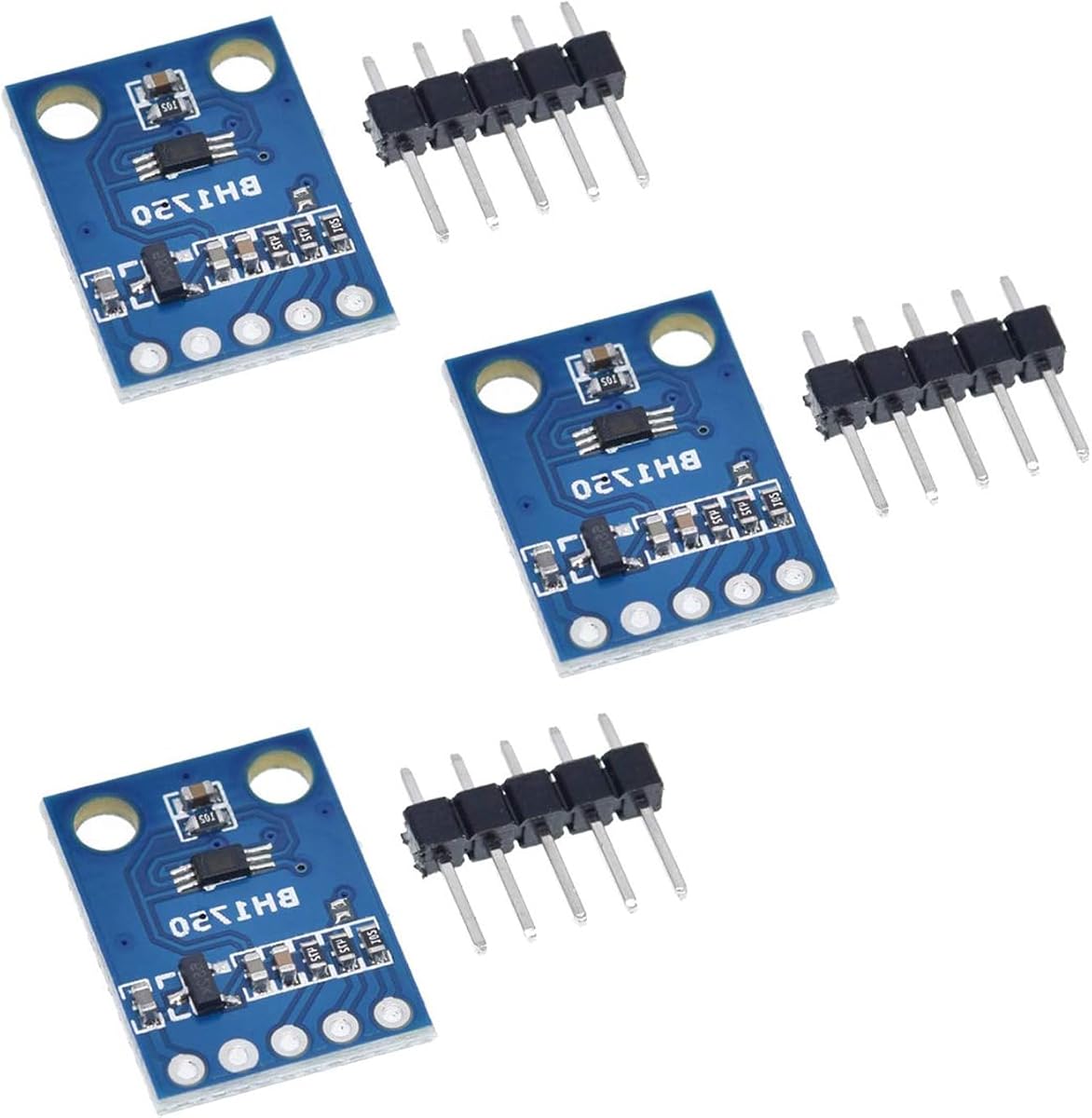


This HiLetgo module offers exceptional precision for ambient light detection projects. It features the BH1750FVI chip which delivers high-quality digital readings directly to your microcontroller without complex analog calibration.
We may earn a commission when you buy through this link, at no additional cost to you.
The compact dimensions allow you to fit multiple units on a single breadboard or PCB. Its 3 to 5 volt power supply range ensures compatibility with most standard Arduino boards and other microcontrollers like ESP32.
While it requires I2C communication which may be slightly more complex than analog sensors the accuracy and ease of digital data processing make it a preferred choice for professional and advanced hobbyist projects.
We recommend this module for anyone needing reliable light intensity data for automation systems or display brightness control. It balances performance and cost effectively making it an editor's choice for this category.
The BH1750FVI chip provides accurate lux values without needing external analog to digital converters.
Its small footprint allows for clean layouts in tight enclosures or multi-sensor arrays.
We may earn a commission when you buy through this link, at no additional cost to you.
These bare photoresistors are ideal for DIYers who need many units for prototyping or large scale deployments. Each unit is a simple 5mm component that changes resistance based on light levels offering a classic analog solution.
We may earn a commission when you buy through this link, at no additional cost to you.
With a maximum voltage of 150 volts they are robust against power spikes common in experimental setups. The spectral peak at 540 nanometers matches well with visible light making them suitable for general ambient sensing.
You will need to build a simple voltage divider circuit to read them as they lack integrated electronics. While this adds a step to wiring it provides full control over the circuit design and component selection.
This bulk pack is perfect for classrooms or workshops where multiple students need sensors. It is the best budget option for those who prioritize quantity and flexibility over plug and play convenience.
Requires minimal external components like a resistor to convert light levels into readable voltage.
High maximum voltage rating ensures longevity even in unstable power environments.
We may earn a commission when you buy through this link, at no additional cost to you.
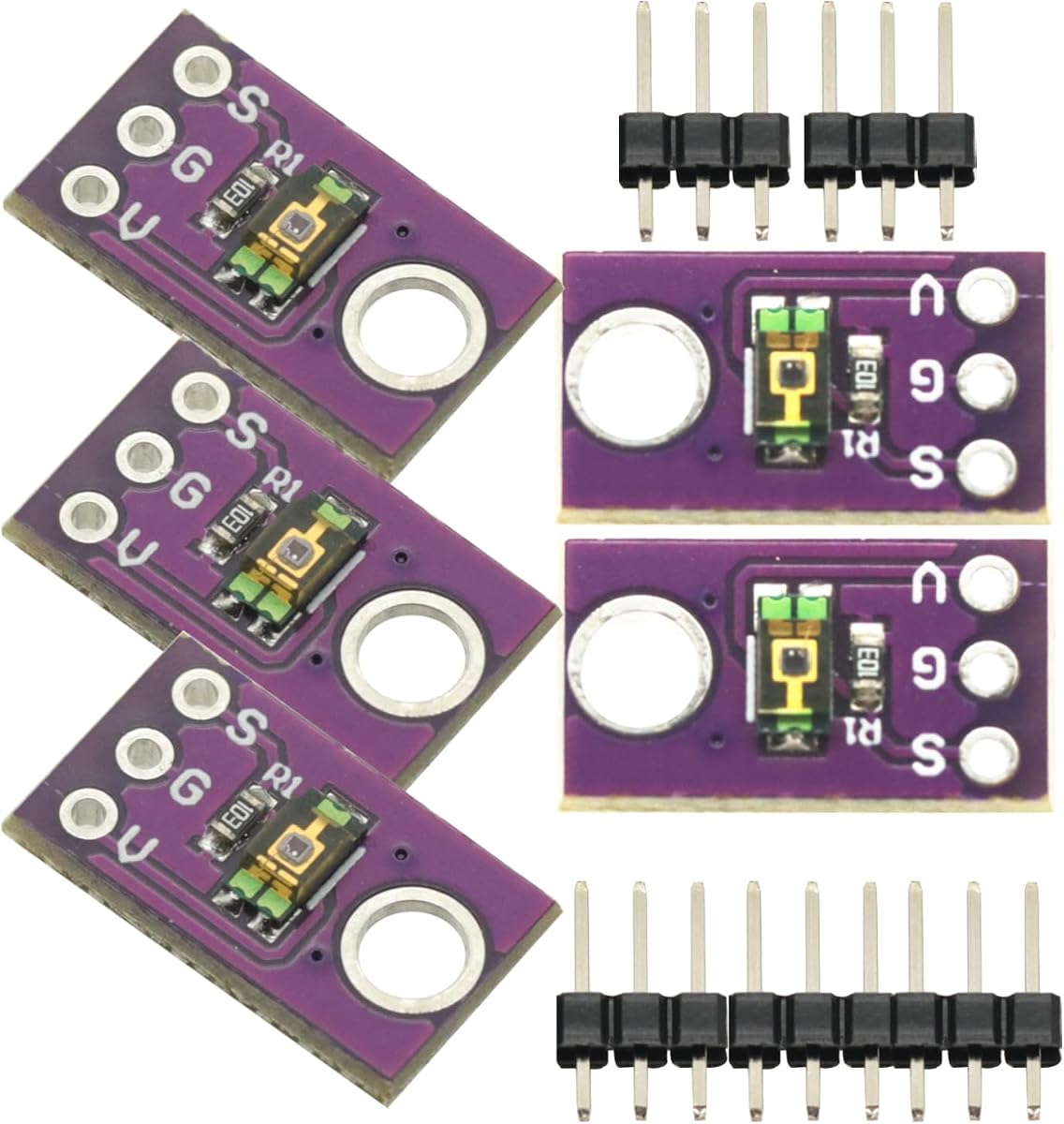
The TEMT6000 module stands out for its professional grade performance and linear response characteristics. It is designed for applications requiring precise light measurement such as automatic display backlight dimming in consumer electronics.
We may earn a commission when you buy through this link, at no additional cost to you.
Its compact size makes it suitable for tight spaces where larger modules would not fit. The high-quality construction ensures consistent readings over time which is critical for industrial or commercial lighting control systems.
While it comes at a higher cost than basic photoresistors the reliability and precision justify the investment for serious applications. It eliminates the noise and non-linearity often found in cheaper sensor modules.
We recommend this module for engineers and advanced users building products that need to meet strict performance standards. It is the premium choice when accuracy and consistency are non-negotiable requirements.
Provides a direct proportional relationship between light intensity and output current for easier calibration.
Built to withstand continuous operation in demanding environments without performance degradation.
We may earn a commission when you buy through this link, at no additional cost to you.
This three pack offers great value for projects requiring multiple light sensors. Each module includes the high-quality BH1750FVI chip ensuring accurate ambient light intensity measurement across all units.
We may earn a commission when you buy through this link, at no additional cost to you.
The compact size allows you to deploy sensors in different locations without cluttering your workspace. Its versatile power supply range works seamlessly with most standard microcontrollers including Arduino Uno and ESP32.
While the packaging may vary it generally provides good protection during shipping. Users should note that soldering headers might be required before use depending on your preferred connection method.
This is an excellent option for bulk buying when you need reliable sensors for a distributed system. It combines quality and quantity to offer a compelling solution for medium scale automation projects.
Ensures all three units deliver similar readings for uniform monitoring across different zones.
Designed for easy integration with standard I2C buses on most Arduino boards.
We may earn a commission when you buy through this link, at no additional cost to you.
This photodiode module excels at detecting light from a specific direction due to its directional nature. It includes both digital and analog outputs allowing flexible integration into various project types.
We may earn a commission when you buy through this link, at no additional cost to you.
The adjustable sensitivity via a blue potentiometer gives you fine control over trigger thresholds. This is especially useful when you need to detect light from a fixed source like a beam or LED.
While the directional focus limits it for general ambient measurement it is perfect for object detection or security applications. The included fixing bolt holes simplify mounting onto enclosures or chassis.
We recommend this module for projects requiring precise light targeting rather than general ambient detection. It is a versatile choice for 10 units that balance cost and functionality well.
Designed to perceive light sources in a fixed direction for better light seeking effect.
Provides both digital switch output and analog voltage for flexible project design.
We may earn a commission when you buy through this link, at no additional cost to you.
This module is designed for simplicity offering a digital output that triggers when light levels cross a set threshold. It uses an LM393 comparator to provide a clean signal for microcontrollers.
We may earn a commission when you buy through this link, at no additional cost to you.
The adjustable threshold via potentiometer allows you to set precise trigger points for your application. This makes it ideal for projects like automatic night lights or alarm systems triggered by darkness.
With only three pins wiring is straightforward even for beginners. The compact size ensures it fits easily on any breadboard or prototyping area without consuming much space.
We suggest this module for users who want a reliable digital switch without needing analog processing. It is a practical choice for triggering events based on ambient light changes.
The LM393 comparator ensures a clean waveform and strong driving capability for your logic.
Use the potentiometer to adjust the brightness level that triggers the digital output.
We may earn a commission when you buy through this link, at no additional cost to you.
This digital light sensor works with a wide range of microcontrollers including Arduino ESP32 ESP8266 and Raspberry Pi. It features both digital and analog outputs giving you flexibility in how you process data.
We may earn a commission when you buy through this link, at no additional cost to you.
The triggered threshold is adjustable via a built-in potentiometer allowing you to tune the sensor for specific conditions. Tutorials are provided to help you get started quickly with common setups.
While the module design is basic it covers the essential functions needed for light detection. The 3.3 to 5V supply ensures it works with most modern microcontroller boards.
We recommend this for users building projects across different microcontroller platforms. It provides a universal solution for light detection that integrates well with many common IoT projects.
Designed to work with 3.3V and 5V microcontrollers for broad project compatibility.
Use the digital pin for simple switches or the analog pin for detailed readings.
We may earn a commission when you buy through this link, at no additional cost to you.
This bulk pack includes 50 GL5516 photoresistors which are a standard choice for light automation projects. It offers excellent value for those needing a large number of sensors for multiple devices.
We may earn a commission when you buy through this link, at no additional cost to you.
The resistance characteristics are typical for GL5516 with low resistance in light and high resistance in dark. This wide range allows for robust detection across varied lighting conditions.
Since these are bare components you will need to design the circuit yourself which includes adding resistors for voltage dividers. This provides full flexibility for custom designs and layouts.
We recommend this pack for makers or educators requiring many units for a class or large project. It is the best choice for those who prefer designing their own circuits around standard components.
Uses a widely available and reliable photoresistor type with predictable resistance values.
Build custom circuits that match your exact voltage and logic requirements.
We may earn a commission when you buy through this link, at no additional cost to you.
This module combines a 5MM LDR with an LM393 comparator to provide both analog and digital output options. It is designed for ambient light threshold detection and automatic control tasks.
We may earn a commission when you buy through this link, at no additional cost to you.
The supply voltage of 3 to 5 volts ensures it works with most standard microcontrollers including Raspberry Pi and ESP32. The potentiometer allows you to adjust the detection brightness easily.
Its compact board fits well on prototyping breadboards and small project enclosures. The strong driving capability of the comparator output can drive LEDs or relays directly in many cases.
We recommend this module for users who want a simple plug and play solution for light switching. It balances cost and features effectively for general purpose light detection projects.
Get both a digital switch for triggering and an analog signal for precise readings.
Use the potentiometer to customize the light level at which the sensor triggers.
We may earn a commission when you buy through this link, at no additional cost to you.
The uxcell module is a reliable choice for light intensity detection in automotive or smart car projects. It uses a wide voltage LM393 comparator to ensure good stability during operation.
We may earn a commission when you buy through this link, at no additional cost to you.
Output options include both digital and analog signals providing flexibility for your project needs. The working voltage range supports both 3.3V and 5V systems which is common in modern electronics.
Its design is straightforward making it easy to integrate into custom PCBs or breadboards. The three pack offers a convenient amount for testing and initial deployment.
We recommend this module for projects where stability and consistent readings are important. It is a solid choice for anyone looking for a dependable light sensor with flexible output options.
The comparator ensures good performance across both 3.3V and 5V logic systems.
Choose between digital logic signals or analog voltage depending on your microcontroller needs.
We may earn a commission when you buy through this link, at no additional cost to you.
Selecting the right light sensor depends on your specific project needs and technical requirements. This guide outlines the key factors to consider when evaluating different sensor modules.
There are mainly two types of light sensors: photoresistors (LDRs) and photodiodes or digital modules like the BH1750. Photoresistors change resistance based on light levels and are simple and cheap. Digital modules provide direct light intensity readings in lux and are more accurate but cost slightly more.
Choose photoresistors for simple switch-based projects and digital modules for precise measurement tasks.
Modules may offer digital output (LOW/HIGH) or analog output (voltage). Digital modules are easier to use for simple on/off triggering while analog modules give you detailed light level data for complex applications.
Ensure your microcontroller has the right pins to read the output type you choose.
Check that the sensor operates within your microcontroller voltage range. Most Arduino boards work with 5V logic but ESP32 and ESP8266 often use 3.3V. Ensure the sensor is compatible with your logic levels to avoid damage.
Select sensors with a wide voltage range to maximize compatibility.
Consider the light range your sensor needs to detect. Some modules are optimized for indoor ambient light while others handle high outdoor brightness. Adjustable sensitivity via potentiometer is a valuable feature for fine-tuning.
Look for modules that support your required lux range and allow calibration.
Compact modules are easier to integrate into small projects or tight enclosures. Some sensors come with fixing holes for mounting which is useful for industrial or permanent installations.
Choose a size and mounting method that fits your enclosure design.
Digital sensors using I2C or UART require software libraries but offer better accuracy. Simple analog sensors require less setup but need more code to interpret data. Evaluate your software comfort level when choosing.
Beginners might prefer analog modules while advanced users may want I2C digital modules.
High-quality sensors will perform consistently over time and temperature changes. Look for reputable brands or modules with proven track records in reviews. Robust build quality is essential for outdoor or industrial use.
Prioritize build quality if your project will be exposed to harsh environments.
Bare components are cheaper but require more assembly while modules are more convenient. Bulk packs offer better value if you need many units. Balance cost against ease of use for your project budget.
Buy modules for convenience or bulk components if you need to save money on large builds.
Start by connecting the sensor power pins to your microcontroller. Typically connect VCC to 5V or 3.3V and GND to ground. Then connect the data output pin to an analog or digital input pin on your board.
Download any required libraries if using a digital module like BH1750. For analog sensors simply write code to read the analog input value and map it to light levels. Test different lighting conditions to calibrate thresholds.
Protect the sensor from direct water or dust by using enclosures. Regularly check connections for loose wires which may affect readings. Keep the sensor surface clean for accurate ambient light detection.
LDRs are photoresistors that change resistance with light while BH1750 is a digital module that outputs direct lux values. BH1750 is more accurate but slightly more complex to integrate than basic LDR modules.
Many modules support both 5V and 3.3V operation. Check the voltage range in the specs. If the sensor outputs 5V logic on a 3.3V board use a voltage divider to avoid damage.
For analog sensors read values in dark and light conditions then map them in code. Digital sensors like BH1750 are calibrated internally but you can adjust threshold values in your software as needed.
A digital LDR module with adjustable threshold is ideal. It allows simple triggering logic without complex code. The WWZMDiB module is a popular choice for this application.
Yes bare photoresistors need a voltage divider circuit with an external resistor to be read by an analog pin. Modules include this internally so you only need to wire VCC GND and OUT.
Most modules are rated for indoor use only. For outdoor projects ensure the sensor is housed in a weatherproof enclosure. Look for industrial grade options if exposure to elements is expected.
Basic modules have three pins VCC GND and OUT. Some advanced digital sensors may have four pins including SDA and SCL for I2C communication. Check the pinout diagram before wiring.
The HiLetgo GY-302 and TEMT6000 modules stand out for precision while the EBOOT photoresistors offer unmatched bulk value. Each option serves a different purpose from hobbyist experiments to industrial automation.
Consider your project complexity and budget when choosing. Simple analog sensors are great for beginners while digital modules provide professional accuracy. Always match voltage and interface types to your microcontroller.
Prices and availability change so verify product details before purchasing. These ten light sensors provide a solid foundation for any Arduino project requiring light detection and automation capabilities.