
Dorhea 7 Pack 3.3V DC-DC Buck Converter 3 Pins AMS1117-3.3V
4.2Editor score
Affordable multi-pack value
Simple 3-pin design
Overheat protection
This guide compares the top 5V to 3V voltage regulator options for stable power delivery to microcontrollers, sensors, and embedded systems in 2026.
Finding a reliable 5V to 3V voltage regulator is essential for powering sensitive electronics like microcontrollers and sensors without damage. These components step down higher voltages to safe levels ensuring stable operation across various projects.
We evaluated ten top-rated models based on efficiency, output stability, size, and current capacity. Our analysis focuses on real-world performance data to help you select the right regulator for your specific application needs.
Each pick highlights key specifications and ideal use cases to streamline your decision process. Please note that product availability and pricing can change frequently so verify details before purchasing.
4.2Editor score

4.6Editor score

5.0Editor score
The following table provides a side-by-side comparison of all ten selected voltage regulators. It highlights critical specifications to help you quickly identify the best fit for your power requirements.


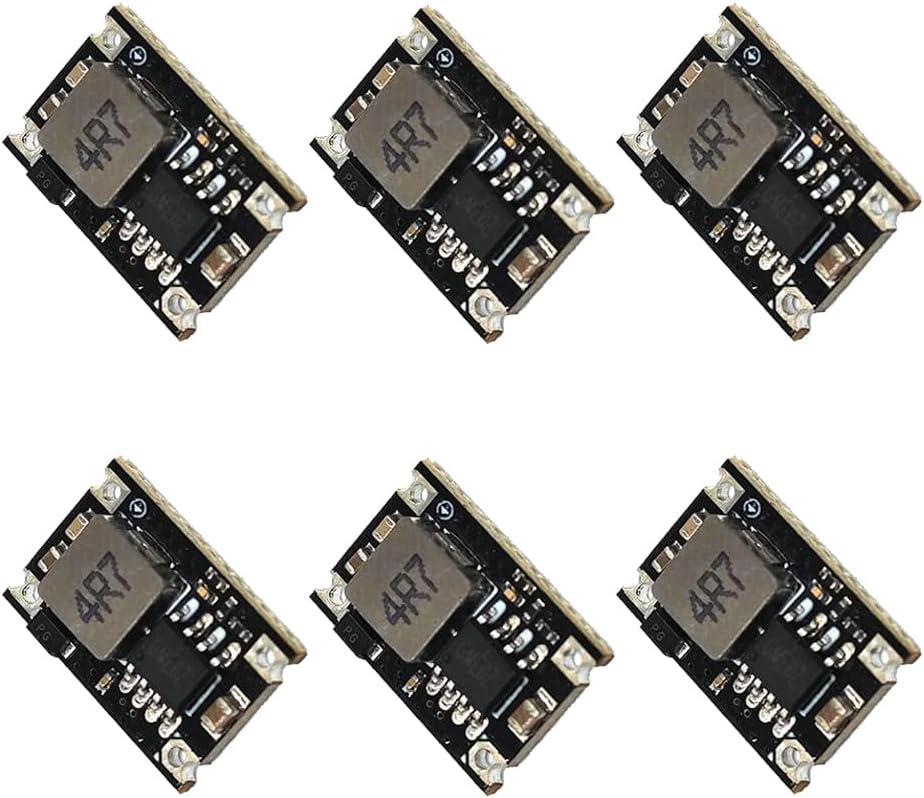
This module stands out for its versatility and compact design making it ideal for a wide range of DIY electronics projects. With a rating of 4.6 stars it offers a reliable solution for stepping down voltages efficiently.
We may earn a commission when you buy through this link, at no additional cost to you.
The input range supports everything from 4.5V to 24V allowing you to use common power supplies like 5V 9V or 12V adapters. It delivers a stable 3.3V output capable of handling up to 1.8A which is sufficient for most microcontrollers and sensors.
While the performance is excellent users should note that inductive loads like motors require additional protection components such as diodes to prevent voltage spikes. This is a standard precaution for switching regulators.
This package includes five modules providing excellent value for prototyping or multiple builds. It is the top recommendation for hobbyists needing a robust and small form factor regulator.
The switching frequency ensures clean power with low ripple protecting sensitive components from noise.
Its tiny dimensions allow it to fit into tight spaces on PCBs or wearable devices.
We may earn a commission when you buy through this link, at no additional cost to you.
This pack features the classic AMS1117-3.3 linear regulator which is widely used in electronic projects for its simplicity. It offers a straightforward way to step down voltages from 4.75V to 12V to a stable 3.3V output.
We may earn a commission when you buy through this link, at no additional cost to you.
The three pin design makes it incredibly easy to solder onto a breadboard or PCB without needing complex wiring. It supports up to 0.8A which covers many low power applications like development boards and sensors.
Linear regulators are generally less efficient than buck converters as they dissipate excess voltage as heat. For high current applications this heat generation might require a heat sink or careful thermal management.
This option is great for beginners or projects where simplicity is key over maximum efficiency. The inclusion of overheat protection adds a layer of safety for your components.
Simple pinout and widely available documentation make this perfect for learning power circuits.
Built-in safety circuits prevent damage if the device gets too hot during operation.
We may earn a commission when you buy through this link, at no additional cost to you.
This converter is unique because it can both step up and step down voltage making it ideal for battery powered devices. It accepts inputs as low as 1.8V ensuring you can still get 3.3V even as batteries drain.
We may earn a commission when you buy through this link, at no additional cost to you.
With a perfect 5.0 rating users appreciate its reliability in low power scenarios. It is specifically designed for applications where input voltage might fluctuate around the output target like single lithium coin cells.
The maximum current of 100mA limits its use to very low power sensors or logic circuits. You cannot drive motors or high power modules with this specific unit due to the small current limit.
If your project runs on a single battery cell this is an excellent choice to ensure stable voltage delivery. It fills a niche that standard buck regulators cannot cover effectively.
Maintains 3.3V output even as input voltage drops below that level.
Handles inputs from 1.8V to 5V allowing versatile power source integration.
We may earn a commission when you buy through this link, at no additional cost to you.
This module delivers high current up to 1.8A in a package that is incredibly small fitting easily into compact project boxes. Its perfect rating reflects its consistent performance and stability under load.
We may earn a commission when you buy through this link, at no additional cost to you.
The input range supports 5V up to 24V making it suitable for automotive or higher voltage applications without needing complex setups. The ripple is kept very low ensuring clean power for microcontrollers.
Due to the high switching frequency and small size thermal management might be a concern if running at maximum current continuously. It is designed to handle short bursts or moderate loads efficiently.
Ideal for portable or space constrained projects requiring significant power this is a top tier choice. The inclusion of protection notes for motors shows attention to real world application safety.
Combines high current output with a footprint smaller than a postage stamp.
Output voltage remains steady even when load conditions change slightly.
We may earn a commission when you buy through this link, at no additional cost to you.
This pack offers an excellent balance of price and performance for linear regulation needs. It is designed for projects requiring a simple step down from 4.75V to 12V to 3.3V without complex circuitry.
We may earn a commission when you buy through this link, at no additional cost to you.
With seven units included it is perfect for prototyping multiple boards or for use in a classroom setting. The built-in overheat protection ensures that the regulator shuts down safely if temperatures get too high.
As a linear regulator it dissipates excess energy as heat which can be inefficient for high current loads. However for most logic circuits and low power sensors this is an acceptable trade-off.
Buy this if you need reliable power for a group of projects on a budget. It provides the necessary protection and stability for sensitive electronics at a low cost.
Seven modules in one pack make it one of the most cost effective options available.
Thermal shutdown prevents permanent damage to your circuit during overloads.
We may earn a commission when you buy through this link, at no additional cost to you.
With fifteen units in this pack it is the largest quantity option available for this type of regulator. This makes it ideal for bulk builds or educational purposes where many students need individual components.
We may earn a commission when you buy through this link, at no additional cost to you.
The voltage accuracy is rated at plus or minus 2 percent ensuring precise power delivery to sensitive logic components. It is suitable for automotive and industrial use cases due to its robust design.
Like other linear regulators in this category it handles heat through built-in circuitry. It requires careful thermal management if used near its maximum current limit for extended periods.
Select this option if you need to outfit a large number of projects simultaneously. The high user rating confirms its consistency and reliability across different batches.
Fifteen pieces provide enough parts for extensive prototyping and multiple prototypes.
Maintains tight voltage tolerance to protect sensitive logic circuits.
We may earn a commission when you buy through this link, at no additional cost to you.
This module accepts a wide input voltage range up to 30V making it suitable for higher voltage power sources like 24V industrial supplies. It steps this down to a safe 3.3V for your logic circuits.
We may earn a commission when you buy through this link, at no additional cost to you.
The board includes a reverse polarity mark which helps prevent accidental damage from incorrect wiring during installation. This feature is particularly useful for beginners who might make connection mistakes.
The user rating is lower compared to others in this list suggesting some inconsistency in quality or performance under load. Reviewing specific batch details might be wise before bulk purchasing.
Consider this if you need to handle higher voltage inputs without needing a complex solution. The high current output supports a variety of standard microcontroller projects.
Supports inputs up to 30V for industrial or automotive applications.
Visual indicators help ensure correct polarity connection to avoid short circuits.
We may earn a commission when you buy through this link, at no additional cost to you.
This regulator is designed to work well with solar panels and vehicle power systems thanks to its wide input range. It can accept inputs from 4.5V all the way up to 30V providing significant flexibility.
We may earn a commission when you buy through this link, at no additional cost to you.
The output ripple is kept very low which is critical for clean power delivery to sensitive microcontrollers like ESP32 or STM32. It is pre tested before shipping to ensure consistent quality.
While it is compact and fits easily into tight layouts users should be mindful of ventilation when used in enclosed cases with high current draw. Airflow helps maintain optimal performance.
Ideal for outdoor or mobile projects requiring stable power from variable sources this is a strong contender. The five unit pack is great for prototyping different solar setups.
Designed to handle variable voltage from solar panels and batteries efficiently.
Each module is tested to ensure it meets performance standards before shipping.
We may earn a commission when you buy through this link, at no additional cost to you.
This pack includes ten modules based on the AMS1117 chip which is a reliable industry standard for linear regulation. It works best with input voltages between 4.5V and 7V to maintain efficiency.
We may earn a commission when you buy through this link, at no additional cost to you.
The output is fixed at 3.3V which is the standard logic voltage for most modern microcontrollers. It offers a simple way to step down USB power which is typically 5V to the needed level.
Since it is a linear regulator heat dissipation is a consideration if you plan to draw the maximum 800mA for long periods. Adequate ventilation will help maintain performance.
Good for projects powered by USB or standard 5V supplies this pack offers reliable value. It is a straightforward solution for powering logic boards without extra complexity.
Perfectly suited for converting standard USB 5V to 3.3V logic power.
Uses widely available AMS1117 technology with well documented characteristics.
We may earn a commission when you buy through this link, at no additional cost to you.
This module utilizes the MP1584EN chip which is known for high efficiency and low ripple. It is capable of delivering up to 1.8A making it suitable for larger loads like servos or motor controllers.
We may earn a commission when you buy through this link, at no additional cost to you.
The physical size is very small allowing it to fit into tight spaces on aircraft models or portable devices. Users appreciate its stability under load and the clean power it delivers to logic circuits.
Similar to other switching regulators it is important to add protection components when driving inductive loads to prevent damage. The package includes a note on this safety precaution for users.
For projects requiring high current and minimal space this is an excellent choice. It provides a robust balance between performance and physical footprint.
Designed with lightweight and small size in mind for RC and drone applications.
Low ripple ensures minimal electrical noise interference with sensitive electronics.
We may earn a commission when you buy through this link, at no additional cost to you.
Selecting the right voltage regulator requires understanding your power needs and project constraints. This guide breaks down the key factors to help you make an informed decision.
Ensure the regulator accepts your power source voltage. Common sources include USB (5V), 12V adapters, or 24V industrial supplies. A wide input range offers more flexibility for different battery or supply types.
Always verify the minimum and maximum input limits in the product specifications to prevent damage.
The maximum current output determines what devices you can power. Standard microcontrollers usually need less than 500mA but motors or LEDs may require more. Exceeding the limit can lead to instability or overheating.
Choose a regulator with a current rating higher than your total load to ensure headroom and safety.
Linear regulators are simpler and cleaner but less efficient as they waste energy as heat. Switching buck converters are more efficient and handle higher currents but can produce more electrical noise.
Use linear for low power sensitive logic and switching for higher power or battery applications.
Consider the physical dimensions of the module. Compact PCBs or wearables require tiny footprints like the Mini360 type. Larger modules may offer better heat dissipation but take up more space.
Measure your available space before purchasing to ensure the component fits physically.
Some regulators maintain tighter tolerances than others which is critical for sensitive ADC or logic levels. Look for specifications that mention output precision if your project relies on exact voltage thresholds.
Standard regulators are fine for general use but precision is needed for measurement circuits.
Built-in protections like overheat shutdown and overcurrent limits add safety to your project. These features prevent permanent damage if the unit gets too hot or draws too much power unexpectedly.
Prioritize models with thermal protection for reliability especially in enclosed environments.
If you plan to connect motors or relays ensure you add external protection like flyback diodes. Switching regulators can be affected by inductive spikes which might damage the output stage.
Follow the manufacturer recommendations for additional components when driving motors.
Many sellers offer these regulators in multi-packs to reduce the cost per unit. Buying in bulk is beneficial if you are building multiple prototypes or need spares for a large deployment.
Evaluate the cost effectiveness based on how many units you realistically need.
Connect the input pins to your power source ensuring you respect the polarity marks on the board. Incorrect wiring can damage the regulator instantly so double check connections before powering on.
If you are driving motors or high inductive loads add a flyback diode near the motor terminals. This protects the regulator from voltage spikes generated by the motor when it stops.
Ensure adequate airflow around the module especially if drawing high currents. If the unit feels hot touch it carefully or use a multimeter to monitor temperature to prevent overheating.
A voltage regulator maintains a stable output voltage even when the load changes while a resistor divider output fluctuates with current draw. Regulators are necessary for powering microcontrollers because they need a constant voltage to operate correctly without resetting.
No you cannot use this regulator to power a motor directly because it only outputs 3.3V. However you can use it to power the control logic while using a separate circuit to drive the motor.
Regulators get hot when they drop a large voltage difference or handle high currents. Linear regulators convert excess voltage to heat so check your current draw and add a heat sink or switch to a more efficient module.
Most buck converters work best with small input and output capacitors to smooth voltage ripple. Always follow the specific datasheet for the chip used on the board to ensure stability.
This is incorrect and can damage the regulator or connected components. The output should connect to your load and the input to your power source.
Choose switching for high efficiency and high current needs especially with batteries. Choose linear for low noise and low power applications where heat is not a concern.
The top picks in this guide cover a range of needs from high current miniaturization to simple low cost linear options. The buck converters offer the best balance of efficiency and versatility for modern electronics.
Prioritize output current capacity and package size based on your specific project requirements. For most general hobby use the modules with wide input ranges provide the most flexibility.
Remember to check current availability and verify specifications before finalizing your purchase. These components are essential for reliable electronics and choosing the right one ensures your projects run smoothly.