
Verifone VX520
3.5Editor score
EMV compliant
Contactless support
Ethernet connectivity
This guide compares the top card readers for vending machines, evaluating connectivity, payment types, security, and compatibility to help operators choose the
Modern vending operators need reliable cashless payment systems to maximize sales and improve customer experience. Card readers for vending machines enable customers to use credit cards, mobile wallets, and contactless options effortlessly.
We evaluated ten leading card readers based on connectivity options, payment acceptance, security certifications, and ease of integration with existing vending hardware. Our analysis focuses on real-world performance and operator feedback.
Each pick highlights key features, pros, and cons to help you match a reader to your specific machine type and business needs. Prices and availability change frequently, so verify details before purchasing.
3.5Editor score
3.8Editor score

4.0Editor score
The following table compares all ten products side by side, highlighting their core specifications and capabilities to help you make an informed decision quickly.


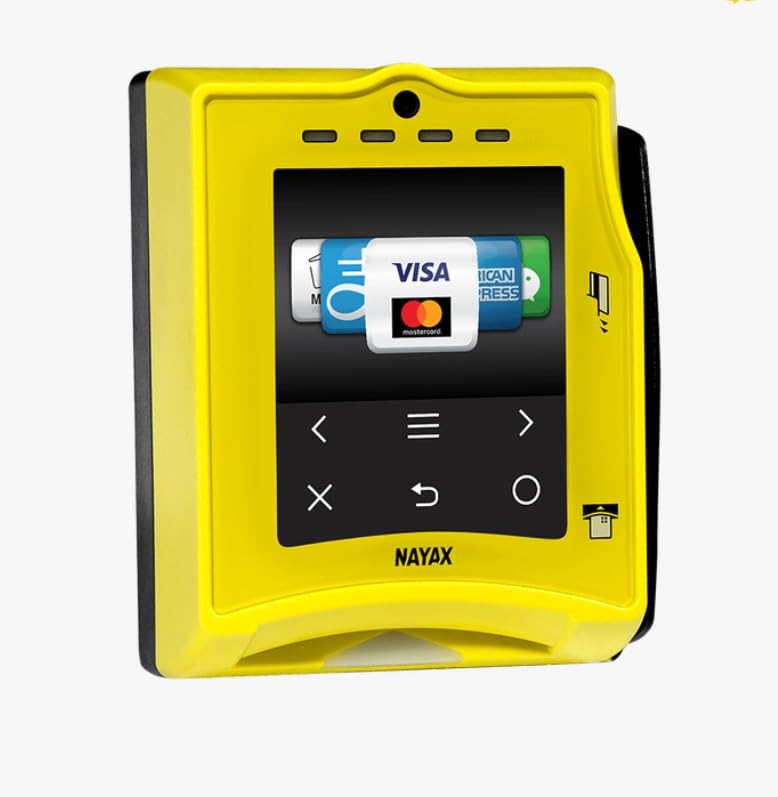
The VPOS Touch stands out as a top contender for operators seeking a complete cashless payment solution. It supports EMV Chip cards, NFC contactless payments like Apple Pay and Google Pay, and traditional magnetic stripe options. With a 3.8 rating, it balances affordability and functionality effectively for modern vending environments.
We may earn a commission when you buy through this link, at no additional cost to you.
Its plug-and-play connectivity simplifies installation significantly. The included high-gain 4G LTE antenna ensures instant cellular connection without needing separate Wi-Fi or ethernet setups. Real-time telemetry via the Nayax management suite allows operators to monitor inventory, cash levels, and sales data remotely with instant mobile alerts. This connectivity is vital for efficient route planning and machine maintenance.
While the VPOS Touch offers robust features, the activation process may take up to ten business days, which could delay immediate deployment. Additionally, full functionality depends on the Nayax management suite, which may require a subscription or specific setup steps. These factors are acceptable trade-offs given the comprehensive remote management capabilities it provides.
This reader is ideal for operators managing multiple machines who need centralized oversight. If you require seamless integration with MDB or Pulse protocols and want secure PCI DSS compliant transactions, the VPOS Touch is a strong recommendation. It delivers the reliability needed for unattended retail and vending scenarios.
The Nayax management suite provides real-time telemetry to track sales, inventory, and machine performance remotely with instant alerts.
It accepts all major payment forms including EMV Chip, NFC contactless wallets, and magnetic stripe cards for maximum customer flexibility.
We may earn a commission when you buy through this link, at no additional cost to you.
The Nayax VPOS Touch offers an enhanced user interface with a 2.4-inch color LCD screen that supports multiple languages and voice prompts. This model is rated N/A but comes highly recommended for its advanced marketing features and durability. It accepts credit cards, mobile wallets like WeChat Pay and Paytm, and QR codes for broad payment flexibility.
We may earn a commission when you buy through this link, at no additional cost to you.
Its customizable touchscreen allows operators to display loyalty programs, discounts, and punch cards directly on the device. This turns a simple transaction point into a marketing opportunity that can increase customer retention. The anti-vandal design features Dragontrail glass, shock detection, and an IP55 rating, making it suitable for high-traffic or outdoor locations where durability is critical.
Installation is straightforward with plug-and-play ease and remote software updates that keep the device current without physical access. However, the lack of a visible rating on the listing means you rely on brand reputation and technical specs for confidence. Operators should verify merchant account requirements before purchase to ensure smooth activation.
This reader suits operators looking to engage customers through interactive screens and marketing tools. Its robust build quality makes it ideal for arcades, unattended machines, or locations prone to wear. If you value customer engagement and durability alongside payment acceptance, the Nayax VPOS Touch delivers strong value.
The color LCD supports loyalty programs and discounts, turning transactions into opportunities to build customer relationships and repeat sales.
Dragontrail glass and IP55 rating ensure the device withstands physical impact and environmental exposure in demanding unattended settings.
We may earn a commission when you buy through this link, at no additional cost to you.
This Generic card reader provides a standard cashless solution for vending machines with a focus on essential functionality. It requires activation before use, involving a yellow instruction sheet inside the box. The process takes up to ten business days after submission, which operators must plan for to avoid downtime.
We may earn a commission when you buy through this link, at no additional cost to you.
While specific technical specs are not detailed in the listing, it aligns with standard vending machine payment acceptance. It is likely compatible with common protocols like MDB or Pulse, making it a viable option for basic cashless needs. The lack of detailed branding suggests it may be a rebranded unit from a larger manufacturer.
The activation requirement is the main trade-off, as it prevents immediate use upon receipt. Operators should factor in this timeline when planning machine conversions from cash to cashless. However, if cost is a primary driver and you can wait for activation, it offers a straightforward path to accepting card payments.
This device is suitable for operators who prioritize affordability and need a basic cashless transition without advanced features. Ensure you have your merchant account details ready before initiating activation. With proper planning, it can serve as a reliable entry point into modern payment systems.
Activation is mandatory before use and involves following steps in the included sheet, taking up to ten business days for completion.
Designed for standard vending machine protocols, it provides essential cashless acceptance without complex proprietary requirements.
We may earn a commission when you buy through this link, at no additional cost to you.
The Symcode Multi-Function card reader supports magnetic, chip, and contactless NFC readings via USB. With a 2.8 rating, it is designed for versatility across membership systems and kiosks. It reads all three magnetic tracks and supports SLE4442 chip cards, contactless NFC, and CPU chip cards using APDU commands for deep development.
We may earn a commission when you buy through this link, at no additional cost to you.
It offers two operational modes: keyboard emulator for active auto-reading and software read for passive HID mode. The three reading modes include swipe magnetic, insertable chip, and contactless NFC with a switch. This flexibility makes it useful for custom integration projects where standard readers might lack specific protocol support.
However, it is read-only and cannot encode data, limiting its use to verification scenarios. Deep development requires APDU commands for CPU chip cards, which may demand technical expertise. The low rating suggests potential compatibility issues or limitations in consumer-facing reliability compared to dedicated vending solutions.
This reader is best for developers or businesses building custom POS or membership systems where specific card types are needed. It is less ideal for plug-and-play vending use without technical setup. If you need multi-format reading capabilities and have technical resources, it offers a cost-effective option.
Supports swipe, insertable, and contactless reading modes with switchable settings to accommodate different card types.
APDU command support enables deep integration with custom software for membership and specialized access control systems.
We may earn a commission when you buy through this link, at no additional cost to you.
The Verifone VX520 is a well-known card reader offering dial, Ethernet, and smart card capabilities. With a 3.5 rating, it balances legacy reliability with modern contactless payment support including NFC and Apple Pay. It is EMV compliant and ensures secure transactions for users and operators alike.
We may earn a commission when you buy through this link, at no additional cost to you.
Its connectivity options provide flexibility for different environments, supporting both traditional dial-up and Ethernet connections. The device is compact and suitable for indoor or counter settings where Ethernet is available. Being from a reputable brand like Verifone, it is trusted for stability in point-of-sale scenarios.
As an older model, it may lack some advanced features found in newer dedicated vending solutions like integrated telemetry or mobile apps. Operators relying on Ethernet for connectivity need to ensure network access is available at the machine site. For budget-conscious buyers needing basic EMV and contactless acceptance, it remains a solid choice.
This reader is ideal for operators upgrading legacy systems to accept contactless payments without overhauling infrastructure. It is best suited for fixed locations with reliable Ethernet access. If you prioritize brand reliability and basic compliance over advanced vending-specific features, the VX520 delivers value.
Verifone is a trusted name in payment processing, offering stable performance and broad compatibility with merchant gateways.
The device meets EMV standards and supports contactless payments, ensuring secure and modern transaction capabilities for customers.
We may earn a commission when you buy through this link, at no additional cost to you.
This Multi-Function Card Reader comes with SDK software and a testing card, supporting magnetic, memory chip, and PSAM cards. With a 3.5 rating, it is designed for membership systems and kiosks requiring diverse card reading capabilities. It reads all three magnetic tracks and supports Mifare RFID and contact PSAM cards for broad compatibility.
We may earn a commission when you buy through this link, at no additional cost to you.
The package includes a software CD with user guides, though technical setup may be required. It is not an encoder but reads various card formats for verification or access purposes. The inclusion of SDK and testing resources suggests it targets developers or businesses integrating card data into custom systems.
Users must check the CD guide carefully as instructions may be technical. If you lack development experience, the setup could be challenging. However, the ability to read PSAM and Mifare cards makes it useful for specialized applications beyond simple credit card transactions.
This reader suits operators building custom POS or membership platforms needing specific card protocols. It offers a cost-effective way to read multiple card formats without buying separate devices. Ensure you have the technical support to interpret the SDK and integrate with your system.
SDK and user guide CD provided to help with custom integration into membership or POS systems.
Reads magnetic, Mifare, and PSAM cards, offering versatility for various access and payment card types.
We may earn a commission when you buy through this link, at no additional cost to you.
The E-seek M-260 ID Card Reader offers high-rated performance at 4.0, ideal for environments requiring ID verification. It reads government-issued IDs with magnetic stripes or 2D barcodes in one device. The included 6-foot USB smart cable and bottom interface connector make it versatile for kiosk applications.
We may earn a commission when you buy through this link, at no additional cost to you.
Its dual interface options include standard side access USB and a bottom connector for kiosk integration. This design flexibility allows it to fit into specialized hardware setups better than standard readers. Data transfers via USB or RS-232, ensuring compatibility with various host systems used in authentication or enforcement settings.
While excellent for ID verification, this reader is specialized for authentication rather than general cashless payments. Its higher price point reflects its targeted capabilities. Operators needing age verification, access control, or secure ID scanning will find this device highly capable.
This reader is best for businesses combining vending with age-restricted products or access control requirements. It delivers reliable scanning in high-demand settings. If your primary need is secure ID reading alongside standard card acceptance, the E-seek M-260 is a premium solution.
Features side and bottom USB connectors to allow flexible integration into kiosks or POS hardware setups.
Reads magnetic stripe and 2D barcode data from government IDs, ideal for age verification and access control.
We may earn a commission when you buy through this link, at no additional cost to you.
The VP3350 Card Reader offers contactless and EMV payments with a mobile-friendly compact design. A new merchant account with SwyftPAY is required before shipment, which ensures security compliance. It is PCI P2PE compliant and supports EMV contact, contactless, and magstripe transactions.
We may earn a commission when you buy through this link, at no additional cost to you.
Its surcharge compatibility allows businesses to pass processing fees to customers if needed. The compact size makes it suitable for portable or small footprint applications. While it lists compatibility with CardPointe Virtual Terminal and API, setup depends heavily on the merchant account approval process.
The requirement for a new merchant account means operators cannot use existing processors with this device. This may be a barrier if you already have established payment relationships. Additionally, the lack of a visible rating suggests it is a newer or niche product in this context.
This reader is ideal for new businesses needing a secure, compact card solution with modern compliance. Ensure you are ready to set up the required merchant account before ordering. For mobile or counter setups requiring P2PE security, the VP3350 delivers essential features.
PCI P2PE compliance ensures robust encryption and security for all contact and contactless card transactions.
The mobile-friendly design allows for easy setup on counters or in portable point-of-sale environments.
We may earn a commission when you buy through this link, at no additional cost to you.
The MTMS15 Multi-Technology Card Reader supports card and PIN transactions with open architecture and real-time networking. It handles multiple technologies including mobile NFC for modern payment methods. This design suits environments requiring multi-factor authentication or flexible payment options.
We may earn a commission when you buy through this link, at no additional cost to you.
As an open architecture solution, it allows customization and integration with various software systems. Networked real-time capabilities ensure transaction data is processed immediately, which is critical for fraud prevention and cash flow management. However, specific technical details are not listed, requiring direct vendor inquiry for compatibility.
The lack of visible ratings and details means operators should verify integration requirements thoroughly. This reader is likely targeted at specialized markets like transit, clubs, or access-controlled vending. For operators needing advanced authentication features, it offers a tailored solution.
Use this device when your workflow demands multi-factor security and open integration capabilities. It ensures flexibility in card types and transaction methods. If you require detailed specs, contact the seller to confirm fit for your specific machine and software setup.
Supports card plus PIN transactions, adding an extra layer of verification for high-value or restricted access scenarios.
Networked capabilities enable immediate transaction processing and data synchronization across systems.
We may earn a commission when you buy through this link, at no additional cost to you.
The Bluetooth X6BT VIP Card Reader is designed for mobile use with iOS and Android devices via Bluetooth or USB. With a 3.8 rating, it supports all major operating systems and comes with free software for Windows, Mac, and mobile platforms. It reads and writes all three tracks on magnetic cards.
We may earn a commission when you buy through this link, at no additional cost to you.
Its Bluetooth capability allows pairing with mobile devices for on-the-go transactions or custom vending setups. It adheres to ISO 7811-6 standards ensuring broad card compatibility. This makes it useful for field sales or operators needing flexible connectivity options beyond wired connections.
Bluetooth pairing can introduce latency or connectivity issues compared to wired USB or cellular options. The setup may require installing specific software drivers on target devices. Operators should test compatibility with their existing hardware before deploying widely in an unattended environment.
This reader is ideal for mobile or semi-permanent setups where wireless connectivity is preferred. It offers cross-platform support and ISO standard compliance for reliable card handling. Ensure your infrastructure supports Bluetooth integration to avoid connectivity interruptions.
Supports Windows, MacOS, iOS, Android, and Linux with free software included for seamless integration.
Reads and writes all three tracks with full ISO 7811-6 standard support for reliable card encoding and verification.
We may earn a commission when you buy through this link, at no additional cost to you.
Selecting the right card reader involves evaluating connectivity, payment types, security, and machine compatibility to ensure reliable operation.
Connectivity is critical for remote management and transaction processing. Look for readers with cellular (4G LTE) options if machines are in locations without Wi-Fi or Ethernet. Wired options like USB or Ethernet are reliable for fixed indoor setups but require physical cabling.
Choose cellular for remote telemetry and mobile setups; wired options for stable indoor installations where cables are accessible.
Ensure the reader accepts EMV chip, contactless NFC, and mobile wallets like Apple Pay to meet modern customer expectations. Some models also support magnetic stripe as a fallback. QR code acceptance can expand payment options for international travelers.
Prioritize EMV and contactless support to reduce fraud and accommodate mobile wallet users.
Security is paramount. Select readers with PCI DSS and EMV certifications to protect customer data and operator liability. Some devices offer P2PE encryption for enhanced transaction security. Compliance ensures you meet industry standards.
Look for PCI DSS and EMV Level 1 and 2 certifications to ensure secure transactions.
Vending machines use protocols like MDB or Pulse to communicate with payment devices. Verify that the reader supports the protocol your machine uses. Incompatible protocols require additional hardware adapters that add cost and complexity.
Confirm MDB or Pulse protocol support to avoid integration issues with existing vending hardware.
Remote management capabilities let you monitor sales and inventory in real time. Look for integrated management suites with mobile alerts. This helps optimize routes and quickly identify machine issues before they affect revenue.
Choose readers with real-time telemetry and mobile alerts for efficient operation and maintenance.
Unattended machines face environmental and physical stress. Select readers with IP ratings (like IP55) and reinforced glass to withstand weather and vandalism. Compact designs with multiple interfaces allow better fit into machine enclosures.
Opt for IP-rated devices with reinforced materials for durability in high-traffic outdoor locations.
Consider activation times and merchant account requirements. Some readers need prior approval or specific account setups before shipping. Factor in lead time to avoid delays in launching cashless operations.
Verify activation steps and merchant account requirements before purchase to ensure timely deployment.
Technical support availability is essential for troubleshooting. Choose products from vendors offering responsive customer service and warranty coverage. This minimizes downtime when issues arise with transactions or connectivity.
Prioritize vendors with strong support channels and warranty terms for long-term reliability.
Installation requires connecting the reader to your machine's payment port and ensuring power is supplied. Follow the included manual for specific wiring instructions. Secure cables inside the machine to prevent tampering.
Activate the device through the vendor portal as instructed. Enter your merchant details and wait for approval if required. Test a transaction to confirm connectivity before leaving the machine unattended.
Regular maintenance includes cleaning the screen and card slot with a dry cloth. Check for firmware updates remotely. Inspect for physical damage and ensure the antenna is unobstructed for cellular readers.
Many card readers require a separate merchant account for payment processing, especially newer models with integrated security. Some may work with existing processors if they support standard gateway connections. Always confirm with the vendor to ensure compatibility.
No, most modern readers need a network connection to authorize transactions and transmit data. Cellular models include a 4G LTE antenna for this purpose. Wired Ethernet or Wi-Fi options also require stable internet access.
MDB (Multi Drop Bus) is a digital communication protocol common in modern vending machines. Pulse is an older signaling method. Your reader must match the protocol your machine uses to communicate correctly without adapters.
Activation typically takes up to ten business days depending on the vendor and your application details. Some models may be ready instantly if pre-approved. Plan ahead to avoid downtime.
Most top-rated readers support NFC contactless payments including Apple Pay, Google Pay, and Samsung Pay. This is essential for customer convenience. Always confirm contactless support in the specifications.
Use provided mounting hardware to secure the reader inside the machine's payment box. Ensure cables are hidden and locked. Anti-vandal versions have reinforced glass that reduces tampering risks.
The VPOS Touch leads as the top pick for its balance of connectivity and management features. Budget-conscious buyers may prefer the Verifone VX520 for reliable EMV support.
Prioritize compatibility with your machine's protocol and the security certifications that protect your business. Consider whether cellular connectivity is essential for your locations.
Always verify current prices and availability directly with the vendor before purchasing to ensure you get the best deal for your needs.