
HiLetgo PCM5102 I2S IIS Lossless Digital Audio DAC Decoder Module
4.2Editor score
PCM5102A DAC chip
I2S interface support
Pre soldered stereo jack
Compare top DAC for Raspberry Pi options including HiFi DAC HATs and digital cards for audio quality and compatibility with Pi 5 and older models.
Transform your Raspberry Pi into a high-fidelity audio source with a dedicated digital-to-analog converter. These boards bypass weak internal audio circuits to deliver studio-grade sound for music and home theater.
We evaluated ten leading DAC HATs based on audio chip quality, output options, software support, and value. Each product was assessed for compatibility with Pi 5 and prior generations plus ease of setup.
Every pick below highlights key features, pros, cons, and ideal use cases. Note that pricing fluctuates frequently so verify current costs before purchasing to ensure you get the best deal available now.
4.2Editor score
4.5Editor score

4.5Editor score
This table compares key technical specifications across all ten reviewed DAC HATs to help you quickly identify which model matches your specific audio needs and budget constraints.


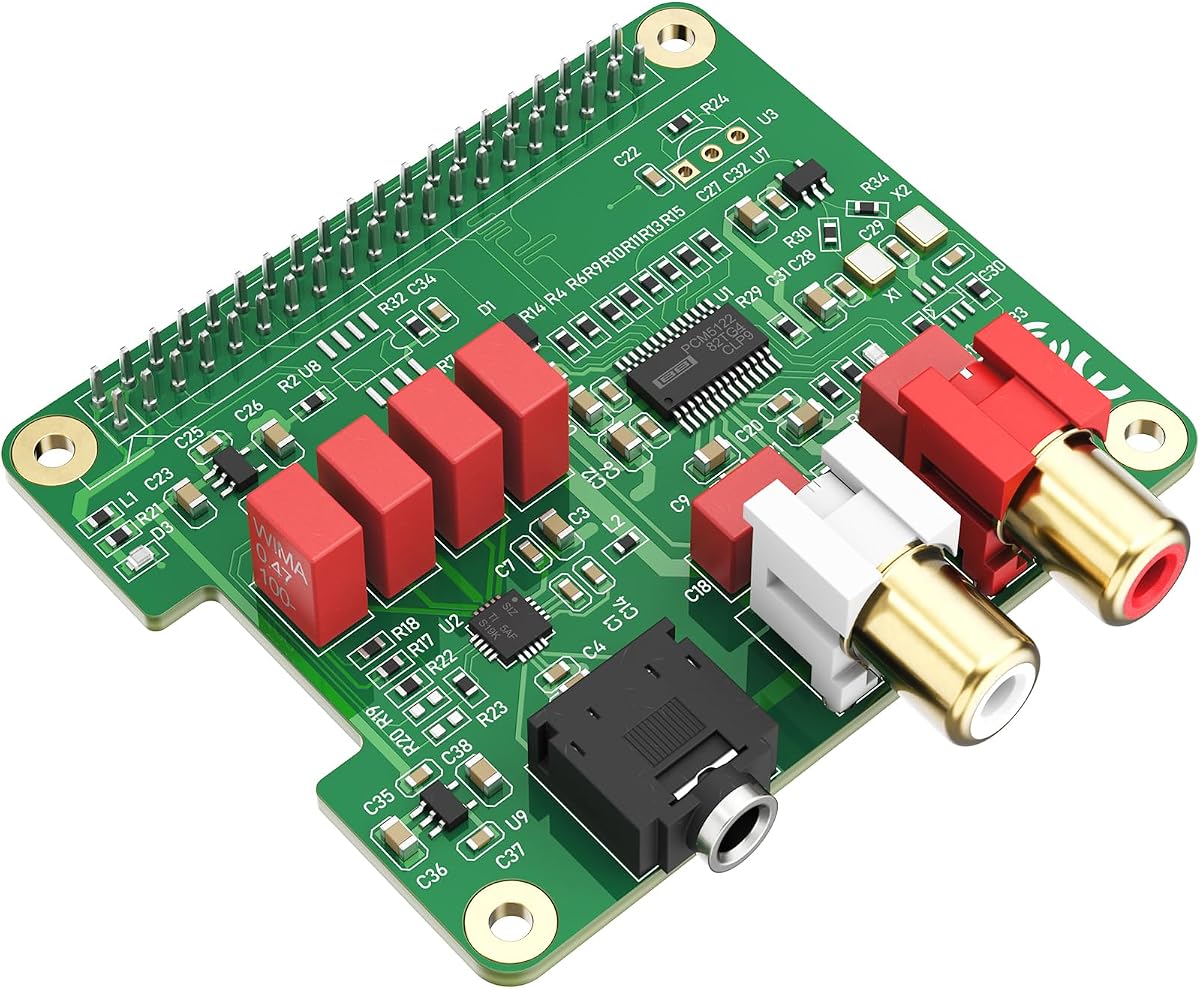
This HiFi DAC HAT stands out as the top pick for most users seeking high quality audio on any Raspberry Pi model. It uses the respected PCM5122 chip to deliver clean 384kHz 32bit playback with minimal noise.
We may earn a commission when you buy through this link, at no additional cost to you.
The dual oscillators eliminate jitter from the Pi's internal clock ensuring precise timing. Independent grounding for RCA and headphone outputs prevents crosstalk while the film capacitors boost analog signal purity significantly.
Its main limitation is physical clearance since the board sits directly on the GPIO pins which may interfere with some cases. Power supplies should be clean to avoid introducing hum into the audio chain.
Buyers who want balanced performance without breaking the bank should choose this board. It offers reference class engineering at a fraction of traditional DAC costs making it ideal for home music systems.
Master clock mode allows the HAT to dictate timing rather than relying on the Pi which reduces jitter and improves overall clarity especially for high resolution tracks.
It works seamlessly with Volumio Moode and LibreELEC. Onboard EEPROM means you rarely need manual configuration so installation is quick and straightforward for beginners.
We may earn a commission when you buy through this link, at no additional cost to you.
The DAC Mini Hat is specifically designed to fit smaller boards like the Pi Zero without overhanging. It retains full compatibility with larger Pi models while maintaining a compact footprint.
We may earn a commission when you buy through this link, at no additional cost to you.
Equipped with the same PCM5122 chip as the top pick it delivers similar audio quality. The TPA6133 headphone amp provides enough power for high impedance headphones which is rare in this price tier.
While it lacks some advanced clocking features found in pricier HATs it still offers excellent sound. Some users report needing minor tweaks for certain OS setups but overall compatibility is strong.
This is perfect for portable media players or projects where space is limited. It delivers unbeatable value for those who need reliable audio on Zero models without sacrificing sound quality.
Its compact design avoids overhang on Zero boards ensuring stable connections in tight enclosures. This makes it superior for portable audio builds where bulk is a concern.
Dual RCA and 3.5mm outputs allow you to connect to amps or headphones easily. This flexibility supports diverse setups from desktop speakers to portable headphones.
We may earn a commission when you buy through this link, at no additional cost to you.
For audiophiles seeking the ultimate performance this Pro Hat uses the flagship ES9038Q2M chip. It achieves 129dB dynamic range and supports DSD512 which few other Pi HATs can handle.
We may earn a commission when you buy through this link, at no additional cost to you.
Three TI op amps drive the outputs delivering robust power for headphones and balanced connections. Independent ultra low jitter clocks ensure timing precision that rivals standalone audio components in price.
The balanced output is a unique feature for Pi users offering better noise rejection for long cable runs. Its larger size may require specific cases so check clearance before installation.
This model is ideal for serious listening environments where bit perfect sound matters. It justifies the higher cost by bringing professional audio standards to your Raspberry Pi setup.
Support for DSD512 ensures native playback of high res formats without conversion artifacts. This preserves the original quality of your music collection perfectly.
Balanced outputs cancel noise interference for longer cable runs to external amps. This feature is usually found only on much more expensive audio equipment.
We may earn a commission when you buy through this link, at no additional cost to you.
Unlike other HATs this Digi One Hat outputs digital audio rather than analog signals. It connects to external DACs via S/PDIF which is ideal for high end audio systems.
We may earn a commission when you buy through this link, at no additional cost to you.
Galvanic isolation completely separates the Pi's power from audio signals eliminating ground loops and buzz. Dual crystal oscillators provide accurate clocking across all frequency ranges.
It supports up to 192kHz sampling rates and works with all major music player software. The lack of analog outputs means you must own a separate DAC to hear sound.
Buyers who already have an external DAC should choose this model. It guarantees the cleanest digital signal possible for maximum fidelity through your existing audio gear.
Industrial isolation components prevent electrical noise from reaching your DAC inputs. This ensures a pure signal path that maintains audio integrity over long cables.
It offers both optical Toslink and electrical RCA digital outputs. This versatility lets you connect to almost any external DAC or amplifier you own.
We may earn a commission when you buy through this link, at no additional cost to you.
This module uses the reliable PCM5122 chip to deliver solid audio quality at a budget friendly price. Its LED indicators help troubleshoot power and decode issues easily.
We may earn a commission when you buy through this link, at no additional cost to you.
With a 120dB SNR it offers clear sound that rivals more expensive boards. It uses the I2S interface for accurate digital transmission to the DAC chip.
The lack of a dedicated headphone amp means you need external speakers or headphones with an amp. Still it remains one of the most cost effective options available today.
It is perfect for beginners on a tight budget or simple speaker projects. The performance exceeds expectations for the price making it a smart entry level choice.
Red and green LEDs clearly show power and decoding status. This visual feedback simplifies debugging without needing software tools or complex commands.
120dB SNR ensures low background noise even during quiet passages. It handles high resolution files well providing a clean listening experience.
We may earn a commission when you buy through this link, at no additional cost to you.
This RASPIAUDIO HAT simplifies setup with an onboard EEPROM chip that enables plug and play operation. It supports a wide range of Pi models from Zero to Pi 5.
We may earn a commission when you buy through this link, at no additional cost to you.
It delivers 112dB SNR and 32bit 384kHz support which is adequate for casual listening. The PCB has an aesthetic design that adds visual appeal to projects.
While it lacks advanced jitter correction or balanced outputs it still beats USB DACs in noise performance. It is best for users who want simplicity over audiophile specs.
Buyers seeking an easy install with decent sound should pick this one. It balances functionality and cost well for home media players and basic audio tasks.
The EEPROM chip auto configures the HAT reducing manual driver installation. This saves time and makes it easier for beginners to start listening quickly.
It provides significantly better audio quality than standard USB adapters. This improvement is noticeable in reduced noise and clearer instrument separation.
We may earn a commission when you buy through this link, at no additional cost to you.
This DAC focuses on eliminating noise by including a ground loop isolator. It uses the PCM5122 codec to ensure clean and reliable audio playback for your Pi.
We may earn a commission when you buy through this link, at no additional cost to you.
The isolator prevents unwanted hum from power grounding issues which is common with single board computers. It is designed specifically for the Pi 5 and uses its V3 case.
With only one 3.5mm output it lacks flexibility for dual analog connections. This makes it less versatile than multi output boards but perfect for headphones.
Choose this if you experience buzzing sounds with other setups. It offers a simple solution to noise problems while delivering solid audio performance.
The ground loop isolator prevents hum caused by shared power grounds. This results in a cleaner signal especially when using long audio cables.
Designed specifically for Pi 5 compatibility and Argon case use. This ensures optimal physical fit and power management for that model.
We may earn a commission when you buy through this link, at no additional cost to you.
The HiFiBerry DAC+ DSP features a 300MHz processor for real time audio adjustments. You can perform room equalization and mixing without external software.
We may earn a commission when you buy through this link, at no additional cost to you.
Its standalone mode allows it to run without the Pi being active which is useful for dedicated music servers. Digital inputs let you connect external sources directly.
The board works only with specific enclosures which can limit mounting options. The cost is higher than standard HATs but the DSP features justify it.
Buyers who need room tuning or standalone capability will appreciate this board. It brings advanced DSP capabilities to the Pi ecosystem for professional audio setups.
Built in DSP allows you to tune audio to your room's acoustics. This improves sound quality by compensating for room reflections or bass issues.
It supports external digital inputs for flexible source switching. This feature is rare in typical Pi HATs and adds versatility.
We may earn a commission when you buy through this link, at no additional cost to you.
This classic Digi+ version provides bitperfect digital audio via Toslink and coax. It is designed for older Pi models but remains stable for legacy setups.
We may earn a commission when you buy through this link, at no additional cost to you.
The S/PDIF chip supports up to 192kHz 24bit resolution making it suitable for most high res audio. It sends raw data streams to external DACs without modification.
It does not have analog outputs so you must use an external DAC. Compatibility is limited to older models which may not be ideal for new builds.
Choose this if you have an older Pi and an external DAC. It offers proven reliability and excellent digital transmission for long term projects.
The board sends unmodified data streams ensuring no quality loss. This is critical for preserving the integrity of high quality audio files.
Designed for Pi 2 and A models it suits older hardware. While limited it remains a stable choice for legacy systems.
We may earn a commission when you buy through this link, at no additional cost to you.
This module is the most affordable option offering digital audio improvement over onboard audio. It uses the PCM5102A chip and supports the I2S interface.
We may earn a commission when you buy through this link, at no additional cost to you.
The stereo jack comes pre soldered for convenience but wiring requires care. It works well for both Pi and Arduino projects needing voice or audio output.
It lacks many features like oscillators or EEPROM but delivers clear sound. Build quality is basic so handle it gently to avoid damage.
Perfect for those on a strict budget who need basic audio. It offers surprising quality for the cost and is ideal for small hobbyist projects.
The stereo jack is already attached to save assembly time. This simplifies connecting headphones or speakers without soldering.
It supports Arduino boards expanding its use beyond the Pi. This versatility makes it great for robotics or voice projects.
We may earn a commission when you buy through this link, at no additional cost to you.
Choosing the right DAC depends on your specific audio goals, hardware setup, and budget constraints.
The DAC chip determines core audio performance. Look for reputable chips like PCM5122 or ES9038Q2M which offer low distortion and high dynamic range for cleaner sound.
Higher quality chips provide better clarity especially at high volumes and with detailed tracks.
Check if the HAT supports 384kHz or 192kHz rates depending on your music library. Higher rates ensure accurate playback of high resolution files without downconversion.
Support for 32bit/384kHz is ideal for most audiophiles seeking lossless playback.
Decide between analog outputs like RCA and 3.5mm versus digital S/PDIF outputs. Analog outputs drive headphones and speakers directly while digital outputs need an external DAC.
RCA outputs offer better signal quality than 3.5mm jacks for connecting to amplifiers.
Dual oscillators on the board eliminate timing errors from the Pi's system clock. This reduces jitter and improves sound precision especially during complex passages.
HATs with master clock mode deliver significantly better timing than those relying on the Pi.
Ensure the HAT works with your preferred OS like Volumio or Moode. Look for EEPROM support which simplifies setup by avoiding manual driver installation.
Good community support helps troubleshoot issues quickly when setting up your system.
Verify dimensions if you use a case since some HATs stick out beyond the board. Pi Zero users need compact boards to avoid overhang or mounting conflicts.
Check clearance around GPIO headers to ensure stable connections with other devices.
High performance DACs may need stable power to avoid introducing noise. Ensure your Pi power supply can handle the load without voltage drops.
Using a separate regulated supply helps maintain audio quality in demanding setups.
Prices range from under twenty dollars to over one hundred. Budget models work for casual listening while premium boards offer features for critical listening.
Balance features with cost to find a HAT that meets your audio needs efficiently.
Begin by installing the HAT firmly on the GPIO header ensuring no pins are bent. This physical connection must be secure to prevent audio dropouts or signal loss.
Configure your OS to route audio through the HAT using ALSA settings or your music player app. Most popular software detects the HAT automatically for simple setup.
Keep the board clean and free of dust. Avoid touching exposed components and ensure good ventilation to maintain long term reliability and performance.
Most DAC HATs draw power directly from the Pi's GPIO pins so no separate power supply is needed. Ensure your Pi power supply is strong enough to handle the extra load especially for high performance models.
You can use passive speakers only if your HAT includes an amplifier or you use a separate powered amp. Active speakers with RCA inputs work directly with analog output boards without extra hardware.
Volumio and Moode Audio offer the best support for most HATs. They auto detect compatible boards and simplify configuration for seamless audio playback right out of the box.
Most modern HATs use onboard EEPROM to auto configure drivers so none are needed. However some may require enabling audio via config tools or adding lines to system files.
Use a HAT with galvanic isolation or a ground loop isolator accessory. Ensure all connected devices share the same power outlet to minimize electrical interference.
I2S provides direct digital access bypassing the Pi's USB bus which reduces noise. This results in clearer sound compared to USB DACs which may suffer from interference.
The HiFi DAC HAT leads our list for balancing performance and affordability with its PCM5122 chip and dual oscillators. It suits most users seeking high fidelity music playback.
Prioritize boards with low jitter clocks and good software support for the smoothest experience. Match output types to your speakers or DAC to ensure optimal signal paths.
Prices and stock change often so check current availability before purchasing. This guide helps you select a HAT that transforms your Pi into a reliable audio hub.