
Luster Leaf 1625 Digital Soil Thermometer
4.2Editor score
Affordable pricing
Simple digital display
Early season planting
This guide compares the top digital soil thermometers for accurate temperature readings to help you optimize planting times and plant health effectively.
Finding the right digital soil thermometer is essential for gardeners who want to monitor root zone conditions accurately. These devices help you determine the perfect time to plant seeds or transplant seedlings based on precise temperature data.
We evaluated ten top-rated models based on accuracy, durability, ease of use, and additional features like pH and moisture testing. Our goal is to help you choose a tool that fits your specific gardening needs and environment.
Each pick highlights unique strengths such as wireless monitoring, compost tracking, or multi-parameter testing. Please note that prices and availability can change, so check the current listing before making your final purchase decision.
4.2Editor score

4.7Editor score

4.2Editor score
This table provides a side-by-side look at key specifications for each model including probe length, display type, and unique features to help you compare options quickly.




The Reotemp K83B1 stands out as a reliable tool for gardeners focusing on compost and soil health. Its 4.7 rating reflects consistent performance in varied conditions. The build quality ensures longevity even with frequent outdoor use.
We may earn a commission when you buy through this link, at no additional cost to you.
Its 12-inch stainless steel stem allows deep insertion for accurate core soil temperatures. The included digital composting guide helps beginners manage pile heat effectively. The waterproof design protects it from rain and moisture exposure during use.
While it uses an analog dial rather than a digital screen it remains highly readable. Some users prefer digital numbers but the clarity here is sufficient. The lack of extra features keeps it simple and focused on temperature.
This model is ideal for composters and gardeners who prioritize durability over extra functions. It offers a straightforward way to monitor heat without complexity. We recommend it for those seeking a trusted traditional thermometer.
The 304 stainless steel case and glass lens resist corrosion and damage. This ensures the thermometer lasts through multiple seasons of outdoor gardening tasks.
Free expert instructions help users manage compost piles for efficient production. This adds value beyond just temperature measurement for organic gardeners.
We may earn a commission when you buy through this link, at no additional cost to you.
The Luster Leaf 1625 offers a straightforward digital solution for monitoring soil temperature. With a solid 4.2 rating it serves beginners well. Its simplicity makes it an excellent entry point for gardeners on a budget.
We may earn a commission when you buy through this link, at no additional cost to you.
It focuses solely on temperature which keeps costs low and usage simple. The digital screen provides clear numbers without needing interpretation. This tool is perfect for checking if the ground is ready for planting seeds.
Though it lacks advanced features like pH testing it does its core job well. The build is basic but functional for occasional checks. Users should expect it to handle standard garden tasks without fuss.
We recommend this for those needing a quick reliable temperature check without extras. It is a cost effective way to start monitoring soil conditions. Its value lies in affordability and direct functionality.
This thermometer provides essential temperature data at a minimal cost. It is perfect for gardeners who do not need complex multi-parameter tools.
No complex menus or settings are required to get a reading. Insert the probe and read the result immediately for quick planting decisions.
We may earn a commission when you buy through this link, at no additional cost to you.
The ECOWITT WN34BS brings modern connectivity to soil monitoring. Its 4.2 rating highlights its value for tech savvy gardeners. The ability to track data remotely sets it apart from standard testers.
We may earn a commission when you buy through this link, at no additional cost to you.
It supports Wi-Fi gateway pairing for real-time viewing on apps. This allows checking temperatures without visiting each plant location. The waterproof probe ensures durability in outdoor beds or greenhouses.
The requirement for a separate gateway adds initial cost and setup steps. Users must connect it to the ECOWITT server for full features. However the convenience of remote alerts justifies this for many.
This model is best for large gardens or farms needing centralized data. It offers peace of mind through automated monitoring and alerts. We suggest it for those investing in smart gardening systems.
Data uploads to a free server for viewing on laptops or phones. This enables checking conditions from anywhere without physical inspection.
The system allows up to eight channels for tracking multiple spots. This scalability helps manage large growing areas efficiently.
We may earn a commission when you buy through this link, at no additional cost to you.
The YAMRON 4-in-1 combines several key metrics into one device. Its 4.2 rating suggests balanced performance across functions. It is designed to offer a comprehensive view of plant conditions.
We may earn a commission when you buy through this link, at no additional cost to you.
It measures moisture pH temperature and sunlight all at once. The rotating head helps read the screen while kneeling. The backlight aids visibility in darker garden areas or early mornings.
Readings require moist soil to prevent probe damage. Users must wait ten minutes after watering for accurate tests. This limitation means it is not for instant dry checks.
This is a strong choice for indoor and outdoor plant care. It consolidates tools into one unit saving space and cost. We recommend it for home gardeners managing diverse plant types.
The screen tilts to allow easier viewing while bending over. This ergonomic feature reduces strain during repeated soil checks.
Data is presented with graphics for easy understanding. Novice growers can interpret results without technical knowledge.
We may earn a commission when you buy through this link, at no additional cost to you.
This 7-in-1 kit offers extensive monitoring for serious plant enthusiasts. With a 4.4 rating it delivers reliable data across many parameters. It adds EC and TDS functions for water quality tracking.
We may earn a commission when you buy through this link, at no additional cost to you.
It helps determine optimal watering times via fertility and light data. The large screen ensures numbers are visible without squinting. This tool supports science-based care for various plant needs.
The variety of features might overwhelm casual gardeners. Proper insertion is vital to avoid damaging the probe in dry soil. Users should read instructions carefully for best results.
We recommend it for growers seeking detailed soil analytics. It provides a holistic view of the growing environment. This is ideal for optimizing health in both pots and beds.
These metrics reveal salt and nutrient levels in soil. This helps prevent over-fertilization and root burn issues.
Data driven decisions lead to healthier and stronger plants. Users can track trends over time for better gardening outcomes.
We may earn a commission when you buy through this link, at no additional cost to you.
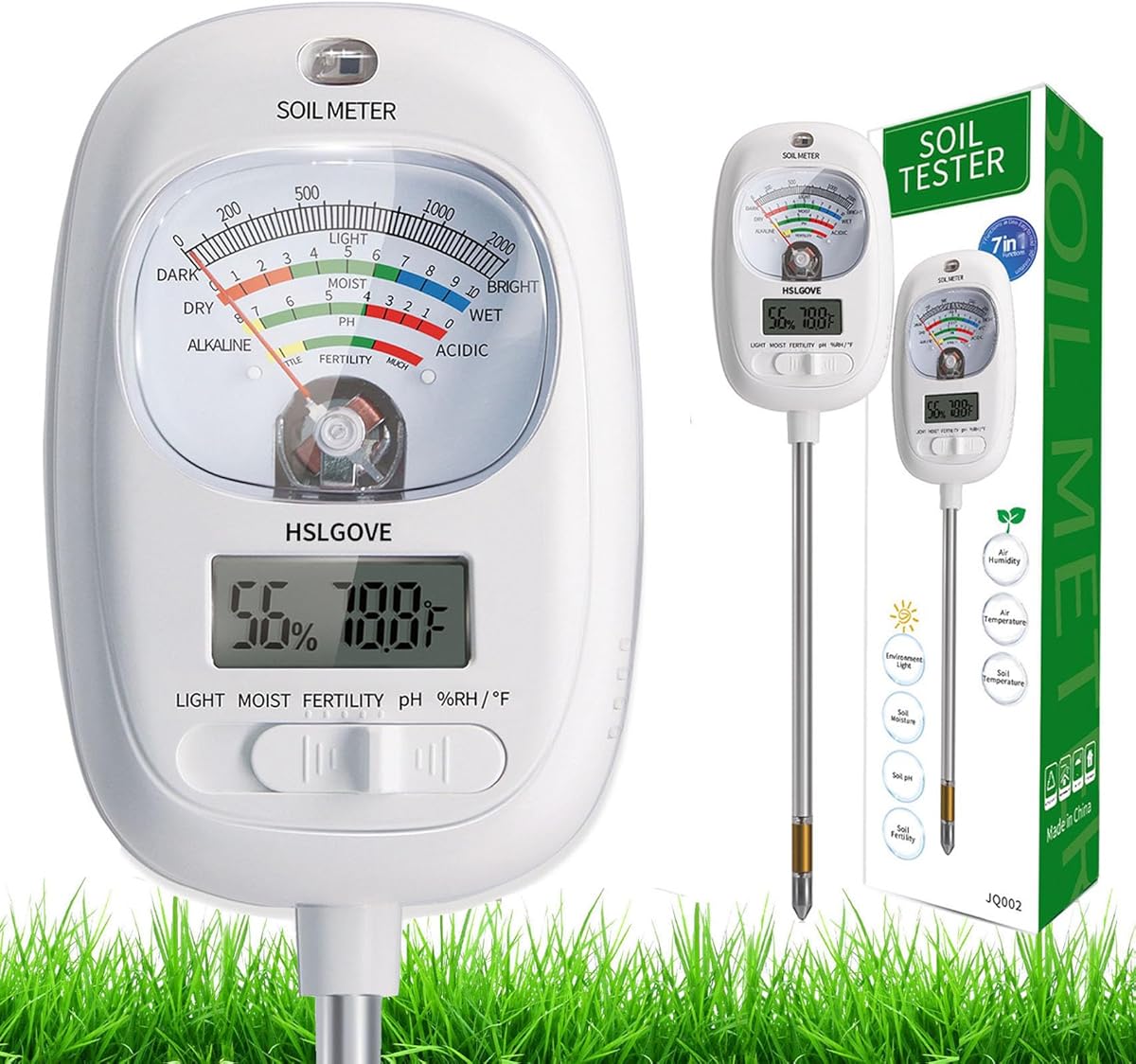
The HSLGOVE kit uses a dual screen to show soil and air data. Its 4.4 rating confirms accuracy in multiple measurements. This unique design separates environmental factors for better clarity.
We may earn a commission when you buy through this link, at no additional cost to you.
It measures air humidity alongside soil temp and moisture. This helps manage greenhouse or indoor conditions effectively. The chip supports accurate readings across different soil types.
Users must switch modes to read specific parameters. This adds steps but prevents data overlap on the screen. Battery changes are needed frequently for the digital unit.
This is great for controlled environment gardening like greenhouses. It offers a complete picture of plant surroundings. We recommend it for those managing specific climate conditions.
One screen shows soil metrics while another tracks air. This separation improves readability and reduces user confusion.
The three metal probe design resists wear and tear. It ensures long-term performance even in compacted soils.
We may earn a commission when you buy through this link, at no additional cost to you.
The Urban Worm thermometer is tailored for vermicomposting needs. Its 4.6 rating reflects strong user satisfaction in this niche. It ensures worms stay within their ideal temperature range.
We may earn a commission when you buy through this link, at no additional cost to you.
Color tick marks show safe zones at a glance. Green yellow and red indicators simplify monitoring. This prevents heat stress in worm compost systems.
It is not designed for deep garden beds beyond five inches. However this depth is perfect for bins and shallow pots. The analog dial is robust and easy to read.
We recommend this for home composters and worm farmers. It provides a specialized tool for a specific purpose. Its simplicity and durability make it a favorite in this category.
Visual markers indicate safe and unsafe temperatures quickly. This reduces the need to interpret numbers during daily checks.
Worms thrive in specific ranges between 55 and 90 Fahrenheit. This tool helps maintain that balance for healthy populations.
We may earn a commission when you buy through this link, at no additional cost to you.
This meter focuses on conductivity and temperature for nutrient analysis. Its 4.1 rating indicates reliable results for advanced users. It helps maintain healthy salt levels in the root zone.
We may earn a commission when you buy through this link, at no additional cost to you.
ATC ensures accuracy across different soil temperatures. The backlight helps read values in low light settings. The corded sensor allows flexibility during insertion.
Calibration requires a solution and extra steps. Users must follow precise instructions to maintain accuracy. This adds complexity compared to simpler thermometers.
We recommend it for growers managing soil nutrition closely. It is a specialized tool for nutrient management tasks. This supports long-term plant health through data.
The system adjusts readings based on thermal changes. This ensures consistent data regardless of ambient heat.
The electrode resists dust and water ingress. This protects the sensor during outdoor gardening use.
We may earn a commission when you buy through this link, at no additional cost to you.
This model offers wireless convenience for large outdoor spaces. With a 4.5 rating it delivers stable data over distance. The TDR technology improves moisture reading accuracy significantly.
We may earn a commission when you buy through this link, at no additional cost to you.
You can monitor conditions from your couch or office. A single display can manage up to twelve sensors. This helps track multiple areas without walking to each spot.
Setting up the pairing process takes initial effort. Battery life depends on usage frequency and temperature. Users should plan for regular maintenance of sensors.
We recommend it for large gardens or smart home setups. It brings modern convenience to traditional soil monitoring. This supports efficient care for extensive plant collections.
Signals transmit up to 328 feet from the sensor. This allows checking data remotely without physical presence.
Multiple contact points ensure consistent moisture readings. This reduces errors from uneven soil density.
We may earn a commission when you buy through this link, at no additional cost to you.
The 7-in-1 meter aims for high precision with five probes. Its 3.9 rating suggests it requires user calibration. It provides deep insights into soil chemistry and humidity.
We may earn a commission when you buy through this link, at no additional cost to you.
The split display shows moisture and pH simultaneously. This reduces the need to switch modes frequently. The probes resist corrosion for use in tough soils.
Results need patience as pH values take time to settle. Users must check multiple spots for average readings. This ensures accuracy across different areas of soil.
We recommend it for advanced growers needing detailed data. It is expandable for larger farm or greenhouse setups. This supports precise management for commercial or hobby farming.
Multiple probes improve data precision over standard meters. This reduces errors from uneven soil conditions.
Two data points are visible at once for efficiency. This saves time during routine garden inspections.
We may earn a commission when you buy through this link, at no additional cost to you.
Selecting the right thermometer depends on your specific gardening goals. Whether you need basic temperature checks or full environmental analysis this guide covers the key factors to consider.
Ensure the device covers the temperatures relevant to your plants. Some models are limited to warm ranges while others handle cold climates. Accuracy is vital for transplant decisions so check reviews.
Look for verified accuracy claims within two degrees for best results.
The probe must reach the root zone without bending. Stainless steel options last longer than plastic coated ones. Longer stems help in larger garden beds or compost piles.
A robust probe ensures long-term use without frequent replacements.
Backlit LCD screens help in low light or night use. Large numbers reduce eye strain for older gardeners. Analog dials are simpler but require interpretation skills.
Prioritize displays that match your visual needs and conditions.
Multi-function models test pH moisture and light too. This can save money by replacing several tools. However more features may increase complexity and battery usage.
Choose extra functions based on your specific plant care requirements.
Wireless models offer remote monitoring via apps. These require gateways or home networks to function. Consider if you need constant data access over manual checks.
Connectivity adds convenience but adds cost and setup effort.
Most devices use AAA batteries which need replacement. Solar options exist but are rare for soil testers. Check battery life estimates before buying.
Rechargeable units reduce waste but may cost more initially.
Outdoor exposure demands water and dust resistance. IP65 or higher ensures durability in rain. This prevents damage from accidental spills or heavy weather.
Always check the waterproof rating for outdoor gardening use.
Some models need calibration solutions for accuracy. Others are pre-calibrated and ready to use. Calibration adds steps but improves long-term reliability.
Assess your willingness to perform maintenance on the device.
Insert the probe into moist soil to get accurate readings. Avoid forcing it into dry hard ground to prevent damage. Wait at least ten seconds for the numbers to stabilize.
Clean the probe with water after each use to remove residue. Store the device in a dry place away from direct sunlight. Replace batteries when the low power indicator appears.
Regularly check calibration if your model supports it. This ensures consistent accuracy over time. Following these steps extends the life of your gardening tool significantly.
Soil temperature affects seed germination rates and root development. If the soil is too cold seeds may rot or fail to sprout. Monitoring ensures you plant at the optimal time for growth.
Yes but you need a longer probe to reach the core heat. Models designed for composting handle higher temperatures. Standard soil testers may have range limits for active piles.
Check weekly during planting season to track changes. After planting monitoring can be less frequent unless transplanting. Daily checks are useful for controlled environments like greenhouses.
Some models require calibration for high accuracy while others do not. Calibration usually involves a known temperature solution. Follow the user manual for specific instructions on your device.
Most vegetables prefer soil temperatures between 65 and 75 degrees. Some root crops like carrots can tolerate cooler soil. Always check specific requirements for each plant variety.
Some models support water temperature if the probe is waterproof. Others are for soil only. Check the product specs to see if water testing is supported.
We highlighted ten models covering basic to advanced needs. The Reotemp K83B1 remains top for durability while the ECOWITT leads in connectivity. Budget options like Luster Leaf offer simplicity.
Prioritize probe depth and waterproofing for outdoor longevity. Features like pH testing add value if you manage soil chemistry. Ensure the display meets your readability needs for daily use.
Remember to check current prices and availability before purchasing. Our reviews help narrow choices but your specific conditions may vary. Invest in a tool that supports your gardening goals effectively.