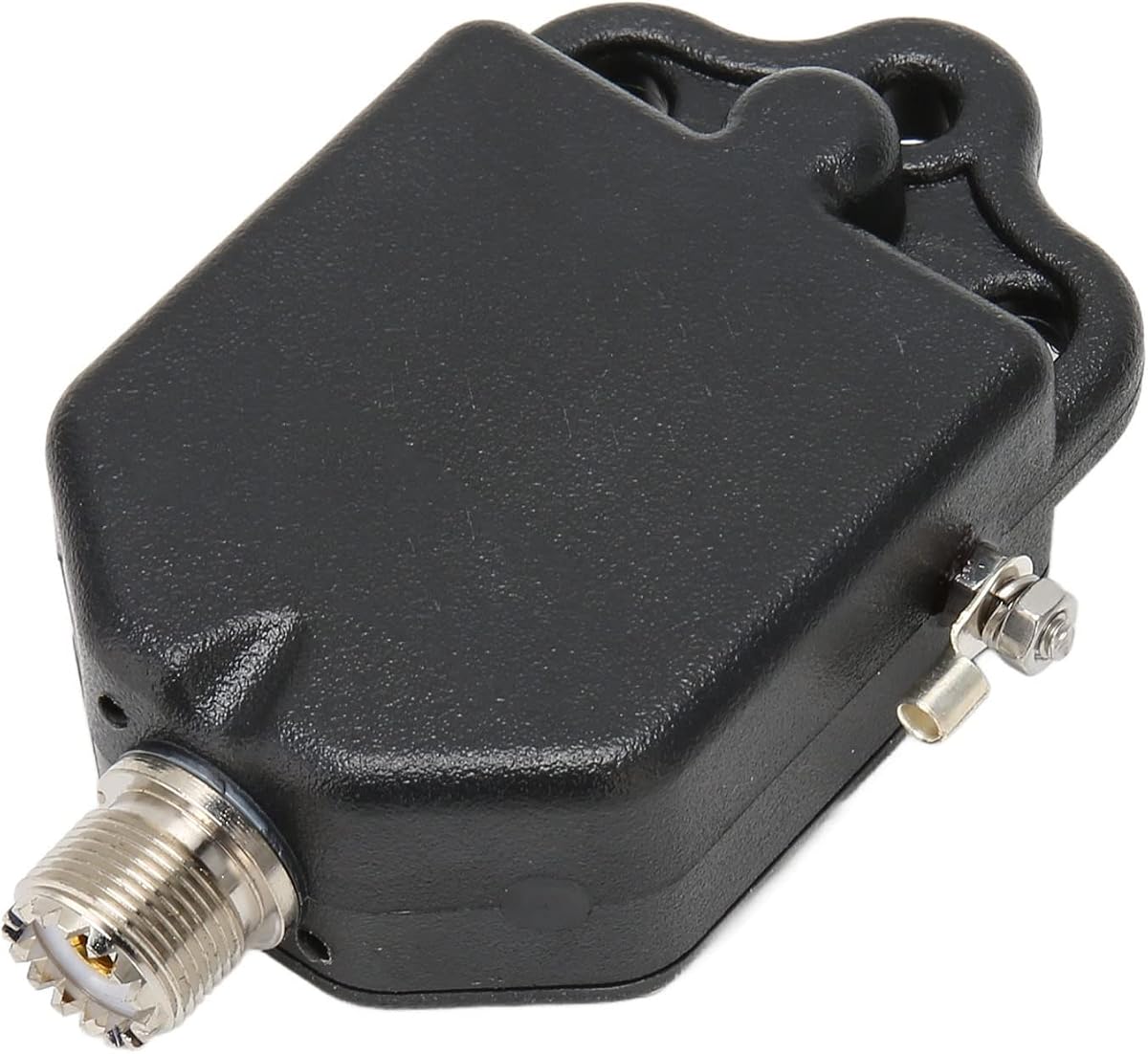
HF End Fed Antenna, 4 Band 8 Band 1MHz to 30MHz 100W Power End Fed Radio Antenna
4.5Editor score
Affordable price point
Solid 100W power rating
Easy setup with standard balun
This guide compares the top End Fed Antenna for Portable Hf models for 2026, evaluating performance, durability, and ease of setup for mobile operators.
Portable HF operations demand reliable antennas that are compact yet effective. An End Fed Antenna for Portable Hf offers a simple solution for hams on the go. These antennas eliminate the need for complex counterpoise systems, making them ideal for quick deployments in the field or emergency situations where space is limited.
We compared ten top-rated models based on power handling, frequency coverage, and build quality. Each product was evaluated for its suitability in portable scenarios like POTA or SOTA activations. Our analysis focuses on real-world usability, ensuring you can find the right match for your specific radio and operating style without unnecessary complexity.
Each pick highlights key strengths and potential limitations to help you decide quickly. Note that pricing and availability change frequently, so check current listings before purchasing. We prioritize models that balance performance with portability, ensuring you stay connected regardless of your location or the conditions you face during your expeditions.
4.5Editor score

4.8Editor score

3.6Editor score
This side-by-side comparison outlines the key specifications and capabilities of each model. We focus on essential metrics like power limits, frequency range, and physical attributes to help you narrow down your options efficiently for your next portable operation.
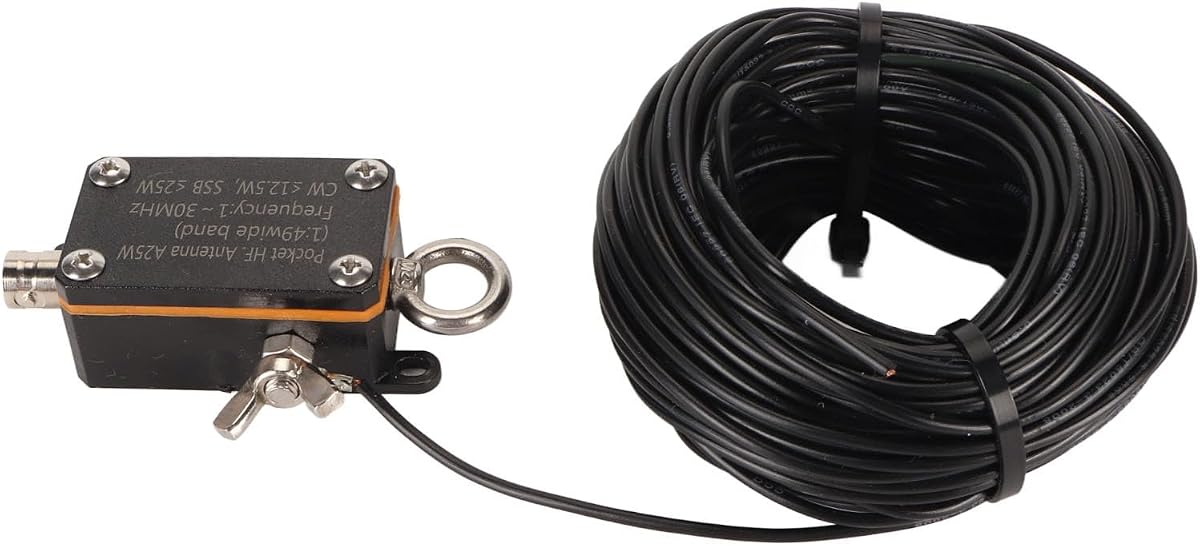
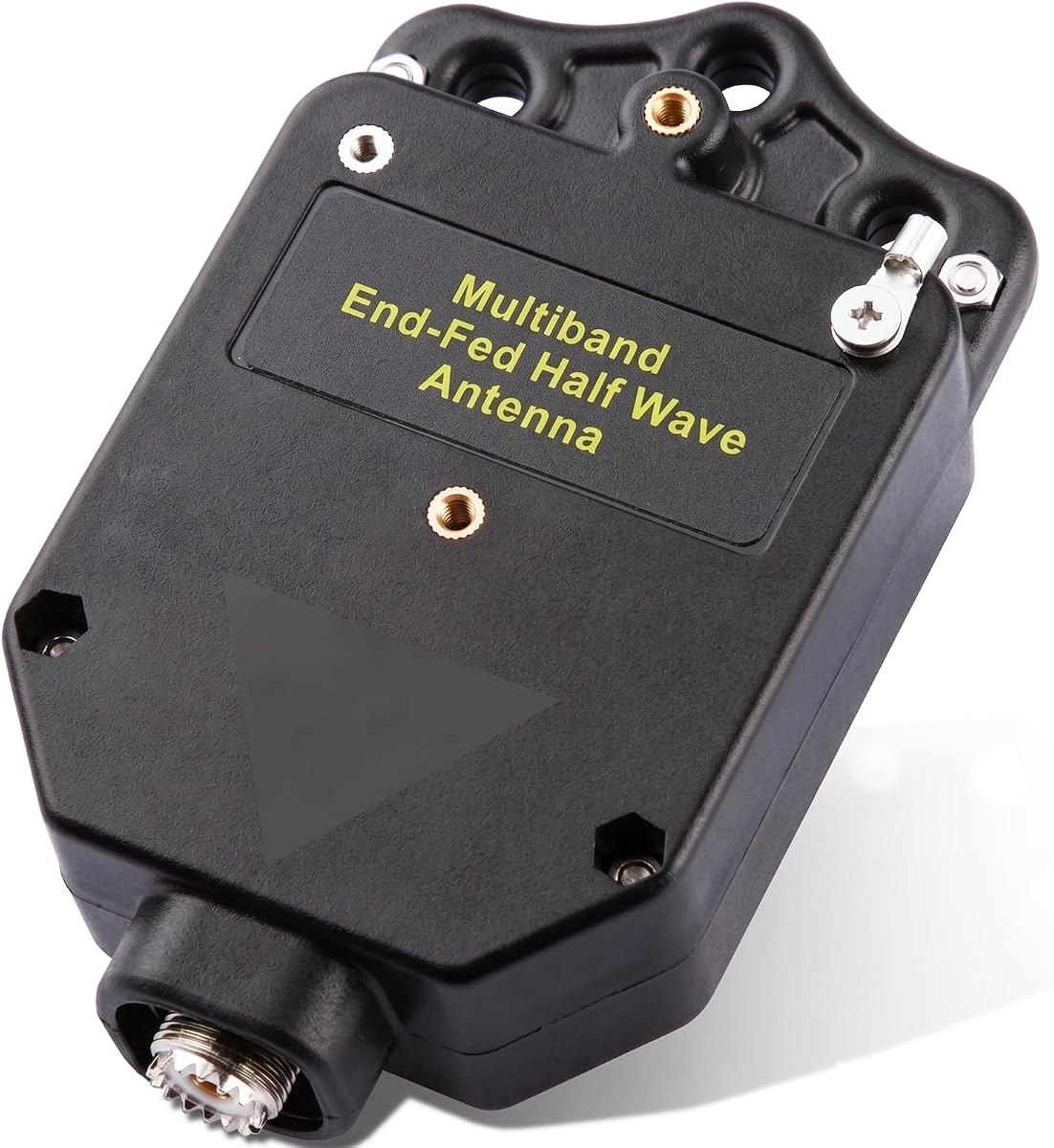


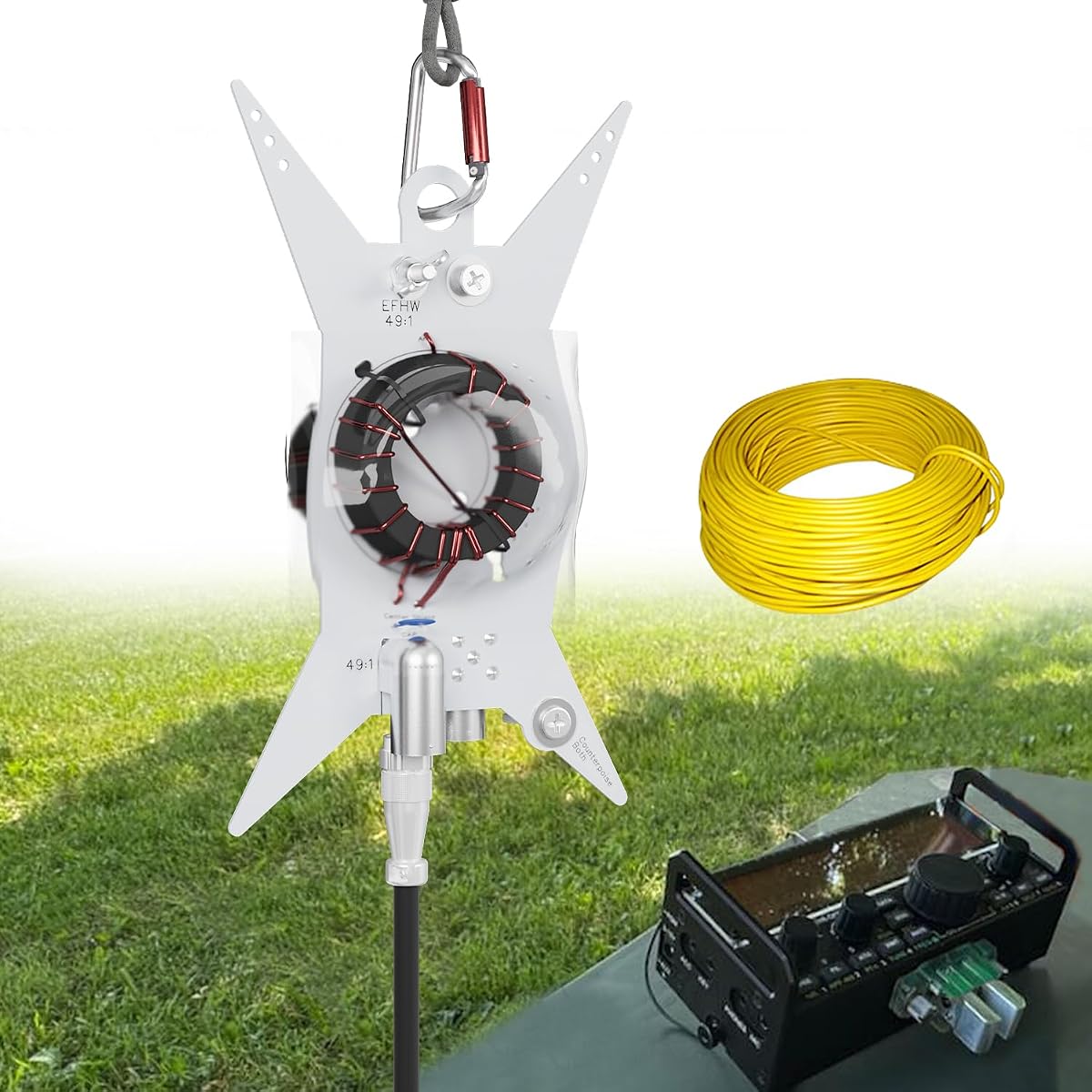

This End Fed Antenna for Portable Hf stands out for its robust performance across the entire HF spectrum. With a 4.8 rating, users appreciate its reliability and high power handling capabilities. It is designed to support various modes like SSB, CW, and digital signals effectively.
We may earn a commission when you buy through this link, at no additional cost to you.
The antenna features a 1:64 matching ratio that minimizes signal loss significantly. It supports up to 150W on SSB, making it suitable for high-power operations. The ABS material ensures it withstands environmental stress without degrading over time.
While it requires some wire cutting for optimal performance, the results are worth the effort. Users should note that environmental factors can influence resonance, so fine-tuning is recommended. This trade-off ensures maximum efficiency across different bands.
Radio enthusiasts seeking a balance of power and portability should consider this model. It is ideal for field deployments where reliable long-distance communication is essential. Its sturdy build makes it a top choice for serious operators.
This model supports high power levels, allowing users to maximize transmission range without compromising safety.
Operating from 1 to 30 MHz, it covers all major amateur bands, offering flexibility for various communication needs.
We may earn a commission when you buy through this link, at no additional cost to you.
This antenna offers versatile deployment options for users needing stealth or temporary setups. It supports continuous HF coverage without the need for precise alignment. The omnidirectional pattern ensures reliable reception in various orientations.
We may earn a commission when you buy through this link, at no additional cost to you.
Designed with a dedicated ground terminal, it effectively suppresses EMI interference during heavy digital modes. The ABS shield protects against harsh outdoor elements, ensuring long-term durability. It handles up to 150W on SSB comfortably.
Installation requires attention to wire length and placement away from obstacles. Users should trim wires to specific lengths for optimal resonance. Avoid placing it near metal objects to maintain signal efficiency.
Perfect for POTA and SOTA activations, this unit adapts to different environments easily. It is a solid choice for those who need to deploy quickly without compromising on power or stability.
Low-profile design allows for quick and discreet setups under strict environmental or regulatory conditions.
Integrated grounding reduces noise, enhancing signal clarity during digital mode operations.
We may earn a commission when you buy through this link, at no additional cost to you.
Built for demanding operations, this antenna supports up to 400W on SSB. It is designed for durability with UV-resistant and waterproof components. The integrated transformer ensures low SWR across the selected bands without an external tuner.
We may earn a commission when you buy through this link, at no additional cost to you.
It features a waterproof M-J connector and a high-performance ferrite core. These elements protect against moisture and signal loss in bad weather. The construction supports a long service life of three to five years with proper care.
The frequency span is limited to the 40m through 10m bands compared to full HF coverage. However, for many operators, this range is sufficient for most communications. It requires specific spacing from objects to maintain efficiency.
This model is ideal for users needing high-power transmission in rugged environments. It excels in long-term field stations or challenging terrains where reliability is paramount over compact size.
Supports high wattage, allowing for stronger signals and better reach during peak communication windows.
Weatherproof materials ensure consistent performance even in rain or high humidity conditions.
We may earn a commission when you buy through this link, at no additional cost to you.
This model provides a cost-effective solution for operators needing broad frequency coverage. It covers the full 1 to 30 MHz range, allowing for versatile communication. The build quality is solid, using premium ABS material for longevity.
We may earn a commission when you buy through this link, at no additional cost to you.
It supports up to 100W on SSB, which is sufficient for most portable setups. The 1:64 balun ensures efficient impedance matching across bands. Standard interfaces make installation straightforward for beginners and veterans alike.
While the power limit is lower than premium models, it remains adequate for typical operations. Users must prepare and trim the wire to match specific frequencies. This slight prep work ensures optimal performance without extra cost.
A great choice for budget-conscious hams, this antenna balances performance with affordability. It fits well into casual field operations where high wattage is not the primary requirement for contact success.
Offers a low entry cost while maintaining essential features needed for reliable HF communication.
Supports multiple bands from 80m to 6m, giving users flexibility to explore different frequencies.
We may earn a commission when you buy through this link, at no additional cost to you.
This unique antenna offers dual matching ratios in a single unit for versatile use. The 49:1 side supports resonant antennas, while the 9:1 side handles random wires. It is suitable for a wide variety of amateur radio applications.
We may earn a commission when you buy through this link, at no additional cost to you.
It features a durable construction designed to withstand rain and wind without damage. The compact and lightweight design makes it easy to carry and deploy quickly. Users appreciate the versatility for different operating modes.
While it offers great flexibility, new users may find the setup slightly complex compared to single-ratio units. Performance varies based on the wire length and surrounding environment. Careful tuning can unlock its full potential.
Ideal for operators who experiment with different wire configurations, this model offers unique adaptability. It is a solid tool for those who need one antenna to cover both resonant and random wire strategies effectively.
Enables two different antenna configurations from one package, doubling your operational options on the field.
Designed to function reliably even in challenging weather conditions, ensuring you can operate regardless of the forecast.
We may earn a commission when you buy through this link, at no additional cost to you.
This upgraded version focuses on delivering stable performance across multiple HF bands. It supports up to 150W on SSB, ensuring strong transmission. The waterproof ABS shell protects it against moisture and environmental wear.
We may earn a commission when you buy through this link, at no additional cost to you.
The optimized matching ratio reduces signal loss significantly. It works well with various antenna structures and radio equipment. Users find the installation process simple and quick for emergency communications.
To maximize efficiency, wire trimming is recommended to match specific frequencies. While it is durable, the weight is slightly higher than the smallest pocket units. This trade-off supports better heat dissipation and power handling.
A reliable choice for professionals and enthusiasts, this model balances robustness with ease of use. It is perfect for long-term outdoor installations where consistent signal quality is a priority for successful contacts.
Engineered to provide consistent SWR readings and clear signals even in varied environmental conditions.
Sealed components prevent moisture damage, allowing safe use during rain or humid weather.
We may earn a commission when you buy through this link, at no additional cost to you.
Designed for extreme portability, this antenna fits easily into any bag or pocket. It uses premium PVC material for durability without adding bulk. The standard interface ensures easy connection to most radios instantly.
We may earn a commission when you buy through this link, at no additional cost to you.
It covers a wide frequency range from 1 to 30 MHz effectively. While it handles lower power levels, it is perfect for QRP and low-power portable operations. Users rate it highly for its quick setup capabilities.
Due to its small size, it handles less power than larger models. However, for lightweight operations, this limitation is often acceptable. It requires external wire but allows for flexible hanging in trees.
Ideal for SOTA hikers and travelers, this model prioritizes weight savings above all. It delivers stable reception and ease of use, making it a top choice for operators who value minimal gear.
The smallest design available allows you to carry it anywhere without feeling burdened by extra weight.
Simple installation means you can start operating minutes after arriving at your site without complex tools.
We may earn a commission when you buy through this link, at no additional cost to you.
This compact antenna is ideal for users prioritizing minimal gear and fast deployment. It features a 1:49 balun and standard interface for quick connection. The PVC material provides a hard shell that resists wear and tear well.
We may earn a commission when you buy through this link, at no additional cost to you.
It handles power levels suitable for low-power operations without risk. The design ensures stable reception across the 1 to 30 MHz range. Users appreciate its lightweight nature for carrying during travel.
The trade-off for its size is lower power handling compared to larger units. It is best suited for SSB less than 25W scenarios. Proper wire preparation ensures it resonates well on your preferred bands.
Perfect for emergency kits or backpacking, this model offers convenience without sacrificing basic performance. It is a reliable backup unit for operators who need a simple solution in a pinch.
Fits easily into small spaces, making it an excellent choice for space-constrained environments or travel bags.
High hardness PVC ensures the unit lasts longer even with rough handling during outdoor expeditions.
We may earn a commission when you buy through this link, at no additional cost to you.
Offering two distinct ratios in one unit, this antenna supports both resonant and random wire setups. It delivers excellent SWR readings across most HF bands reliably. The solid structure ensures it withstands wind and rain effectively.
We may earn a commission when you buy through this link, at no additional cost to you.
Users can choose mounting options like horizontal or vertical based on their terrain. It is designed for quick and easy installation for long-term or temporary use. The build quality is robust for field operations.
Performance depends on the length of the wire used and trimming precision. Some users may need to adjust the setup for specific band resonances. This flexibility is a trade-off for its versatile design capabilities.
Great for operators who need an all-in-one solution for different wire types. It combines ease of use with durable construction, making it a strong contender for regular portable operations.
Accommodates different wire lengths and types, giving you freedom to experiment with antenna configurations.
High-quality materials ensure the unit remains functional even in challenging outdoor weather conditions.
We may earn a commission when you buy through this link, at no additional cost to you.
This unit offers a mini design that is incredibly light and easy to carry anywhere. It supports a wide frequency range including amateur bands from 3 to 30 MHz. The standard interface allows for quick and simple installation.
We may earn a commission when you buy through this link, at no additional cost to you.
Made from PVC, it is durable yet light enough for long treks. It handles power levels suitable for QRP operations without stress. Users find it convenient for replacing antennas quickly during travel.
Due to its size, it is best for lower power operations. While not ideal for high-power stations, it excels in portable scenarios. Careful wire selection ensures stable reception across bands.
An excellent option for hikers and travelers, this model prioritizes comfort and ease of transport. It provides reliable connectivity for those who need minimal gear without losing essential communication capabilities.
Constructed to be ultra-light, reducing the strain on your pack during long field days or hikes.
Quick swap design allows you to change antennas fast if you encounter unexpected field conditions.
We may earn a commission when you buy through this link, at no additional cost to you.
Selecting the right antenna depends on your specific operating needs and environment. Consider these factors carefully to ensure optimal performance and durability in the field.
Power handling determines how much energy your antenna can transmit without overheating or failing. For high-power operations, look for models rated at 150W or higher to ensure safe and consistent performance during SSB modes.
For low-power or QRP setups, lower wattage ratings are sufficient and reduce weight. Always check the manufacturer's specifications for SSB, CW, and digital mode limits.
A wide frequency range like 1 to 30 MHz provides flexibility for various bands. Ensure the antenna covers the specific bands you plan to use most often for reliable contact success.
Some models may focus on specific bands like 40m to 10m. Choose based on your operational focus to maximize efficiency across your preferred spectrum.
Durable materials like ABS or PVC resist environmental wear and tear. Look for waterproof connectors and UV-resistant housings to extend the service life of your equipment in outdoor conditions.
Robust construction protects against accidental drops and weather exposure. This ensures the antenna remains functional even after repeated field use.
The balun ratio affects impedance matching and signal efficiency. A 1:49 or 1:64 ratio is common for end-fed designs and helps reduce SWR across multiple bands effectively.
Ensure the ratio matches your intended wire lengths and operational modes. Proper matching ensures stable performance without excessive loss.
Weight and size matter when carrying gear over long distances. Compact and lightweight models are ideal for hiking or backpacking, allowing you to deploy quickly without burden.
Consider the overall packability of the unit. A small form factor helps in fitting the antenna into emergency kits or backpacks.
Simple interfaces and standard connectors reduce setup time in the field. Look for antennas that do not require complex tools or extensive adjustments for basic operation.
Quick deployment is crucial for emergency situations or limited-time activities. Ensure the design supports fast hanging and connection.
Weatherproof designs withstand rain, wind, and humidity without degradation. Models with sealed connectors and reinforced bodies are better suited for unpredictable conditions.
Resistance to moisture and heat ensures long-term reliability. Avoid units that show signs of corrosion or weak materials.
Some antennas require specific wire lengths or trimming for optimal resonance. Check if wire is included or needs to be sourced separately to avoid delays in setup.
Proper wire length matching improves signal quality. Be prepared to measure and adjust wire to match specific bands effectively.
When deploying, ensure the antenna is at least three meters away from metal objects and foliage to prevent signal distortion. Hang it vertically, horizontally, or diagonally based on your terrain and desired radiation pattern.
Connect the antenna to your transceiver using standard connectors. Adjust the wire length if necessary using an antenna analyzer to achieve optimal SWR before transmitting. Always match power limits to the model's ratings.
After use, inspect the unit for damage or wear. Store it in a dry, protected area to maintain performance. Periodic checks of connectors and housing extend the life of your antenna.
For portable operations, power limits vary from 25W to 150W depending on the model. Lower power units suit lightweight setups, while higher power models support long-range communications. Choose based on your radio and operational needs.
Many modern end-fed antennas include internal baluns that eliminate the need for an external tuner. However, some setups may still benefit from one if the SWR is high. Check specific product features for built-in matching networks.
Wire length varies by band and model; typically 20 meters for 4-band or 40 meters for 8-band coverage. Use an antenna analyzer to fine-tune the length for optimal resonance and efficiency on your desired frequencies.
Most premium models feature waterproof ABS shells and sealed connectors to handle rain and humidity. Always check product details for specific IP ratings or waterproof claims before operating in wet conditions.
Use non-metallic ropes or straps to suspend the antenna from trees or masts. Avoid placing it near metal structures to prevent interference. It can be hung horizontally, vertically, or diagonally.
Beginners should choose models with standard interfaces and simple installation guides. Look for units with broad frequency coverage and clear power limits. A balanced choice like the WOOKLEA offers reliability without complexity.
Choosing the right End Fed Antenna for Portable Hf depends on balancing power, portability, and durability. Our top picks highlight versatile models that meet diverse needs across various operating environments.
Prioritize build quality and frequency coverage to ensure reliable performance in the field. Consider your specific power requirements and deployment conditions to select the most suitable model.
Remember to check current prices and availability before purchasing. These recommendations reflect the best options for 2026, but market conditions change regularly.