
Orbit Rain and Freeze Sensor for Sprinkler Controllers – 57069
4.5Editor score
Adjustable rain threshold
Built-in thermistor
Water-saving design
This guide compares the top irrigation controllers with rain sensors to help you save water, protect your lawn, and automate your sprinkler system efficiently.
Finding the right irrigation controller with a rain sensor ensures your landscape gets water only when needed. These smart devices prevent waste by stopping sprinklers during rain or freeze events, saving money and protecting your plants from damage.
We evaluated ten leading models based on compatibility, ease of installation, smart features, and reliability. Each product offers unique benefits, from wireless sensors to app-based control, helping you choose the perfect fit for your home or commercial needs.
Each pick highlights key specs, pros, and cons to guide your decision. Note that pricing and availability can change, so verify details before purchasing. This list covers diverse options to meet various budgets and irrigation system requirements.
4.5Editor score

4.6Editor score
4.5Editor score
This side-by-side comparison highlights the key features of each irrigation controller and rain sensor model to help you decide which best suits your landscaping needs.




The Hunter Rain-Clik WRCLIK stands out as a top choice for homeowners seeking reliable protection against water waste and freeze damage. With a strong 4.6 rating, it delivers instant shutoff when rain starts or temperatures drop to 37°F. Its wireless design makes it easy to integrate into existing sprinkler systems without complex wiring.
We may earn a commission when you buy through this link, at no additional cost to you.
Key strengths include its maintenance-free operation and customizable reset settings. The adjustable vent lets you fine-tune how quickly watering resumes after rain, ensuring flexibility for different climates and soil types. Installation is straightforward, with included brackets for gutters or walls, and it supports both normally open and closed ports.
While highly effective, users should note the need for periodic battery changes. The price is higher than basic sensors, but the convenience and freeze protection justify the cost for many. It is an ideal solution for those prioritizing ease of use and system safety.
This sensor is perfect for busy homeowners who want reliable, hands-off protection. It pairs well with various controllers, making it a versatile upgrade for any irrigation setup. If you value automation and landscape protection, the Rain-Clik is a strong recommendation.
The built-in freeze detection stops sprinklers at 37°F, preventing costly damage to pipes and plants during cold snaps.
No trenching or wiring is needed, allowing for quick installation in minutes and saving time on setup.
We may earn a commission when you buy through this link, at no additional cost to you.
The Rain Bird TM2-6 offers a straightforward solution for managing up to six sprinkler zones. Rated 4.5, it features a user-friendly interface that simplifies scheduling for residential landscapes. Its rain sensor input allows integration with external sensors to automate watering pauses during wet weather.
We may earn a commission when you buy through this link, at no additional cost to you.
This model includes a master valve or pump start circuit, which is useful for systems needing additional control. The ability to bypass the rain sensor provides flexibility during maintenance or testing. It is designed for both indoor and outdoor mounting, fitting various installation environments.
While it lacks modern smart features like app control, it excels in reliability and simplicity. The programming is intuitive, making it accessible for users who prefer manual control without digital complexity. However, those seeking advanced automation may find it limiting.
Ideal for homeowners with simpler irrigation needs, this controller delivers consistent performance. It is a solid choice for upgrading older systems with rain sensor compatibility. Consider this if you prioritize ease of use over smart connectivity.
The dedicated rain sensor input enables automatic watering stops during rain, enhancing water conservation efforts.
Designed for indoor or outdoor placement, it fits into garages, sheds, or utility areas seamlessly.
We may earn a commission when you buy through this link, at no additional cost to you.
The Rain Bird TRU6I provides program-based watering control for up to six zones, with the option to upgrade to WiFi. Its 4.5 rating reflects ease of use through an intuitive dial and LCD display. It stores programming permanently, even during power outages, ensuring schedules remain intact.
We may earn a commission when you buy through this link, at no additional cost to you.
Features include customizable watering options by day or cycle, and season adjust for broad time changes. The rain delay feature allows manual suspension or sensor integration for automatic pauses. Individual programs per zone help tailor schedules to different plant needs effectively.
While the WiFi module is optional and adds cost, the controller remains functional on its own. Indoor-only placement may limit some outdoor installations. For those planning future smart upgrades, this model offers a cost-effective starting point.
This controller suits homeowners wanting detailed scheduling without immediate smart tech. It is a practical choice for indoor setups with room for expansion. Prioritize this if you value program flexibility and future compatibility.
Easily increase or decrease all watering times by up to 200% to adapt to seasonal changes.
Manually suspend watering or use a sensor for automatic delays, improving water conservation.
We may earn a commission when you buy through this link, at no additional cost to you.
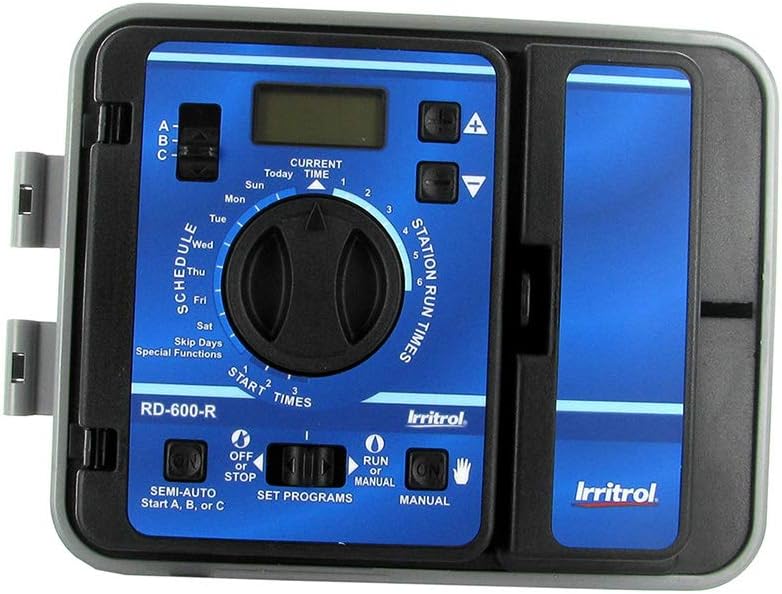
The Irritrol RD600-EXT-R is built for outdoor use, offering six stations and rain sensor integration. Rated 4.5, it supports remote control with optional accessories, adding convenience for adjustments. Its three independent programs allow diverse watering plans for different plant types.
We may earn a commission when you buy through this link, at no additional cost to you.
The rain sensor terminal enables automatic stops during rainfall, reducing waste. Water well recovery options help manage pump circuits during station delays. This model is robust for residential outdoor installations needing reliability.
Programming is straightforward but lacks advanced smart features. The remote compatibility is a plus for large properties. However, basic users may find the interface less intuitive than newer models. It remains a solid workhorse for outdoor needs.
Best for homeowners needing a durable outdoor controller with room to expand. Consider this if you plan to add remote control later. It balances functionality and cost for standard irrigation systems.
Three separate programs help tailor watering schedules to different landscape zones efficiently.
Compatible with remote series for easy access without visiting the controller location.
We may earn a commission when you buy through this link, at no additional cost to you.
The Rain Bird ARC8 brings smart convenience with app control and voice assistant compatibility. Rated 3.8, it offers weather-based scheduling to save up to 30% water. Its EPA WaterSense certification highlights efficiency, making it eco-friendly for home use.
We may earn a commission when you buy through this link, at no additional cost to you.
Users can monitor and adjust schedules remotely, share access with family, and check forecasts. The controller skips or adjusts watering based on local weather, reducing manual intervention. Voice control adds another layer of ease for daily management.
Some users report app connectivity issues, impacting reliability. The lower rating suggests occasional frustration. Despite this, it remains a strong option for those prioritizing smart features and remote management over pure simplicity.
Best for tech-savvy homeowners wanting hands-off watering. If you value convenience and water savings, this fits well. Ensure Wi-Fi stability before installation for optimal performance.
Automatic weather-based skips prevent overwatering, adapting to local forecasts for savings.
Compatible with Alexa for easy command-based watering checks and schedule tweaks.
We may earn a commission when you buy through this link, at no additional cost to you.
The Rain Bird ESP-TM2 offers eight stations and weather-based adjustments for efficiency. Rated 4.6, it features a large back-lit display and quick 3-step programming. Outdoor-rated power cord simplifies setup, and contractor defaults allow easy schedule restoration.
We may earn a commission when you buy through this link, at no additional cost to you.
It supports WiFi module add-ons for remote access and weather integration. Delay watering functions pause irrigation for up to 14 days. This model balances simplicity with advanced options, suitable for expanding systems.
Smart features require extra hardware, increasing cost. However, the robust construction and intuitive interface offset this. It is reliable for indoor or outdoor use. Consider this if you want flexibility without immediate smart complexity.
Ideal for homeowners seeking a dependable, upgradeable controller. Prioritize if you value ease of use and future WiFi options. A strong choice for medium-sized properties.
Internet-based weather data adjusts schedules to save up to 30% water automatically.
Save and restore custom schedules easily, preventing reset after maintenance.
We may earn a commission when you buy through this link, at no additional cost to you.
The Rain Bird ESP4ME3 starts with four zones and expands to twenty-two with modules. Rated 4.6, it supports flow monitoring to detect leaks and save water. Power cord included for quick installation, and memory saves settings during outages.
We may earn a commission when you buy through this link, at no additional cost to you.
Adding a WiFi module enables remote access and weather adjustments. Flow monitoring alerts prevent property damage from leaks. This model suits users needing scalable solutions and leak protection.
Optional modules raise total cost, but functionality is robust. Programming is detailed for custom needs. Consider this if you prioritize expansion and leak detection over basic features.
Best for homeowners planning large systems or needing leak alerts. It offers flexibility and protection. Ensure modules are purchased for full functionality.
Detects leaks with optional sensors, notifying you to prevent water waste and damage.
Start with four zones and expand as landscaping needs grow without replacing the unit.
We may earn a commission when you buy through this link, at no additional cost to you.
The Rain-Bird ESPME3 provides up to 22 stations for residential or light commercial use. Rated 4.6, it includes an outdoor cabinet and clear backlit display. Smart features activate with optional WiFi and sensor modules.
We may earn a commission when you buy through this link, at no additional cost to you.
System alerts notify of electrical or flow issues. The color-coded dial simplifies programming. This model is versatile for growing needs. Consider if you want a long-term solution with room to expand.
Complexity may challenge casual users. Modules increase total price. However, reliability and scalability make it worthwhile. A strong choice for larger landscapes.
Ideal for properties needing robust control and leak protection. Prioritize if you plan expansion. Ensure you factor in module costs for smart features.
Red LED and alerts inform of issues, keeping your system running smoothly.
Add modules to increase station count as your irrigation needs evolve.
We may earn a commission when you buy through this link, at no additional cost to you.
The Orbit Rain and Freeze Sensor offers reliable detection at a budget-friendly price. Rated 4.5, it uses water-absorbing disks and a thermistor for rain and freeze alerts. Wire runs connect to controllers, suspending watering when wet or cold.
We may earn a commission when you buy through this link, at no additional cost to you.
Adjustable thresholds let you fine-tune trigger points. Compatible with Orbit and other major brands, it is versatile. Installation requires wiring but is straightforward. It is an effective entry-level solution.
While lacking wireless ease, it saves water well. The price is a key advantage. Consider if you need basic protection without smart features. A solid value for tight budgets.
Best for cost-conscious homeowners. If you need freeze and rain protection, this works. Check controller compatibility before purchase.
Change the trigger threshold to match your local climate and needs.
Works with Orbit, Hydro-Rain, and other major brands for wide use.
We may earn a commission when you buy through this link, at no additional cost to you.
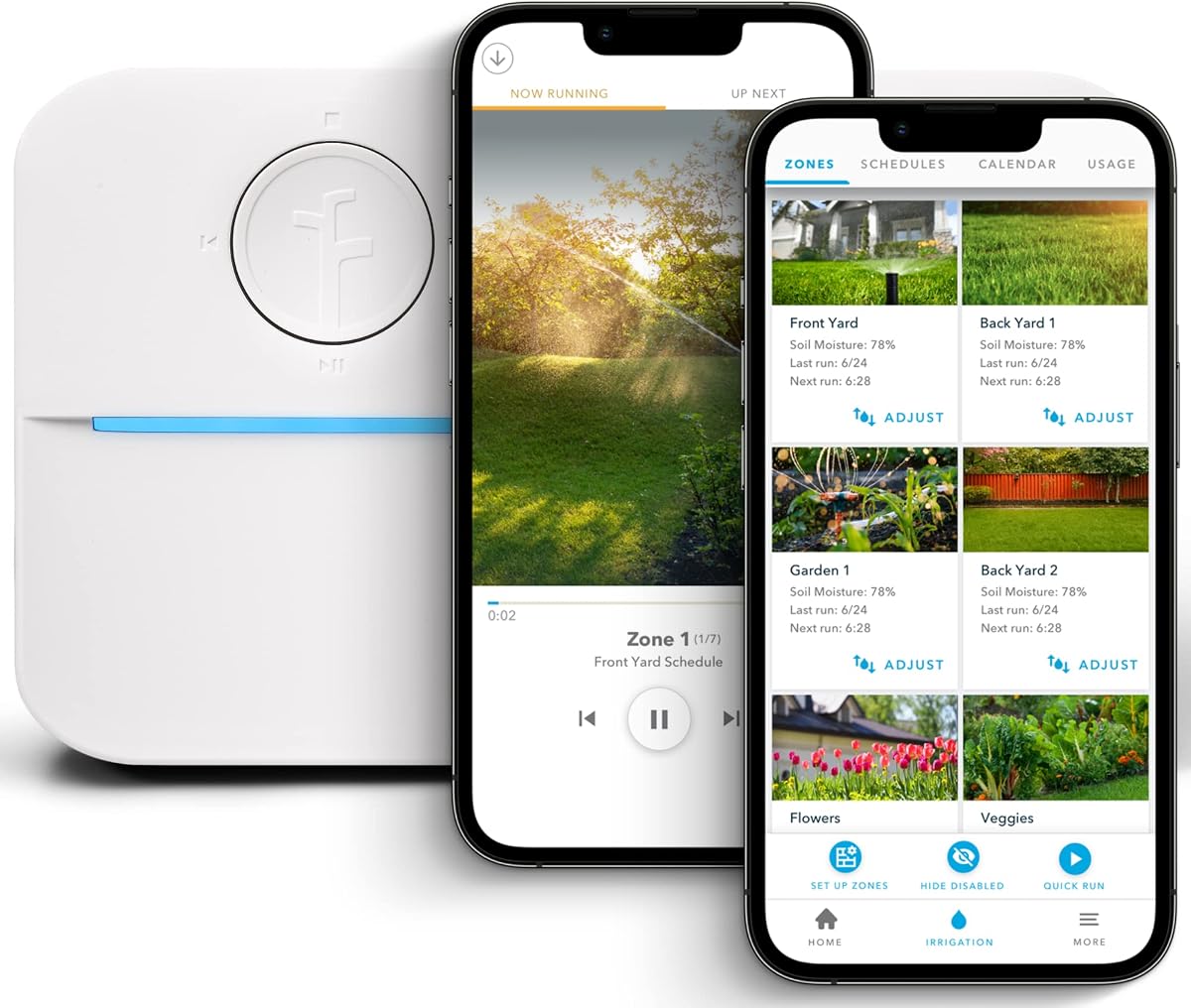
The Rachio 3 Smart Controller offers top-tier automation with Weather Intelligence. Rated 4.5, it skips watering for rain, wind, and freeze via app control. Adaptive schedules optimize water use, ensuring your yard thrives year-round.
We may earn a commission when you buy through this link, at no additional cost to you.
Features include flexible scheduling and real-time usage tracking. Installation is quick, compatible with most systems. It is a premium choice for tech-focused users. The app interface is intuitive and powerful.
Higher cost is balanced by savings and convenience. Some features require subscriptions. If you want full control and savings, this is a top pick. Consider long-term benefits.
Best for homeowners seeking advanced automation. Prioritize if you value smart features and ease. Ensure your Wi-Fi is stable for best results.
Patented algorithm skips watering automatically based on real-time local conditions.
Monitor estimated water usage in the app to manage conservation goals effectively.
We may earn a commission when you buy through this link, at no additional cost to you.
Selecting the right irrigation controller with rain sensor requires evaluating compatibility, smart features, and ease of use.
Ensure the controller matches your current sprinkler system's zone count and wiring. Many support adding stations later, so consider future needs.
Check port types for sensors to guarantee seamless integration without extra adapters.
WiFi and app capabilities allow remote scheduling and weather-based adjustments. These features can save water by skipping rain days automatically.
Prioritize controllers that offer weather integration if you want hands-off efficiency.
Choose between wired and wireless rain sensors. Wireless models are easier to install but need battery changes.
Wired sensors are more reliable for long-term setups with consistent power.
Look for intuitive interfaces with clear displays and simple step-by-step guides. Complex menus can make daily adjustments frustrating.
Models with dial controls or voice support enhance usability for all users.
Outdoor-rated controllers withstand weather elements better. Look for weatherproof casings and temperature-resistant components.
Durability ensures longevity and reduces maintenance costs over time.
EPA WaterSense certification indicates efficient water use. Weather-based skipping can reduce usage by up to 30%.
Prioritize models that offer seasonal adjustments to adapt to changing climate conditions.
If your landscaping grows, choose controllers that support additional zones or modules. This flexibility avoids needing a full replacement.
Check for optional station modules to scale your irrigation system easily.
Prices range widely based on features. Basic models are affordable, while smart controllers cost more but save money long-term.
Balance initial costs with potential water savings and convenience for your needs.
Start by reading the manual to understand programming. Input your zone count and watering times, then enable the rain sensor input to automate pauses.
Regularly clean sensor components to prevent debris buildup. Check battery levels in wireless units and replace them annually for reliable detection.
Test the system periodically to ensure it stops during simulated rain. Adjust settings as seasons change to match plant water needs.
A rain sensor detects rainfall or low temperatures and signals the controller to pause watering. This prevents water waste and protects plants from freeze damage during wet or cold weather.
Most controllers have a dedicated port for rain sensors. Check your model's manual for wiring instructions. Some require specific compatible sensors to work properly.
Wireless rain sensors typically use batteries that last one to two years. Check manufacturer recommendations and replace when the indicator light signals low power.
Smart controllers can save significant water through weather-based scheduling. If you value convenience and long-term savings, they are often worth the higher upfront investment.
Many rain sensors include freeze detection that stops watering when temperatures drop below 37°F. This protects pipes and plants from damage during cold weather.
Program your controller to pause watering on rain days or enable automatic rain sensor inputs. Smart models adjust schedules automatically based on weather data.
We recommend the Hunter Rain-Clik for its ease of use and freeze protection. The Rachio 3 offers top smart features, while the Orbit sensor provides budget-friendly reliability.
Prioritize compatibility with your system and desired smart features. Consider expandability if your landscape may grow in the future.
Always check current availability and pricing before purchasing. These models offer excellent ways to conserve water and protect your lawn.