
Alstar Laser Collimator Alignment for Marca Newtonian Telescopes 1.25 Inch
4.5Editor score
Pre-adjusted for quick setup
Includes detailed English instructions
Affordable metal construction
Finding the right laser collimator for telescope alignment ensures your optics perform at their peak. A quality tool simplifies the process, delivering sharper images for both beginners and experienced astronomers.
We evaluated ten top-rated collimators based on build quality, compatibility, and user feedback. Our list covers various price points and features to help you choose the perfect alignment solution.
Each pick highlights unique strengths and ideal use cases for your setup. Keep in mind that prices and availability can change, so verify details before purchasing your new alignment tool.
4.5Editor score

4.5Editor score
4.7Editor score
As an Amazon Associate we earn from qualifying purchases.
This side-by-side comparison highlights key features across all ten models to help you find the best fit for your specific telescope and budget.
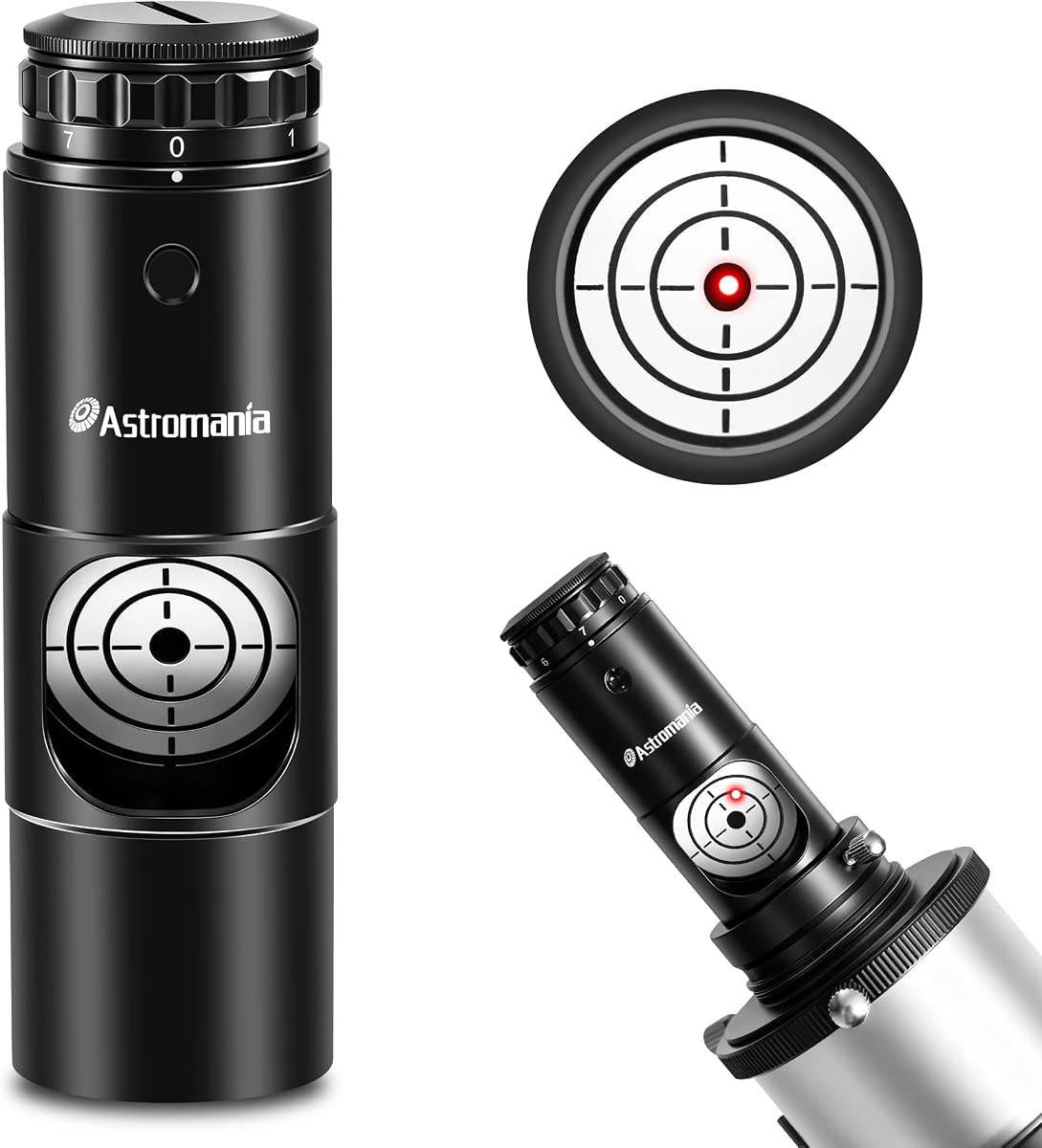


This Astromania collimator earns our top spot for its versatility and ease of use. It delivers reliable performance for Newtonian telescopes with a robust build.
We may earn a commission when you buy through this link, at no additional cost to you.
The removable 2 inch adapter ensures compatibility across most focusers. Seven brightness levels help you adapt to different lighting conditions while adjusting optics.
While the laser is precise, some advanced users may miss a crosshair pattern for finer tuning. This does not detract significantly from its core accuracy.
Ideal for hobbyists seeking a balanced tool, it offers professional results without a steep price tag. We recommend it for most casual to intermediate stargazers.
The included 1.25 and 2 inch adapter makes this unit suitable for nearly any standard Newtonian telescope you might own.
Seven brightness levels allow you to dim the laser for dark skies or brighten it for daytime adjustments without changing optics.
We may earn a commission when you buy through this link, at no additional cost to you.
This smaller Astromania model is perfect for those on a tight budget who still want reliable collimation. It keeps the core features without the extra adapters.
We may earn a commission when you buy through this link, at no additional cost to you.
The metal construction resists wear and tear just like the pricier model. You get the same precise laser output for aligning your Newtonian reflector quickly.
The lack of a 2 inch adapter means it works only with standard focusers. For most users, this limitation is acceptable given the significant savings.
We suggest this for beginners or secondary scopes. It delivers sharp results and is easy to carry to dark sky sites.
By omitting the 2 inch adapter, the price drops significantly, making it the ideal entry point for new telescope owners.
Despite the lower cost, the anodized aluminum body ensures long-lasting performance in various weather conditions.
We may earn a commission when you buy through this link, at no additional cost to you.
SVBONY brings a robust design to this category with a triple cemented lens for a stable red dot. It matches the versatility of other top picks.
We may earn a commission when you buy through this link, at no additional cost to you.
The inclusion of a 2 inch adapter allows for upgrades without buying a new collimator. It ensures you can maintain precision even if you change your eyepieces.
The body feels heavier than plastic alternatives, which might be a pro or con depending on your travel style. However, the stability is worth the weight.
This is a great gift option for friends entering the hobby. It balances quality and price effectively for most reflector users.
The triple cemented lens design reduces beam drift, ensuring your collimation remains accurate throughout the night.
With the included adapter, you can switch from 1.25 to 2 inch optics without needing another collimator.
We may earn a commission when you buy through this link, at no additional cost to you.
This bundle offers more than just a collimator by including an extra lens. It is designed for users who want immediate visual clarity alongside alignment tools.
We may earn a commission when you buy through this link, at no additional cost to you.
The Class I laser ensures safety during day and night use. This is a significant plus for households with children or pets around the telescope.
You might find the lack of a 2 inch adapter limiting if you plan to upgrade. However, the bundled lens adds immediate value to the purchase.
Perfect for casual observers who prioritize ease of use, this set covers the basics well. It simplifies the setup process significantly.
The Class I rating means the laser is eye-safe, allowing you to work without strict safety glasses in most environments.
Having the telescope lens included means you can improve your view right after aligning the optics.
We may earn a commission when you buy through this link, at no additional cost to you.
Alstar offers a straightforward solution that works right out of the box. The pre-adjusted feature saves time for users who want to get observing quickly.
We may earn a commission when you buy through this link, at no additional cost to you.
The metal body ensures it withstands travel to remote dark sky sites. Instructions are clear enough to get a beginner started without frustration.
Not having a battery included is a minor inconvenience that requires a quick trip to the store. It does not affect the long-term utility of the tool.
We recommend this for those who value simplicity over advanced features. It gets the job done reliably and consistently every time.
The unit arrives pre-adjusted, saving you the hassle of initial calibration before your first observation session.
Detailed English instructions guide you through the alignment process, making it accessible for new hobbyists.
We may earn a commission when you buy through this link, at no additional cost to you.
This Alstar model bridges the gap between budget and premium with universal compatibility. It includes the 2 inch adapter and battery for convenience.
We may earn a commission when you buy through this link, at no additional cost to you.
The professional grade build ensures durability. You get a stable beam with adjustable brightness, suitable for various lighting conditions.
User ratings suggest occasional calibration drift, which is typical for this price range. Regular checks keep it performing optimally.
Ideal for intermediate users needing a reliable tool for both 1.25 and 2 inch focusers. It is a solid investment for consistent results.
The included adapter makes this unit future-proof if you upgrade your focuser to a larger size later.
Unlike some competitors, this unit comes with a CR2032 battery, so you can start using it immediately.
We may earn a commission when you buy through this link, at no additional cost to you.
This bundle targets photographers by adding a phone adapter to the standard collimator. It lets you capture the collimation process or align via live view.
We may earn a commission when you buy through this link, at no additional cost to you.
The phone clamp works with various models, offering a cost-effective astrophotography setup. You save by avoiding a separate mount purchase.
The extra weight might be unwieldy for casual viewing. But for imaging enthusiasts, the added capability is a significant benefit.
Best suited for mobile astronomy setups where capturing data is key. It combines alignment with practical imaging utility in one package.
The included adapter helps you align and image simultaneously, streamlining your workflow for deep sky targets.
Works with a wide range of phone sizes, making it a flexible choice for smartphone-based astrophotography.
We may earn a commission when you buy through this link, at no additional cost to you.
This bundle pairs a laser collimator with a Cheshire eyepiece for a complete alignment solution. The perfect rating suggests high user satisfaction with the combination.
We may earn a commission when you buy through this link, at no additional cost to you.
The Cheshire tool offers a passive option for alignment without batteries. Using both tools ensures you achieve the highest precision for your optics.
Managing two pieces of gear can be slightly cumbersome. However, the accuracy gained is worth the extra setup time for serious observers.
Ideal for users who want to ensure every angle of alignment is perfect. It provides both active and passive collimation methods.
The Cheshire eyepiece provides a reliable backup if the laser runs out of power during a session.
Using both tools together ensures that secondary and primary mirror alignment are both correct for sharp images.
We may earn a commission when you buy through this link, at no additional cost to you.
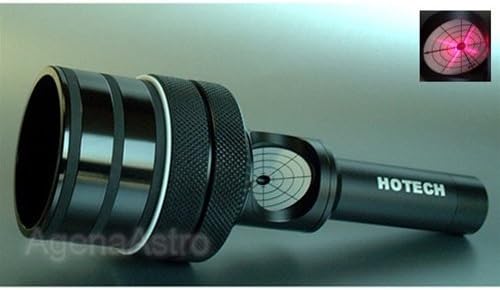
The HoTech SCA collimator solves the common problem of focuser slop with its patented self-centering adapter. This ensures repeatable precision every time you insert it.
We may earn a commission when you buy through this link, at no additional cost to you.
The crosshair model allows for finer adjustments compared to standard lasers. It is a favorite among serious astrophotographers who demand exact optical alignment.
The price is significantly higher than standard models. However, for high-end imaging, the improved accuracy justifies the investment.
We recommend this for advanced users needing maximum precision. It eliminates common alignment errors and delivers superior results.
The SCA adapter locks the laser securely, removing the wobble that plagues standard adapters and ruins precision.
The crosshair design allows you to target specific points on the primary mirror for exact alignment.
We may earn a commission when you buy through this link, at no additional cost to you.
This electronic collimator offers a high-tech approach to alignment. It works with both Newtonian and Schmidt Cassegrain telescopes, making it highly versatile.
We may earn a commission when you buy through this link, at no additional cost to you.
Built-in calibration circles and smartphone compatibility streamline the process. It provides a modern alternative to traditional laser tools.
The high cost may deter casual users. You need reliable power sources and compatible apps to get the most out of the features.
Perfect for tech-savvy astronomers who want software-assisted precision. It represents the next generation of optical alignment tools.
The built-in calibration circles use software guidance to ensure pixel-level accuracy without manual estimation.
Using your smartphone allows you to view alignment data clearly on a larger screen rather than guessing by eye.
We may earn a commission when you buy through this link, at no additional cost to you.
Selecting the right laser collimator involves considering your telescope type, budget, and desired level of precision.
Ensure the collimator matches your focuser size. Many come with 1.25 and 2 inch adapters, but some may be limited to one standard.
Always check if your specific model includes the adapter needed for your telescope.
Look for lasers that comply with Class 3R or safer standards. This ensures the device is safe for your eyes during night adjustments.
Avoid unmarked units that may exceed safe output limits.
Adjustable brightness levels help you adapt to various light conditions. This is useful for daylight checks or very dark skies.
Seven levels are common and provide good flexibility for most users.
Metal bodies are more durable than plastic. They withstand outdoor conditions and reduce vibration during use.
Choose aluminum or anodized metal for a reliable tool.
Basic models use simple beams while premium options feature crosshairs or self-centering adapters. These reduce human error during alignment.
Invest in better tech if you plan on astrophotography.
Most use standard small batteries like CR2032. Check if the package includes the battery to avoid delays.
Having a spare battery on hand is always a good idea.
Clear instructions in your language are crucial for beginners. Step-by-step guides simplify the learning curve.
Look for units with detailed manuals included.
Budget models work well for visual observing while premium ones suit high-resolution imaging. Match the tool to your goals.
Higher prices often reflect better durability and accuracy.
Insert the collimator into your focuser and ensure it fits snugly. Turn on the laser and observe the dot on the primary mirror.
Adjust the telescope screws until the beam reflects back on itself. This centers the secondary mirror correctly for optimal performance.
Keep the unit in a dry place and check calibration periodically. Avoid dropping it to maintain its precision alignment.
A laser collimator aligns the mirrors of a reflector telescope. This ensures the light path is correct, resulting in sharper images of stars and planets.
If your telescope has a 2 inch focuser, you need the adapter. Many collimators include it, but always check the package details before buying.
Ideally, check your alignment before every observing session. Transportation and temperature changes can shift the mirrors slightly.
Yes, if you follow safety guidelines. Ensure the laser is Class 3R or safer and never look directly into the beam.
Yes, many collimators have adjustable brightness. This allows you to align your scope even in daylight or indoor conditions.
Most use a CR2032 lithium battery. Always check the specific model requirements as some may need a different type.
Refractors generally do not need collimation. Laser collimators are designed for Newtonian or reflector telescopes with mirrors.
With adjustable brightness, you can often see the beam even in daylight. However, it is much clearer in dark conditions.
We recommend the Astromania for most users due to its versatility and reliability. It strikes a great balance between features and affordability.
For high-end imaging, consider the HoTech SCA to eliminate any focuser slop. This premium tool ensures maximum precision for your shots.
Remember to check current prices and compatibility before finalizing your purchase. The right tool will enhance your stargazing experience significantly.